


TRANSPORTIN1 coordinates plant immune activation by mediating nuclear import of ADR1 helper NLRs
UncategorizedPlant NLR immune receptors can undergo dynamic changes in subcellular localization upon effector recognition. The Arabidopsis ADR1 helper NLRs mainly act at the plasma membrane (PM) in a phospholipid-dependent manner. Whether ADR1s display nuclear translocation and how ADR1s subcellular partitioning…
A PSA4–YCF4 complex promotes assembly of the photosystem I reaction center in Arabidopsis
UncategorizedAbstractPhotosystem I (PSI) is one of nature's most intricate and efficient nanomachines driving photosynthetic electron transfer. Its biogenesis requires a sophisticated, multi-step assembly pathway coordinated by a suite of nucleus- and plastid-encoded factors, yet the precise molecular mechanisms…
Derepression of BRANCHED1-Controlled Sucrose Hydrolysis Drives Bud Outgrowth and Phytoplasma-Induced Symptoms in Ziziphus jujuba
UncategorizedAbstractSugar metabolism and signalling play major roles in the early events of axillary bud outgrowth by repressing BRANCHED 1 (BRC1) expression. However, whether BRC1 controls sugar metabolism during the cessation of axillary bud growth remains unknown. In previous research it was shown that jujube…
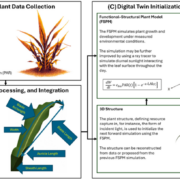
Review: Plant digital twins, the future of crop production
Plant Science Research WeeklyImagine how cool it would be if, just like we check weather apps before going out, we could “grow” a plant in our computer before planting it into our backyard, in order to predict its future success. Pauli et al. discuss this possibility through the use of Digital Twins (DTs), virtual plants that…
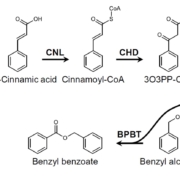
Benzaldehyde reductases complete the salicylic acid biosynthesis puzzle
Plant Science Research WeeklyBenzyl alcohol is a volatile compound and the scent molecule of several seed plants. It also can be converted to benzyl benzoate, which is one of the routes to salicylic acid (SA) production in plants. The flowers of Petunia hybrida are wonderful factories of benzyl alcohol, prompting Lee et al. to use…
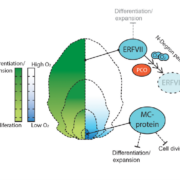
Oxygen: A hidden developmental cue in leaf morphogenesis
Plant Science Research WeeklyOxygen is always considered something living forms need to survive. But wait, its role is beyond just respiration. Would you believe if I told you oxygen guides the development of young leaves? A recent study by Panicucci et al. reveals that oxygen acts as a signalling molecule, affecting cell proliferation…

How chromatin changes shift CHH methylation pathways in soybean
Plant Science Research WeeklyDECREASED IN DNA METHYLATION 1 (DDM1) is a chromatin remodeler that regulates nucleosome organization and facilitates access of DNA methyltransferases to heterochromatic regions enriched in transposable elements (TEs), contributing to DNA methylation, TE silencing, and genome stability. In plants, CHH…

Could the transcription factor HHO5 hold the key to breaking fertilizer dependency?
Plant Science Research WeeklyEfficient nitrogen uptake is essential for plant growth. Hinckley et al. have characterized HRS1 HOMOLOG 5 (HHO5), a transcription factor in Arabidopsis that had been previously overlooked compared to the NIGT1 family. Through a single T-DNA insertion mutation, the authors show HHO5 acts as a non-redundant…
Cellulose synthase complexes and remorins anchor the membrane to the cell wall under water stress
Plant Science Research WeeklyPlant cells are under constant turgor pressure that pushes the plasma membrane tightly against the cell wall. Under severe water loss, cells shrink and membrane retracts without fully detaching from the wall. Narrow bands known as Hechtian strands remain tethered to the cell wall at membrane/wall contact…