
Benzaldehyde reductases complete the salicylic acid biosynthesis puzzle
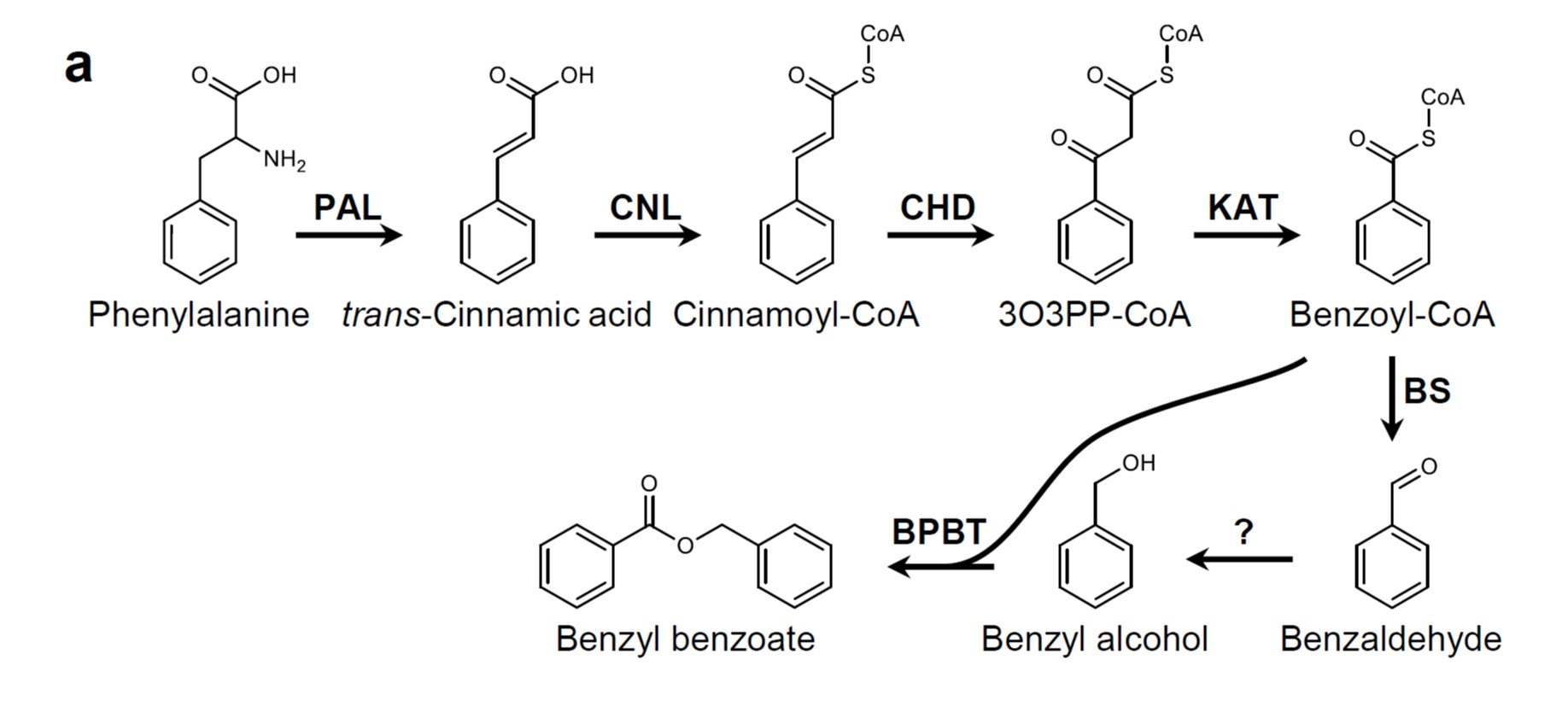 Benzyl alcohol is a volatile compound and the scent molecule of several seed plants. It also can be converted to benzyl benzoate, which is one of the routes to salicylic acid (SA) production in plants. The flowers of Petunia hybrida are wonderful factories of benzyl alcohol, prompting Lee et al. to use it as a model to study benzyl alcohol synthesis. Previous work indicated that benzyl alcohol could potentially be produced by phenylacetaldehyde reductase (PAR) or cinnamoyl alcohol dehydrogenase (CAD) enzymes using nicotinamide adenine dinucleotide phosphate (NADPH) as a cofactor. Leveraging the powerful combination of sequence similarity-based homolog search for these two enzymes and proteomic analyses involving anion exchange chromatography and NAD(P)-binding domains, Lee and colleagues discovered two benzaldehyde reductases (BRs) that differed in three amino acid residues in P. hybrida. Heterologous expression in E. coli confirmed the activity of these two proteins in reducing benzaldehyde to give benzyl alcohol that subsequently leads to SA biosynthesis. Interestingly, computational predictions and experiments on the localization of these proteins across a number of plant species identified a species-specific localization. Phylogenetic analyses of the petunia BRs placed them in a distinct clade in the cinnamyl alcohol dehydrogenase (CAD) phylogenetic tree that showed a mixed occurrence of protein localization as opposed to the uniform localization in other CAD clades. Nature is indeed a marvelous tinkerer and customization specialist! (Summary by Shakunthala Natarajan @shakunthalan.bsky.social) Nature Comms 10.1038/s41467-026-75494-8