

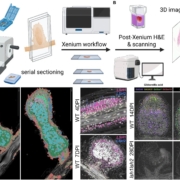
4D spatial transcriptomics reveals root nodules and lateral roots follow parallel developmental trajectories
Plant Science Research WeeklyRoot nodules are specialized organs that house nitrogen-fixing rhizobia bacteria. Previously, bulk tissue transcriptomics suggested that root nodules and lateral roots share most transcriptional programs and therefore may share overlapping developmental trajectory. Contrary to this model, recent work…
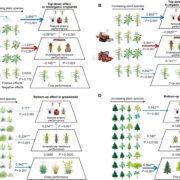
Why plant diversity is the future of sustainable agriculture
Plant Science Research WeeklyThe interactions between different types of plants, pests, and the predators that hunt them shape the health of entire landscapes, but it has been hard to predict what happens when you mix more plant species into different environments. Here, Wan et al. analyzed massive amounts of data from field studies…
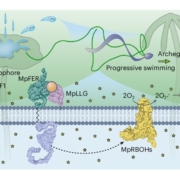
Plant Science Research Weekly: August 28, 2025
WWR Full PostReview: Tracing the evolution of plant cell types
Plants. When we read this word, what comes to mind might be a rose, a tomato plant, or an oak tree. But plants belong to a green lineage that is far more diverse than what we encounter in daily life. This lineage also includes unicellular green algae.…
Ultraviolet-B-induced OsKOL4 promotes ABA accumulation by inhibiting OsABA8ox1 and OsABA8ox2 expression
UncategorizedAbstractUltraviolet-B (UV-B) light is a component of sunlight that influences plant survival and adaptation. UV-B induces plants to regulate their phenotypes and metabolism to increase resistance to UV-B and associated stresses. Abscisic acid (ABA) metabolism and signaling are important for plant responses…
D53-SPL14/17-WOX11 module modulates rice crown root development adaptations to changes in nitrogen availability
UncategorizedAbstractNitrogen (N) is an essential macronutrient for food crops. Plants respond to low N (LN) stress through altering their root morphology. Strigolactones (SLs) are important modulators of root growth in plants. However, the functions of SLs and their downstream pathway in N-modulated formation of…
Ammonium-Nitrate Ratio and Soil Moisture Jointly Regulate Early-Spring Nitrogen Acquisition Through Root Architectural Plasticity in Apple
UncategorizedAbstractEarly-spring nitrogen (N) acquisition in perennial fruit trees represents a critical physiological bottleneck determining vegetative-reproductive balance, as remobilized woody-tissue N supports initial growth but excessive depletion compromises reproductive performance. The interactive effects…
The cysteine protease PAI1 acts as a quantitative metabolic coordinator of amino acid flux for pollen maturation and anther dehiscence in rice
UncategorizedAbstractThe coordination of pollen maturation and anther dehiscence is essential for cereal fertility, yet the metabolic mechanisms linking these processes remain poorly understood. Here, we demonstrate that the rice cysteine protease PAI1 (Pollen Anther Integrator 1) functions as a quantitative metabolic…
The miR166a-MpATHB8 module regulates anthocyanin accumulation to increase rust resistance in Malus ‘Profusion’ leaves
UncategorizedApple rust, caused by the fungal pathogen Gymnosporangium yamadae, leads to substantial yield losses and significant economic damage. In the rust-resistant cultivar Malus ‘Profusion’, rust infection triggers anthocyanin synthesis at infection sites as a defense mechanism to restrict fungal proliferation.…