

Plant Science Research Weekly: August 28, 2025
Review: Tracing the evolution of plant cell types
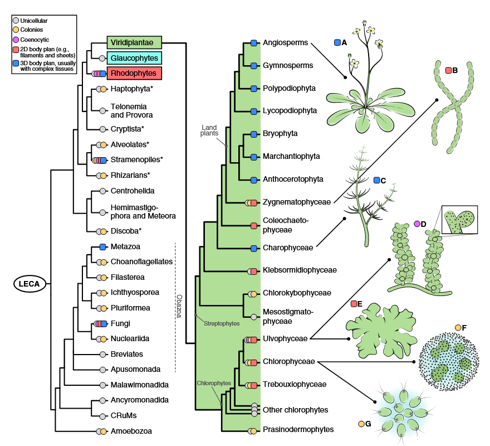 Plants. When we read this word, what comes to mind might be a rose, a tomato plant, or an oak tree. But plants belong to a green lineage that is far more diverse than what we encounter in daily life. This lineage also includes unicellular green algae. The evolution of the green lineage spans over a billion years of adaptation and expansion of genomic resources. Yet how this remarkable diversity of plant cells came to be remains an open question. A recent review by Coate et al. summarized some of these questions. Advances in single-cell research and phylogenetic information may help us unravel the mysteries behind plant cell diversity and evolution. Although plants acquired multicellularity, just as animals did, they show an astounding degree of developmental plasticity, including virtually indefinite regeneration, something uncommon in metazoan systems. Alongside this regenerative capacity, plants have several distinctive features. Their cells contain plastids, large vacuoles, and cell walls. Together, these features point to specific roles for organelle function in determining cell fates and evolution of new cell types. In addition, from a genomic perspective, plant genomes often contain transposable elements, repetitive regions, or whole-genome duplications, which may complicate and study of plant cell evolution. However, new genomic data and comparisons across phylogenetic scales can reveal how ancestral states evolved and provide insights into the origin of plant complexity across the enormous diversity of the green lineage. (Summary by Katarina Kurtović, katarinakurtovic.bsky.social) Current Biology 10.1016/j.cub.2026.04.003
Review: Shuffling genes for better breeds
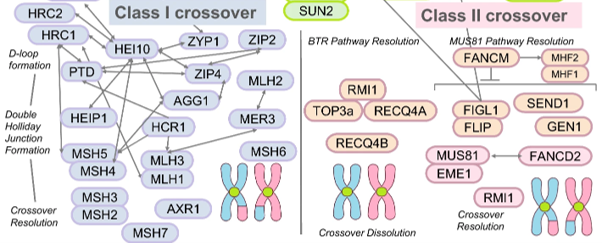 During meiosis, the cell division process that generates four distinct gametes, chromosomes exchange genetic material during homologous recombination. Homologous recombination is a complex process that is tightly controlled in location and frequency – each chromosome must have at least one crossover (where the genetic material is exchanged). But why is this process so important and what do we get out of understanding it? Plant breeders work within the constraints of recombination to generate new plant varieties that are better adapted to future climates or have better trait combinations. Therefore, understanding the molecular processes happening during recombination can offer new strategies and tools to generate desirable plant varieties. Kolesnikova et al. present a visual summary of the complex protein players in homologous recombination. They then cover recent developments in harnessing the molecular knowledge of this process to change recombination frequencies, locations or even decrease recombination all together. This primer should be useful for those interested in the molecular detail of homologous recombination, as well as for those curious about how we can use it to our advantage to breed better crops for the future. (Summary by Anastasia Kolesnikova) Theoretical and Applied Genetics 10.1007/s00122-026-05297-4
GOOSE (Generate disOrdered prOteins Specifying propErties): A new tool to decipher the biological functions of intrinsically disordered regions
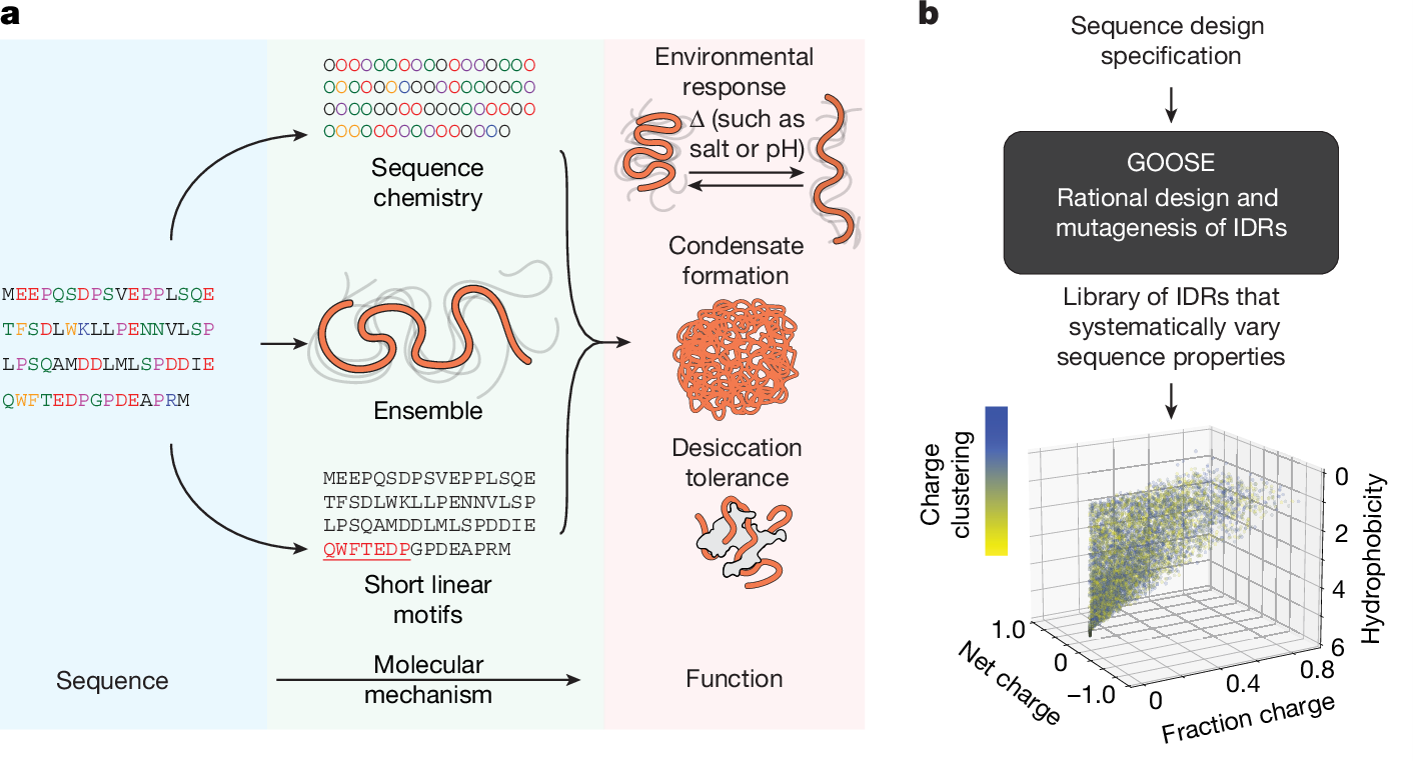 Protein domains lacking a rigid structure, known as Intrinsically Disordered Regions (IDRs), play important roles in many cellular processes, including protein quality control, protein-protein interactions, and subcellular localization. However, we know little about how the properties of IDRs are linked to protein functions. Hunter et al. developed a holistic approach to study these relationships. They introduced GOOSE, a computational framework for rational design of synthetic IDRs with diverse properties. GOOSE enables library-scale design in yeast, allowing the massive generation of mutants to investigate how IDRs link to specific protein functions. As an example, they showed that expanded and compact versions of IDRs of the same length can be generated by varying the distribution of charged residues within the sequence, with the compact IDRs exhibited greater nuclear localization. Moreover, they generated IDRs with attractive or repulsive self-interactions, as well as scaffold IDRs that selectively recruited specific client IDRs while excluding others, demonstrating that IDR sequences can control intracellular assembly and specific molecular interactions. Interestingly, IDRs with high alanine content, lower hydrophobicity, increased helical propensity and weaker self-interactions were also found to improve cell survival during desiccation, like functional desiccation-protective proteins. Overall, the study shows how GOOSE can design disordered proteins for case studies and uncover which sequence features are linked to biological functions, paving the way for a better understanding of the roles of IDRs across organisms. Summary by Fengoula Avgeri (https://x.com/AvgeriF), Nature (10.1038/s41586-026-10849-1 )
Generating giant starch granules in wheat
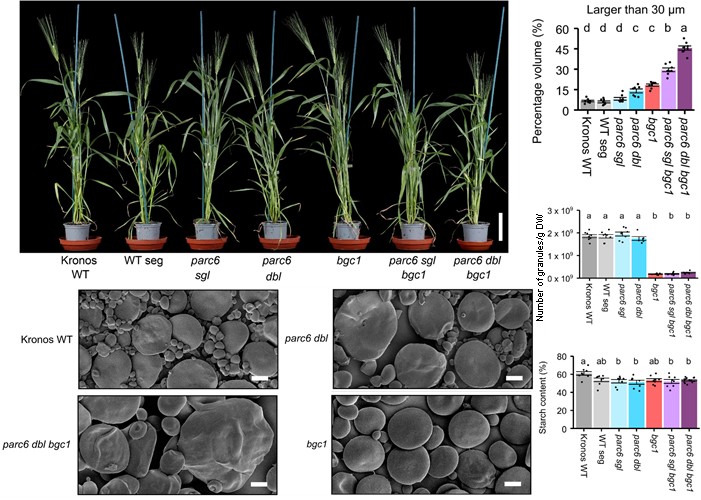 Large, A-type starch granules are desirable for nutritional and industrial purposes due to their gelatinization properties. However, the average wheat starch granule is small (less than 30 µm) compared to other starchy crops like pea and potato. Natural wheat cultivars with large granules have not been identified, necessitating the generation of a novel cultivar. McNelly and colleagues hypothesized that larger starch granules would accumulate if amyloplasts size was increased and/ or the number of new starch granule initiations was reduced. They isolated single mutants of two known factors involved in amyloplast division and starch granule initiation, PARALOG OF ARC6 (PARC6) and B-GRANULE CONTENT 1 (BGC1), respectively, and generated double mutants. Phenotypic analysis showed that the single and double mutants did not differ much from wild type (WT) in plant size, yield, or grain morphology. The double mutants had significantly more large granules (greater than 30 µm) compared to both the single mutants and WT lines but fewer granules overall, suggesting that increased starch granule size in mutants compensates for the large number of smaller granules in the WT. Future research will reveal whether the irregular surface microstructure and altered pasting properties (physical properties associated with the industrial uses and food texture of starch) of large starch granules from the double mutant will benefit milling efficiency and the quality of food products. This article describes a novel genetic combination to increase starch granule size that was previously unavailable in wheat or other cereals. Summary by Iris Mollhoff (@iris.mollhoff) Sci. Adv. 10.1126/sciadv.aeh2735
Genetic and epigenetic divergence among Arabidopsis thaliana Col-0 laboratory lineages since the 1950s
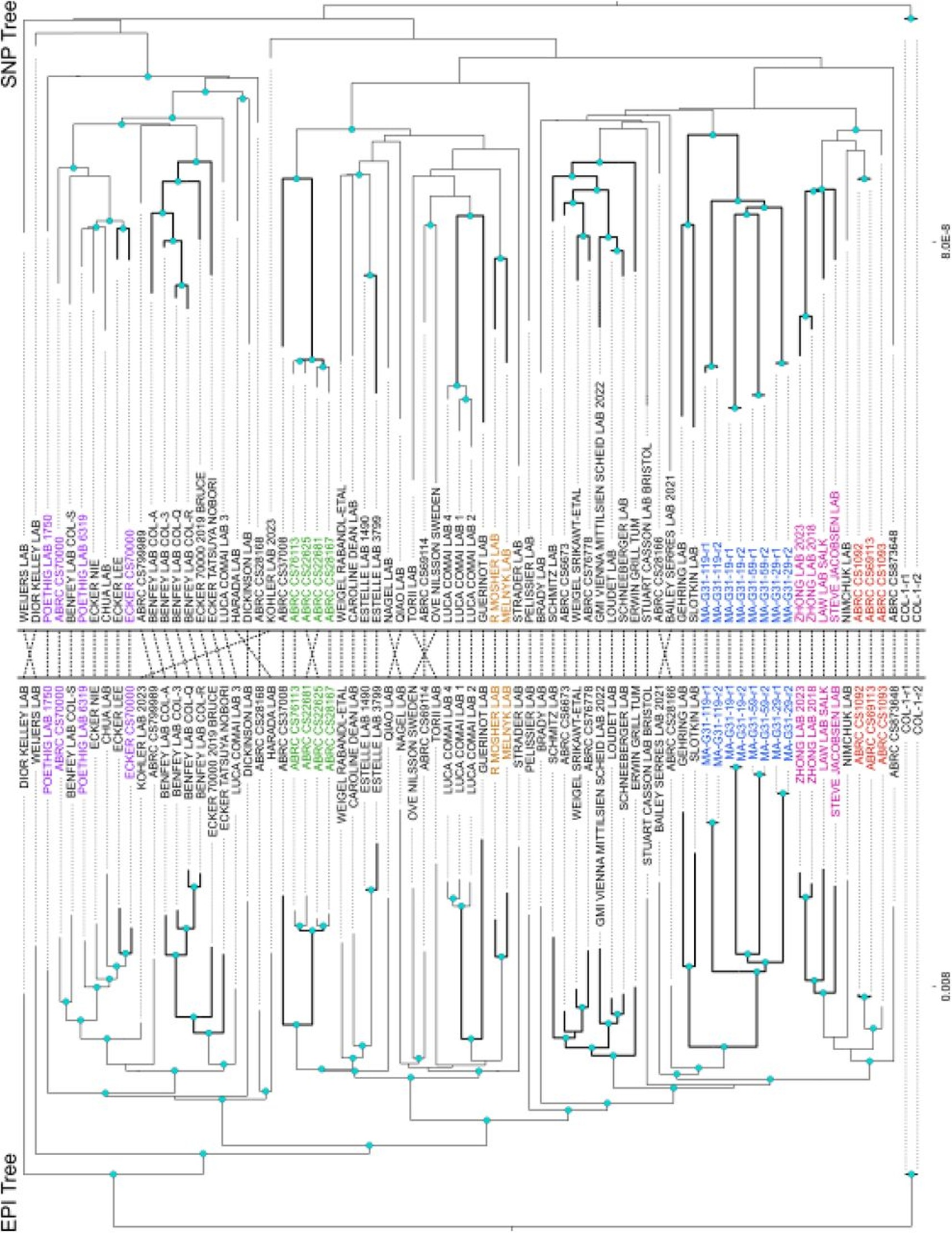 The Arabidopsis thaliana Columbia-0 (Col-0) accession is often treated as a standard reference genotype shared by plant researchers worldwide. However, a new study by Tadros et al. shows that decades of independent propagation in different laboratories have left distinct genetic and epigenetic signatures in Col-0 stocks. By sequencing the genomes and DNA methylomes of 78 Col-0 strains obtained from laboratories and stock centers around the world, the authors reconstructed the history of these lineages and tracked the changes that accumulated over time. Their analyses uncovered both DNA sequence mutations and large numbers of DNA methylation changes, revealing that many laboratory stocks have been evolving separately for generations. Interestingly, phylogenies based on DNA methylation closely mirrored those based on genetic variation and often provided finer resolution among closely related lineages. The study also identified candidate epialleles and mutations associated with differences in gene expression, suggesting that some of these changes may have biological consequences. Together, the findings challenge the view of Col-0 as a single uniform genotype and highlight how long-term laboratory propagation can generate divergence that may influence experimental reproducibility across research groups. (Summary by Fatai Ayomide Akande) bioRxiv https://doi.org/10.64898/2026.08.05.743031
Beyond leaf color: YGRT shapes growth and reproduction in rice
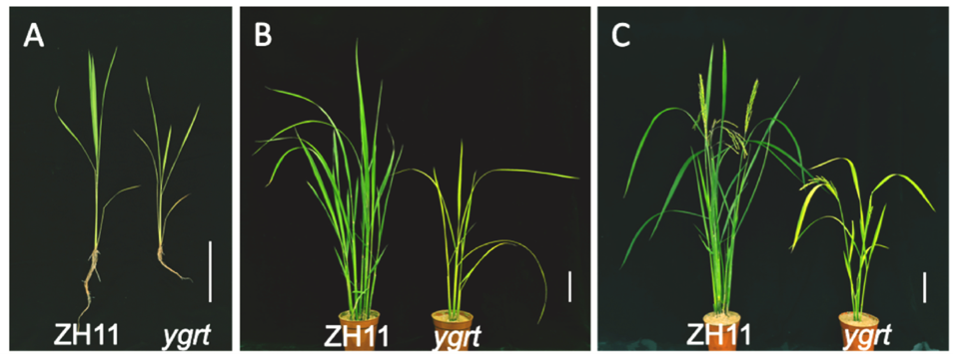 Green leaves are essential for photosynthesis and crop productivity, but the genes that maintain normal leaf development can also influence other aspects of plant growth. In this study, Wang et al. investigated a rice mutant called yellow-green leaf and reduced tillering (ygrt), which develops yellow-green leaves and produces fewer tillers throughout its life cycle. The mutant contained about half as much chlorophyll as normal rice, had poorly developed chloroplasts, and showed reduced photosynthetic activity. It was also shorter, produced smaller grains, and had lower seed production. Genetic mapping traced these defects to YGRT, a gene encoding a uridine monophosphate (UMP) kinase that localizes to chloroplasts and is involved in nucleotide metabolism. Disrupting YGRT with CRISPR reproduced the yellow-green phenotype and reduced chlorophyll levels, while restoring a functional copy of the gene returned the leaves to their normal green color. The study also uncovered a broader role for YGRT in reproduction. In the mutant, the tapetum, a tissue that supports developing pollen, did not break down at the normal time, and many pollen grains failed to mature properly. Although this gene was previously linked to chloroplast development and leaf color, these findings extend its role to tillering and reproductive development. The findings show that YGRT has a wider role in rice than previously recognized, affecting not only leaf color and photosynthesis but also plant growth and reproduction. (Summary by Deborah Ighalo) J. Plant Physiol. 10.1016/j.jplph.2026.154842
A 450-million-year-old signaling system shapes sperm motility
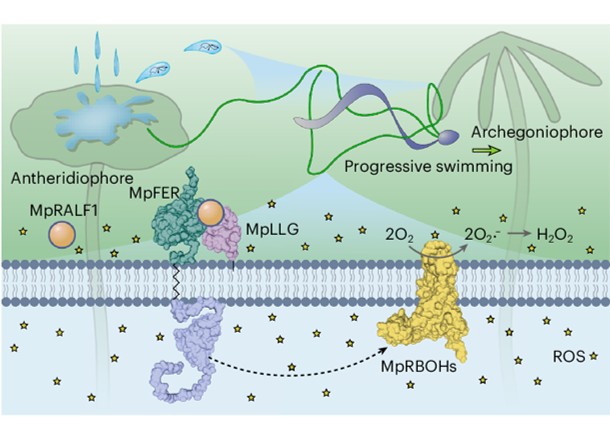
For successful fertilization, sperm must reach the egg. Most land plants deliver non-motile sperm through a pollen tube. However, the liverwort Marchantia polymorpha retains the ancestral form of fertilization, sperm that are motile and use flagella to swim towards the egg. This process offers a unique window into the evolution of reproductive signaling. A recent study by Zhang et al. in Marchantia polymorpha provides new insight into how the movement of motile sperm is controlled at the cellular and evolutionary levels. The researchers identified MpRALF1 as an important regulator whose activity is connected to ROS production, with disruption of this signaling pathway resulting in weaker and less progressive sperm movement. The ability of external MpRALF1 or H₂O₂ to restore these defects indicates that redox signaling has a direct functional role in maintaining sperm performance. The study also highlights an unexpected degree of evolutionary conservation: components of the RALF signaling network can be traced back to early land plants, and Arabidopsis RALF peptides retain partial activity in Marchantia despite their vast evolutionary separation. These findings suggest that coordination between peptide signaling and cellular redox status is an ancient reproductive strategy that has been retained and adapted across plant evolution. (Summary by Jahed Ahmed @picrophilus) Nature Plants 10.1038/s41477-026-02334-4
4D spatial transcriptomics reveals root nodules and lateral roots follow parallel developmental trajectories
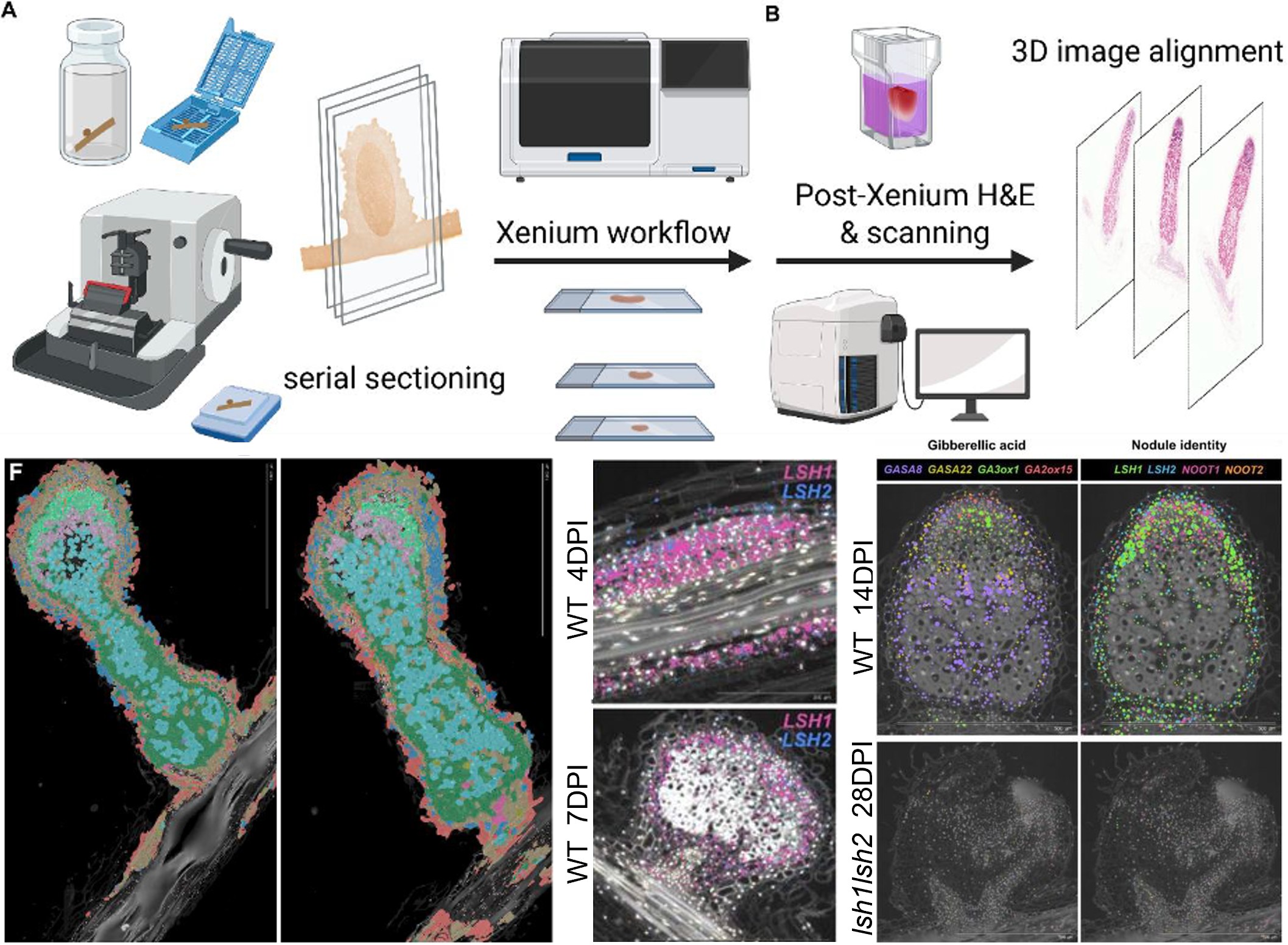 Root nodules are specialized organs that house nitrogen-fixing rhizobia bacteria. Previously, bulk tissue transcriptomics suggested that root nodules and lateral roots share most transcriptional programs and therefore may share overlapping developmental trajectory. Contrary to this model, recent work by Min-Yao Jhu and colleagues presents evidence for a parallel developmental trajectory. To generate multiple high-resolution, single-cell transcriptomic maps, the authors conducted dual-species (Medicago and Rhizobia) spatial transcriptomics using a Xenium Analyzer followed by confocal imaging. Despite overlapping transcriptomic profiles in vascular cells, a subset of distinct transcriptional patterns of nodule development genes in specialized cells differentiates the two organs. Through mutant analyses, Jhu et. al. found that the lsh1/lsh2 mutant displayed disrupted nodule cell architecture and a collapse of the hormone-related transcriptional patterning characteristic of nodule development Furthermore, loss of nodule transcriptional patterning reverts cells to a primary-root-like transcriptional state instead of a lateral-root identity, supporting the model that root nodules follow a parallel developmental trajectory instead of a shared trajectory with lateral roots. Summary by Iris Mollhoff (@iris.mollhoff) bioRxiv. https://doi.org/10.64898/2026.06.23.733685
Why plant diversity is the future of sustainable agriculture
 The interactions between different types of plants, pests, and the predators that hunt them shape the health of entire landscapes, but it has been hard to predict what happens when you mix more plant species into different environments. Here, Wan et al. analyzed massive amounts of data from field studies from across the world to untangle these food chain relationships in everyday farmland, grasslands, and forests. They discovered that adding plant variety has completely different ripple effects depending on whether land is farmed or wild. In agricultural fields, growing multiple crops acts like a magnet for beneficial insect predators and increases their population, suppressing pest populations to the benefit of crop yields. In contrast, in wild grasslands and forests where insects roam freely, having many different plant species simply creates more abundant food and living space for everyone, boosting the populations of both herbivores and their predators together. Overall, the study reveals that plant diversity acts as a natural pest control tool on farms but triggers plant productivity and maximizes higher-level consumer biodiversity in nature. Summary by Fengoula Avgeri, (https://x.com/AvgeriF) Science Advances (10.1126/sciadv.aeb86 )
