Viewpoint: Tips for avoiding false signals in horizontal gene transfer
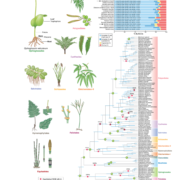
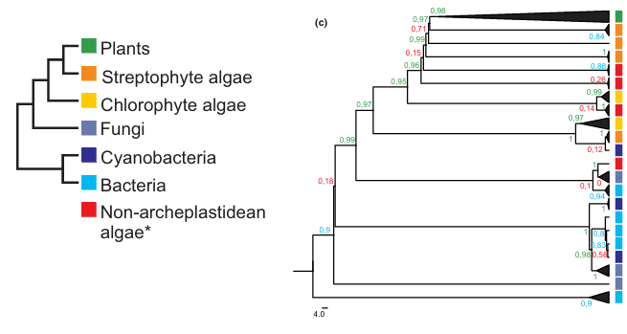 Research into horizontal gene transfer (HGT) and its role in land plant evolution is on the rise. For example, HGT events are known involving components of plant hormone signaling. However, despite the growing amount of phylogenetic information available, some HGT events may be misinterpreted. This is what the authors of a new viewpoint by Fjellheim et al. caution against. The authors therefore propose ten rules for identifying horizontal gene transfers in deep plant phylogenies. Among their recommendations, they emphasize the importance of rigorously filtering genome assemblies for contamination originating from bacterial reads. They also suggest including a representative number of lineages when interpreting signals of patchy gene presence. This is increasingly feasible given the growing number of species across the green lineage with fully sequenced genomes. Analytical rigor in phylogenetic reconstruction is also crucial. Scientists should carefully construct phylogenetic trees and models, as well as interpret the results while considering their biological plausibility. The authors also illustrate their recommendations using three glycosyl hydrolase (GH) families. One example, the GH18 chitinases, has a particularly complicated evolutionary history involving domain shuffling, neofunctionalization, gene duplication, and gene loss, among other processes. Reconstructing the evolutionary history of such a family can therefore be challenging. This work will help future researchers become more aware of how their analytical choices can affect their results and, hopefully, provide a framework for this growing field of research into plant evolution. (Summary by Katarina Kurtović, katarinakurtovic.bsky.social) New Phytol. 10.1111/nph.71680