Review: The five senses of plant pathogens
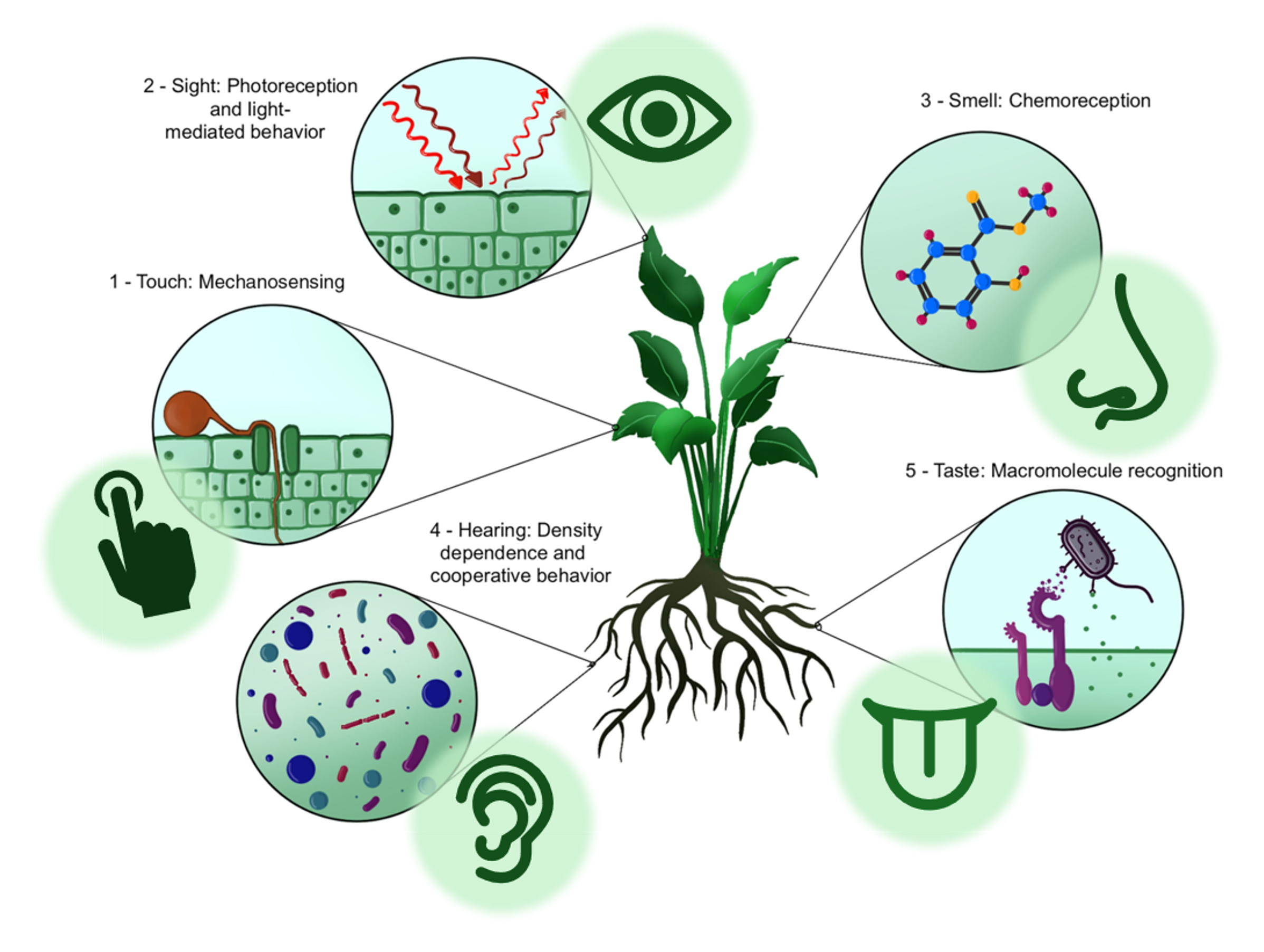 Research in plant immunity has focused primarily on how plants recognize and respond to pathogen signals. The pathogen perspective and the mechanisms pathogens use to “know” whether they have arrived on their respective hosts are less studied. This review by Hammond et al. creatively summarizes current knowledge of plant pathogen host-sensing mechanisms into five major categories analogous to the human senses. Touch or mechanosensing includes examples of plant epidermis attributes such as epidermal ridges and cuticle hydrophobicity. Recent reports also suggest the presence of mechanosensitive calcium ion channels in pathogenic fungi. Sight or photoreception includes light-mediated behavior of both fungal and bacterial pathogens to red, far-red, and blue wavelengths of light. For example, far-red and blue light alter the expression of virulence genes in some bacterial plant-pathogens. Smell or chemoreception represents sensing small molecules, including plant hormones or inorganic chemicals like oxygen. Examples of chemoreception include chemotaxis behavior in bacteria, responses to plant volatiles by nematodes and insects, and oxygen-responsive virulence changes. Hearing, in this analogy, represents density-dependent or cooperative behavior most classically represented by quorum sensing or chemically “hearing the crowd”. New research also implicates sounds generated by air-bubble collapse in plant tissues during drought stress as a vibration signal to fungal and nematode pathogens. Taste represents recognition of plant macromolecules, including fragments released by fungal damage to the plant cuticle and leaf exudates that induce expression of bacterial type three secretion systems. A better understanding of the numerous categories of host signals perceived by plant pathogens would allow us to better protect plants against the initial stages of pathogen infection. Summary by Iris Mollhoff (@iris.mollhoff) MPMI. 10.1094/MPMI-10-25-0148-HH