Using eDNA from leaf and flower surfaces to assess plant-arthropod interactions
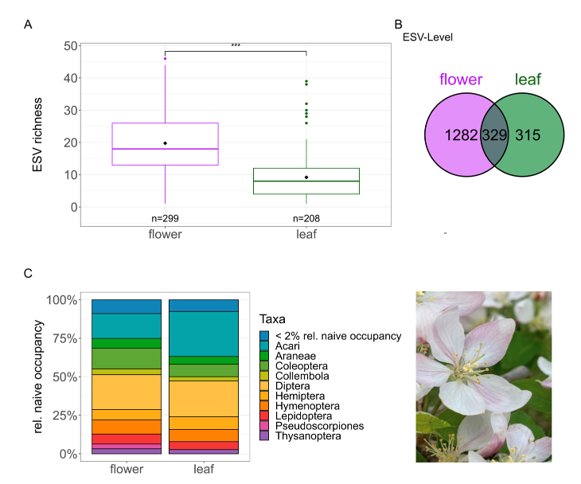 Biodiversity monitoring has become increasingly critical as climate change and anthropogenic land use have escalated, but recording and quantifying interspecies interactions in the field is time- and work-intensive. Environmental DNA, or eDNA, has attracted interest particularly for use in analyzing plant-arthropod biodiversity by enabling researchers to identify arthropod species and characterize communities based simply on DNA deposited on plant surfaces. However, this method requires numerous replicate samples and an expensive filtering process. In this study, Schmidt et al. tested several alternative eDNA isolation protocols from flowers in an effort to reduce the cost and increase the accessibility of this relatively novel method. Using cherry blossoms collected on the Trier University campus in Germany, the researchers attempted extraction of arthropod eDNA from the flowers via four different methods: 1. the standard washing and filtering protocol; 2. alcohol precipitation; 3. lysis and precipitation; and 4. spin column centrifugation. They determined that these four methods cost 10, 1, 2, and 6 euros per sample respectively, a significant range for projects encompassing large numbers of samples. In a subsequent test using apple flowers, the precipitation-based extraction method provided the best compromise between cost and recovered reads. While the composition of arthropod orders recovered by each method differed significantly, all four methods produced a similar number of exact sequence variants and total reads, indicating potential appropriateness for use in future projects that may not have access to the resources required for the cost-intensive filtering process usually considered necessary for eDNA studies. (Summary by Cael Dant) Ecology and Evolution 10.1002/ece3.73831