

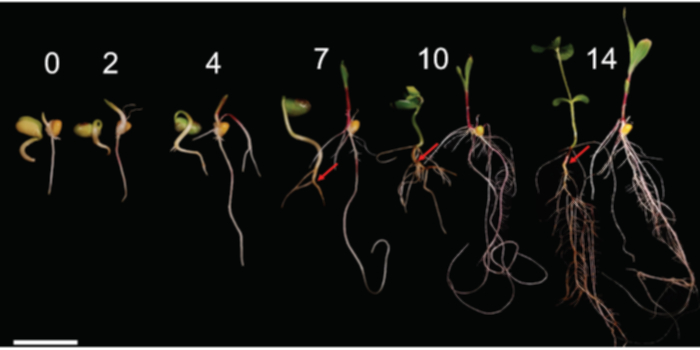
An asymptomatic crop holds the clues for healthy roots
The Plant Cell: In a NutshellBaetsen-Young et al. explore the root transcriptomes of soybean and maize plants infected with a fungus.
The Plant Cell
By Amy Baetsen-Young and Brad Day, Michigan State University
Background: Diverged plant species respond to microbial interactions through different processes, the outcome…

A Hub of Hubs: The Central Role of ZmABI19 in the Regulatory Network of Maize Grain Filling
Blog, The Plant Cell, The Plant Cell: In BriefCereal grains accumulate large amounts of proteins and starch and are a major source of dietary calories for humans and animals. In maize (Zea mays), most of the storage compounds are synthesized during the grain-filling period of kernel development. Several key transcription factors (TFs) that regulate…
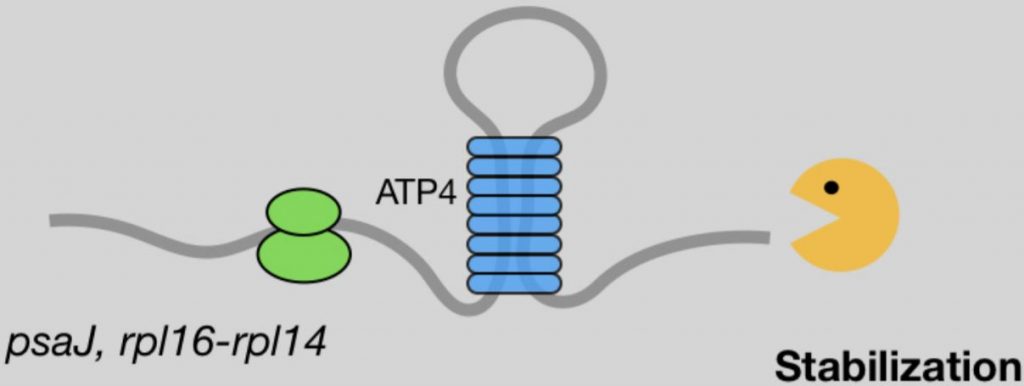
Expanded function of the P-type pentatricopeptide repeat protein ATP4 in RNA editing
Blog, Plant Physiology, Plant Physiology: News and Views, ResearchTianhu Sun
ORCID ID: 0000-0002-2513-1387
Plant Breeding and Genetics Section, School of Integrative Plant Science, Cornell University, Ithaca, New York 14853
ts753@cornell.edu
Chloroplasts are semi-autonomous organelles that retain their own genomes derived from their cyanobacterial ancestors,…
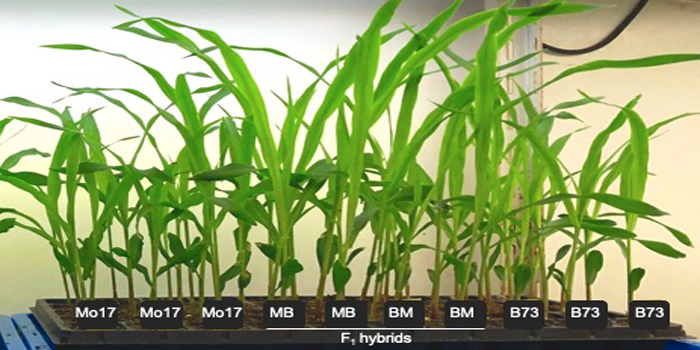
How circadian changes in metabolism affect hybrid vigor
Blog, Research, The Plant Cell, The Plant Cell: In a NutshellZhi Li, Andan Zhu, et al. compare inbred and hybrid lines to explore how daily changes in metabolic pathways affect hybrid vigor. The Plant Cell https://doi.org/10.1105/tpc.20.00320
Background: Heterosis or hybrid vigor refers to the superior growth or fitness in the hybrid progeny compared to one…
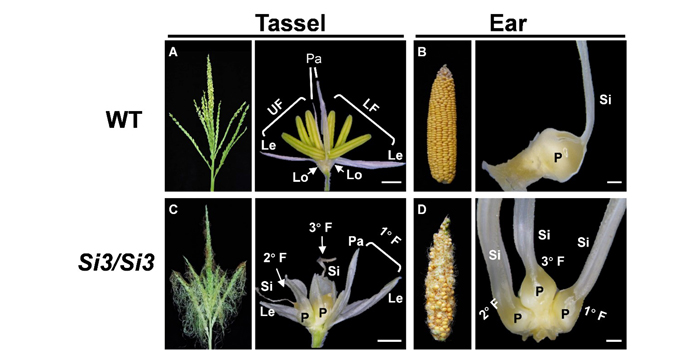
silky3 Is a Novel Transcriptional Regulator that Influences Multiple Flower Development Pathways in Maize
Blog, Research, The Plant Cell, The Plant Cell: In a NutshellLuo et al. demonstrate that ectopic expression of silky3, a novel transcriptional regulator, causes pleiotropic developmental defects in maize inflorescences.. Plant Cell https://doi.org/10.1105/tpc.20.00043
By Haishan Luo, China Agricultural University, Beijing 100193, China
Background: Inflorescence…
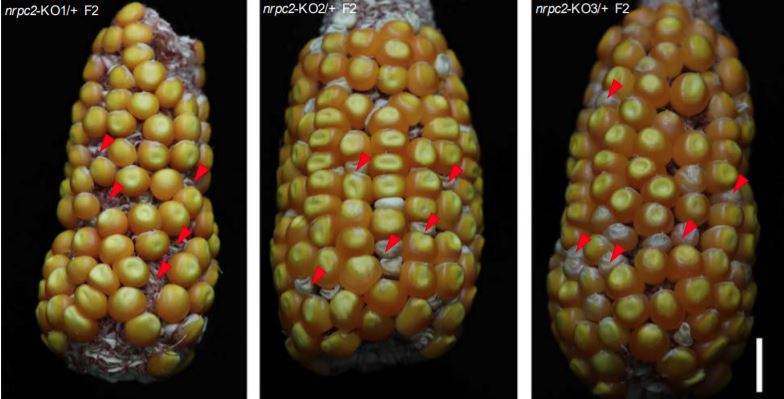
Maize RNA Polymerase III Subunit NRPC2: New Kid on the Kernel Development Block
Blog, Plant Physiology, Plant Physiology: News and Views, ResearchDhineshkumar Thiruppathi 1,2
ORCID ID: 0000-0002-2018-3356
Donald Danforth Plant Science Center,
Saint Louis, Missouri 63132
1Senior author
2Author for contact: dthiruppathi@danforthcenter.org
Seed (kernel) size affects evolutionary fitness and crop yield. In angiosperms, seed size…
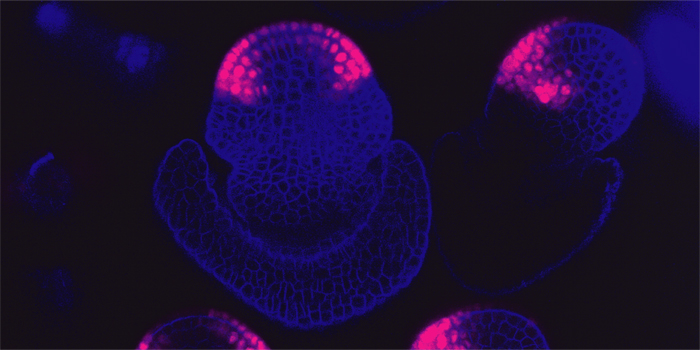
Exploring variation in a key maize regulator of floral form
Blog, Research, The Plant Cell, The Plant Cell: In a NutshellMaría Jazmín Abraham-Juárez, Amanda Schrager-Lavelle et. al. explore how variation in a key floral regulator affects floral development, downstream gene expression and protein complex assembly in maize. Plant Cell https://doi.org/10.1105/tpc.20.00300
by Jazmin Abraham-Juarez, Biology Department,…
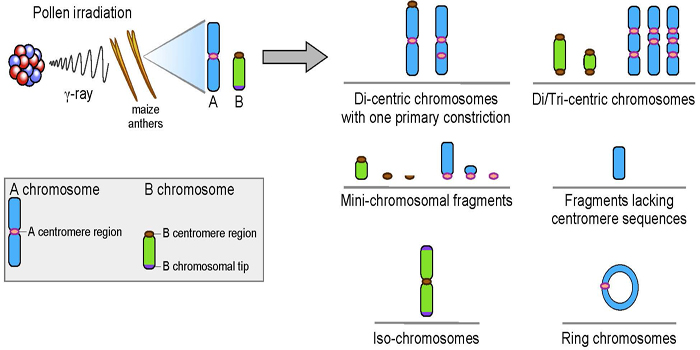
How do Chromosomes Evolve via Unstable Intermediates?
Blog, Research, The Plant Cell, The Plant Cell: In a NutshellYalin Liu, Handong Su, Jing Zhang, et al. explore centromere birth and death by inducing rearrangements via pollen irradiation in maize. Plant Cell https://doi.org/10.1105/tpc.20.00389
Background: The centromere is one of the most important components of chromosomes. Every normal chromosome has one…
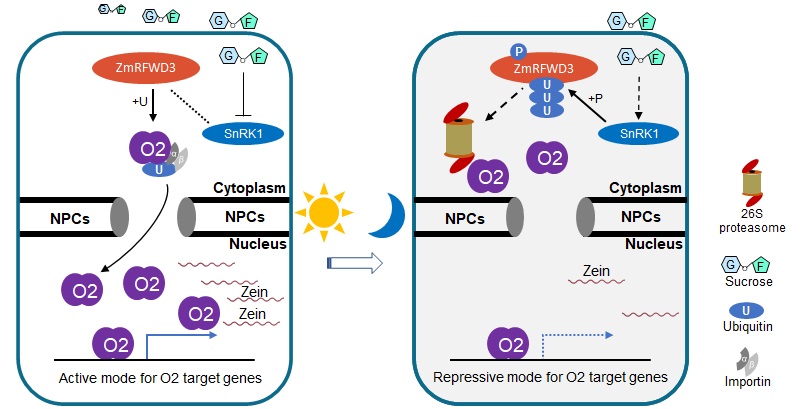
Rhythms in the dark: how endosperm responds to daylight cycles
Blog, Research, The Plant Cell, The Plant Cell: In a NutshellLi et al. discover a diurnal pattern in sucrose content in developing maize endosperm that relies on the action of an E3 ubiquitin ligase on the master regulator transcription factor Opaque2. Plant Cell https://doi.org/10.1105/tpc.20.00352
By Chaobin Li, Zeyang Ma, Rentao Song, China Agricultural…