

Priming and reverse priming: A new twist in plant immunity
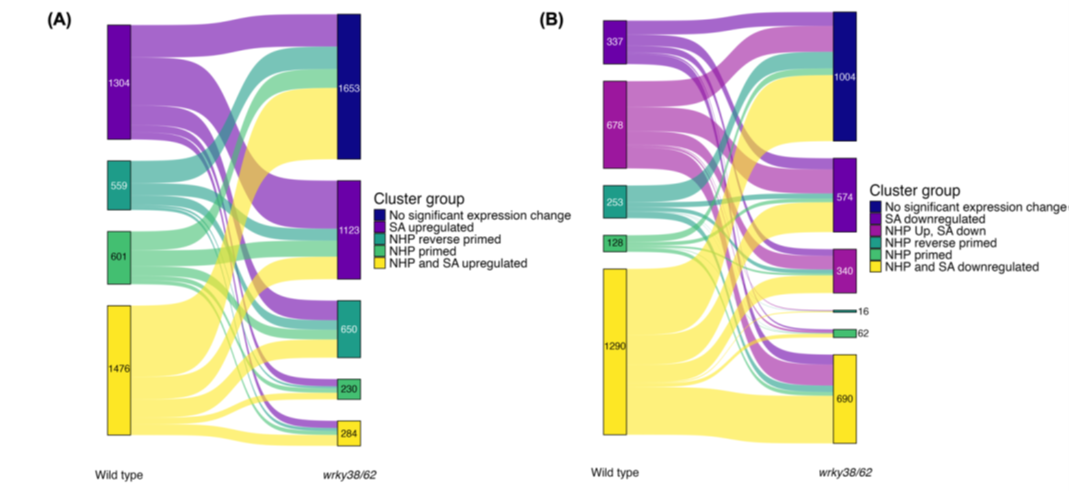 Plants have their own version of an immune system—and it’s smarter than you might think. Through a process called Systemic Acquired Resistance (SAR), plants can “remember” an attack and prepare for the next one, arming themselves with long-lasting, broad-spectrum immunity. When one leaf is infected, the plant sends signals to distant, uninfected tissues, essentially “priming” them for a faster and stronger defense in the future. A key player in SAR is the hormone salicylic acid (SA), but uncovering the exact mobile signals behind this systemic protection has been challenging. Recent studies highlight azelaic acid (AzA) and N-hydroxy-pipecolic acid (NHP) as strong candidates, since applying them externally can trigger SAR. To better understand their roles, Mason and colleagues compared the gene activity patterns triggered by SA, AzA, and NHP. Their findings were striking: NHP provided 10 times stronger protection than AzA and reshaped plant immunity by activating critical transcription factors WRKY38 and WRKY62. Even more intriguingly, NHP didn’t simply boost SA responses—it also suppressed certain SA-dependent genes, suggesting a sophisticated balance of “priming” and “reverse priming” to fine-tune plant defense. This discovery reveals that plant immunity is not just an on/off switch but a highly regulated network—one that could inspire new strategies for sustainable crop protection. (Summary by Ching Chan @ntnuchanlab) bioRxiv 10.1101/2025.04.17.649115

