

GIG1-based in vivo haploid induction offers a rapid breeding strategy in rapeseed
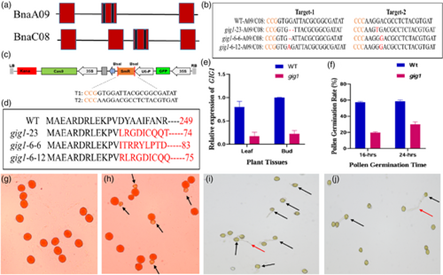 Producing completely homozygous lines in a single generation is crucial for accelerating hybrid breeding in crops like rapeseed (Brassica napus), yet conventional in vitro methods are time-consuming and genotype-sensitive. In this study, Bakhsh et al. developed an efficient in vivo haploid induction system by targeting GIGAS CELL1 (GIG1), a meiosis-related gene not previously used for haploid induction in rapeseed. Using CRISPR/Cas9, the authors edited two highly expressed GIG1 gene copies in floral tissues (BnaA09GIG1 and BnaC08GIG1), generating multiple mutant lines. Two of these, gig1-23 and gig1-6-12, successfully induced maternal haploids when crossed with several elite cultivars. Haploids were identified through a combination of green fluorescent protein (GFP) screening, molecular genotyping with simple sequence repeat markers, flow cytometry, and genome resequencing. These plants exhibited hallmark traits of haploidy, such as smaller floral organs, increased stomatal density, male sterility, and reduced pod size. The gig1 mutants induced haploids from both parental directions, with induction rates ranging from 1.88% to 2.3%, comparable to DOMAIN OF UNKNOWN FUNCTION 679 MEMBRANE PROTEIN (DMP)-based systems and more effective than those relying on centromeric histone mutations. Unlike earlier methods, this system enables reciprocal haploid induction, facilitating efficient cytoplasmic male sterility transfer without nuclear genome contamination. This study offers a stable, genotype-independent tool for rapid development of pure lines and hybrid seed production in rapeseed. (Summary by Muhammad Aamir Khan @MAKNature1998). Plant Biotechnol. J. 10.1111/pbi.70215

