

Plant Science Research Weekly: November 20, 2026
Passing the torch
 This is the last time I’ll be posting the Plant Science Research Weekly series, so I thought I’d start with a little history. This series began in November 2016, with the name “What We’re Reading” (WWR). I began it to provide a quick and easy way for plant scientists to keep up with the literature (see “Why we’re writing What We’re Reading”). It also provided a mentored writing opportunity for the members of the newly launched Plantae Fellows program. Over the past 10 years, we’ve posted more than 3500 research summaries contributed by more than 200 authors.
I want to give a special thank you to Plantae Editor Ching Chan, a former Plantae Fellow and Plant Cell Assistant Features Editor who has been co-running the program for the past two years, and I’m happy to say that at least for the next year, it will be in the very capable hands of Plantae Editor Yee-Shan Ku, who has also served as both a Plantae Fellow and as a Plant Physiology Assistant Features Editor. Best wishes to Yee-Shan and future PSRW contributors, let’s see where the next decade takes us!
Now, on to the science!
Review: The five senses of plant pathogens
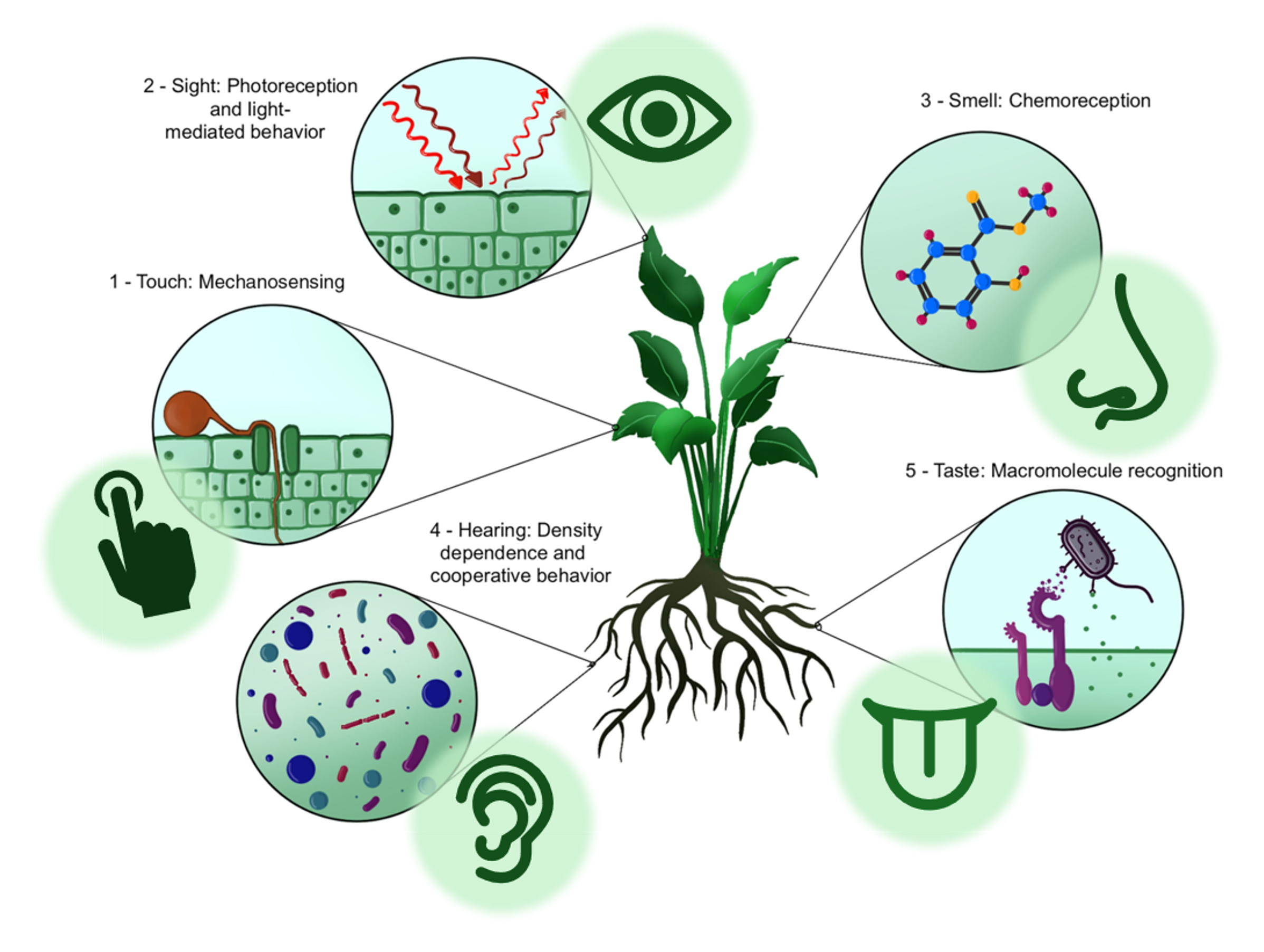 Research in plant immunity has focused primarily on how plants recognize and respond to pathogen signals. The pathogen perspective and the mechanisms pathogens use to “know” whether they have arrived on their respective hosts are less studied. This review by Hammond et al. creatively summarizes current knowledge of plant pathogen host-sensing mechanisms into five major categories analogous to the human senses. Touch or mechanosensing includes examples of plant epidermis attributes such as epidermal ridges and cuticle hydrophobicity. Recent reports also suggest the presence of mechanosensitive calcium ion channels in pathogenic fungi. Sight or photoreception includes light-mediated behavior of both fungal and bacterial pathogens to red, far-red, and blue wavelengths of light. For example, far-red and blue light alter the expression of virulence genes in some bacterial plant-pathogens. Smell or chemoreception represents sensing small molecules, including plant hormones or inorganic chemicals like oxygen. Examples of chemoreception include chemotaxis behavior in bacteria, responses to plant volatiles by nematodes and insects, and oxygen-responsive virulence changes. Hearing, in this analogy, represents density-dependent or cooperative behavior most classically represented by quorum sensing or chemically “hearing the crowd”. New research also implicates sounds generated by air-bubble collapse in plant tissues during drought stress as a vibration signal to fungal and nematode pathogens. Taste represents recognition of plant macromolecules, including fragments released by fungal damage to the plant cuticle and leaf exudates that induce expression of bacterial type three secretion systems. A better understanding of the numerous categories of host signals perceived by plant pathogens would allow us to better protect plants against the initial stages of pathogen infection. Summary by Iris Mollhoff (@iris.mollhoff) MPMI. 10.1094/MPMI-10-25-0148-HH
Viewpoint: Tips for avoiding false signals in horizontal gene transfer
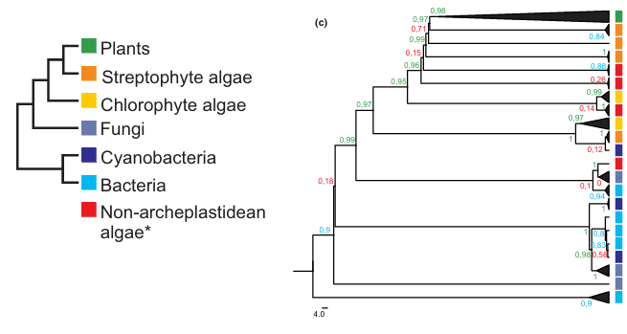 Research into horizontal gene transfer (HGT) and its role in land plant evolution is on the rise. For example, HGT events are known involving components of plant hormone signaling. However, despite the growing amount of phylogenetic information available, some HGT events may be misinterpreted. This is what the authors of a new viewpoint by Fjellheim et al. caution against. The authors therefore propose ten rules for identifying horizontal gene transfers in deep plant phylogenies. Among their recommendations, they emphasize the importance of rigorously filtering genome assemblies for contamination originating from bacterial reads. They also suggest including a representative number of lineages when interpreting signals of patchy gene presence. This is increasingly feasible given the growing number of species across the green lineage with fully sequenced genomes. Analytical rigor in phylogenetic reconstruction is also crucial. Scientists should carefully construct phylogenetic trees and models, as well as interpret the results while considering their biological plausibility. The authors also illustrate their recommendations using three glycosyl hydrolase (GH) families. One example, the GH18 chitinases, has a particularly complicated evolutionary history involving domain shuffling, neofunctionalization, gene duplication, and gene loss, among other processes. Reconstructing the evolutionary history of such a family can therefore be challenging. This work will help future researchers become more aware of how their analytical choices can affect their results and, hopefully, provide a framework for this growing field of research into plant evolution. (Summary by Katarina Kurtović, katarinakurtovic.bsky.social) New Phytol. 10.1111/nph.71680
COPing with temperatures: COP1 acts as a molecular thermometer
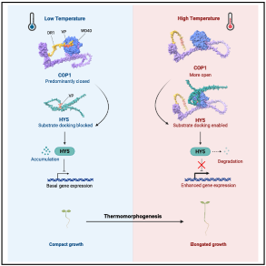 In recent work, Zeng et al. unravel a novel mechanism by which plants perceive changes in temperature. Specifically, they found that COP1, an E3 ligase known as a central integrator of light signaling, also functions as a thermosensor in Arabidopsis. At low temperatures, a Val-Pro (VP) motif of COP1 binds its own WD40 domain, locking COP1 into an inactive conformation. In this state, client proteins, like the growth repressor HY5, are not accessible to COP1. As a result, HY5 accumulates, suppressing plant growth. Conversely, as temperatures rise, the VP motif detaches, enabling a conformational change. In this more open and active state, COP1 binds HY5 and targets it for degradation leading to the activation of genes involved in stem elongation. The VP motif is located at the N-terminus of an intrinsically disordered region (DR1) and altering its length or the aminoacidic sequence changes the plant’s thermal response. Additionally, the authors found that variability in the linker length across the Arabidopsis accessions tune the temperature sensitivity of COP1. Specifically, the DR1 flexibility positively correlates with geographic latitude, providing a mechanism plants used to adapt and grow in colder environments. (Summary by Emma Olmi @olmiemma.bsky.social) Cell 10.1016/j.cell.2026.10.036
GA-deficiency leads to DELLA-mediated histone acetylation and growth repression via ERF2
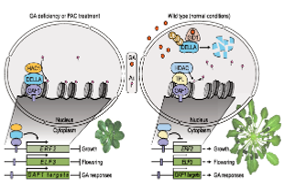 DELLA proteins are plant-specific transcriptional regulators that negatively regulate gibberellin (GA) signaling and thereby influence germination, growth and flowering. In a recent study, Ando et al. screened for DELLA-interacting proteins in cultured Arabidopsis cells using a proximity biotin-labelling enzyme and identified the histone acetyltransferase HAC1. Additional studies showed that DELLA binds the N-terminal region of the HAC1 protein in the nucleus. Loss of HAC1 partly relieved growth inhibition under GA deficiency; in the GA-deficient mutant ga1-3, the hac1 mutation improved germination, and rosette and root growth. Previous studies have shown that DELLA proteins act as co-regulators of GAF transcription factors. In this study, chromatin immunoprecipitation showed that HAC1 is recruited to GAF1 target promoters only under GA deficiency and only when DELLA is present. HAC1 increases histone H3 acetylation at these genes, which supports its role in DELLA-mediated activation. Additionally, the authors identified a new GAF1 target, ETHYLENE RESPONSE FACTOR2 (ERF2). The erf2 mutant is larger, ERF2 overexpression gives smaller plants, and loss of ERF2 restores growth in the dwarf gai-1 mutant. These results indicate that in GA-deficient conditions, DELLA recruits HAC1 to GAF1-bound chromatin, H3 acetylation increases, and ERF2 is switched on to repress growth. (Summary by Sonia Balyan) Plant Cell 10.1093/plcell/koag235
A gene family that makes your tea better by elongating the stem: Meet the XTH genes
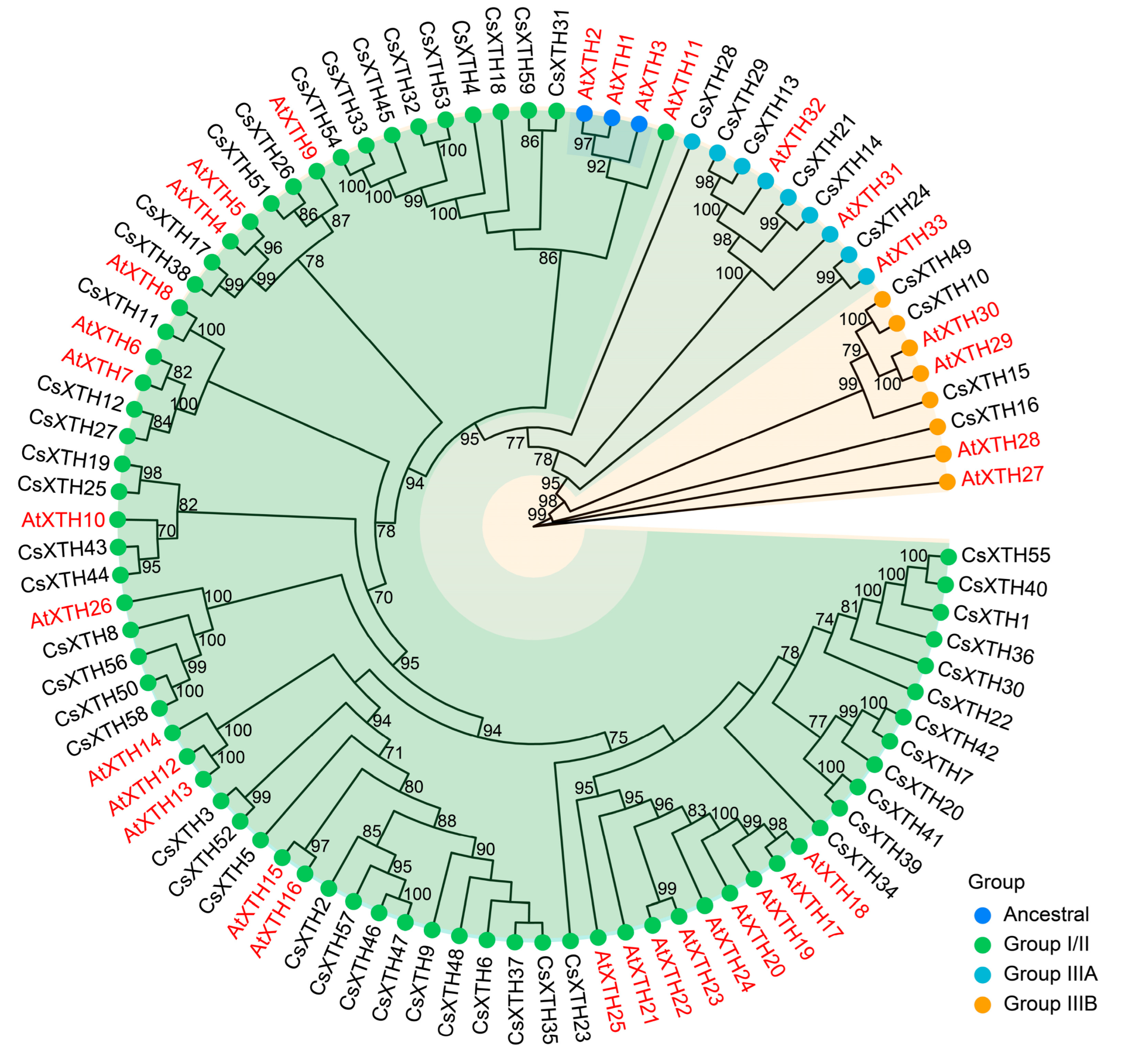 The XTH gene family encodes enzymes involved in cell wall remodeling that promote expansion and elongation, xyloglucan endotransglucosylase/hydrolases. The number and diversity of XTH genes vary considerably across plant species and even between accessions of the same species. In tea (Camellia sinensis), internode length is an important architectural trait, particularly for yield and mechanical harvesting, which affects tea quality. Shen et al. investigated the XTH gene family across nine tea accessions, identifying 477 genes in total, with individual accessions carrying between 42 and 66 XTH genes. Their results suggest that CsXTH genes respond to multiple signals, including light, hormones, development, and stress. The authors identified eight CsXTH genes with detectable stem expression and distinct tissue-expression patterns. CsXTH27 stood out as its internode-associated expression pattern was consistently observed in all three tea cultivars examined. Moreover, transient overexpression of CsXTH27 increased internode length in tea shoots, suggesting that this gene could be a promising candidate for modifying tea shoot architecture. This finding opens up interesting possibilities for breeding tea plants with shoot architectures better suited to mechanical harvesting, potentially improving harvesting efficiency and yield. (Summary by Ale Lombardi, @alepanda.bsky.social) Int. J. Mol. Sci. 10.3390/ijms27167388
Blue light promotes root iron acquisition via a shoot CRY–HY5 signaling module in Arabidopsis
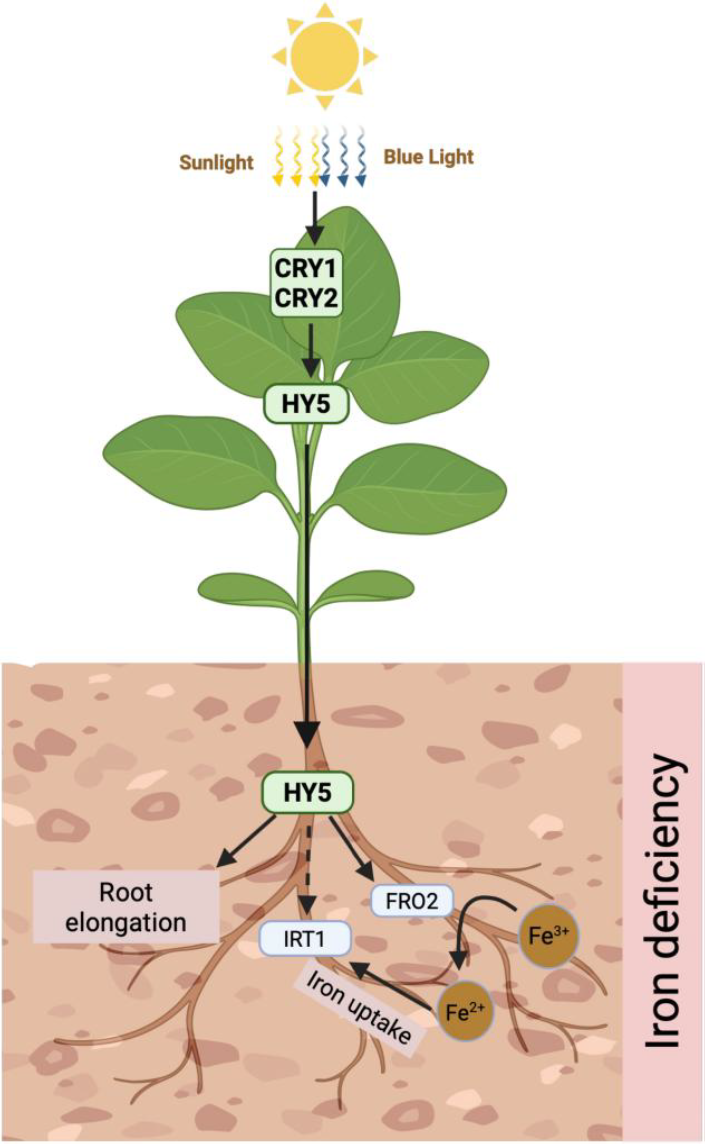 Plants constantly integrate environmental signals to coordinate their growth and development. While the role of light in regulating various plant physiological and developmental processes has been extensively studied, its contribution to fine-tuning nutrient acquisition, a root-specific process occurring belowground, remains less understood. In a recent study, Jakhar et al. investigated the interplay between light perception and iron homeostasis in Arabidopsis thaliana, providing insights into how aboveground light signals may influence belowground nutrient acquisition. They found that blue-light perception in the shoot promotes iron accumulation and root responses to iron deficiency. Interestingly, this response was wavelength-specific, as red light did not produce the same effects on root elongation under iron-deficient conditions. Genetic analysis revealed that the blue-light photoreceptors CRYPTOCHROME 1 and 2 (CRY1/CRY2) act upstream of the transcription factor ELONGATED HYPOCOTYL 5 (HY5) in this blue-light-mediated regulation. Plants lacking HY5 or both cryptochromes showed compromised root elongation under iron deficiency and reduced iron accumulation in response to blue light. These findings suggest that HY5 links light perception in aerial tissues to iron acquisition in roots, thereby providing a mechanism for coordinating environmental information with nutritional demands. Beyond establishing a link between photoreceptor signalling and iron homeostasis, this study highlights the importance of communication between different plant organs in adapting to environmental conditions. It also raises interesting possibilities for exploring how light regimes could be manipulated to improve mineral accumulation and nutritional quality in crops. (Summary by Gourav Arora, @gourav_arora_g) Plant Physiol. https://doi.org/10.1093/plphys/kiag366
pH-specific coumarins recruit distinct bacterial pathways for iron acquisition in Arabidopsis
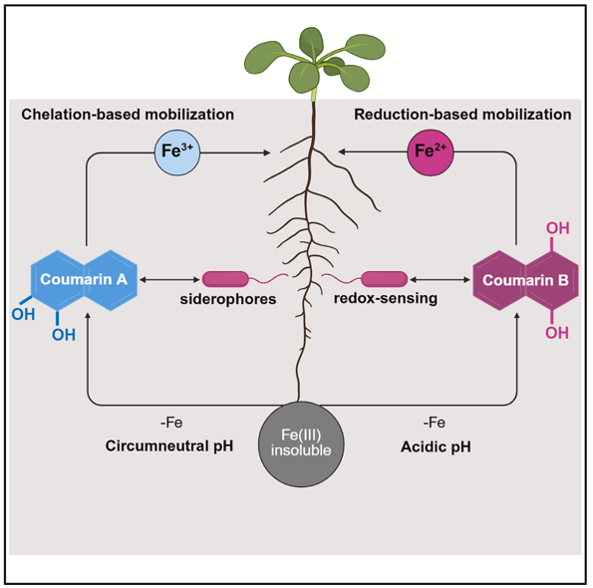 Plants need iron for growth and development, but in natural soils it occurs predominantly as insoluble Fe(III), and its availability declines with increasing pH. Under iron deficiency, Arabidopsis secretes pH-dependent coumarin chemotypes to mobilize iron. However, even with coumarin secretion, plants grown without microbes show iron deficiency, suggesting that the coumarins require the root microbiota to be fully functional. Here, Malisic and colleagues show how soil pH, root microbiota and coumarin chemotype jointly shape iron uptake. The authors tested 246 root commensals isolated from two different soils and found that most rescued iron deficiency at both acidic and circumneutral pH, regardless of soil origin. They focused on IT466, a Pseudomonas proteolytica isolate, which rescued iron deficiency through different coumarins depending on pH. At circumneutral pH, roots released more fraxetin, which acted with the bacterial siderophore pyoverdine to mobilize Fe(III) by chelation. In contrast, at acidic pH, roots enriched the coumarin sideretin, which interacted with IT466 to reduce Fe(III) to soluble Fe(II) through bacterial redox sensing pathways. IT466 did not alter the exudation of these coumarins, indicating that their pH-dependent release occurs independently of the bacteria. Together, pH-dependent coumarin release appears to be an adaptive host strategy for using the root microbiota to support iron uptake across diverse soil conditions. (Summary by Aditi Bhat @jumpy_botanist) Cell 10.1016/j.cell.2026.09.030
A bistable regulatory switch controls the timing of floral transition in Arabidopsis
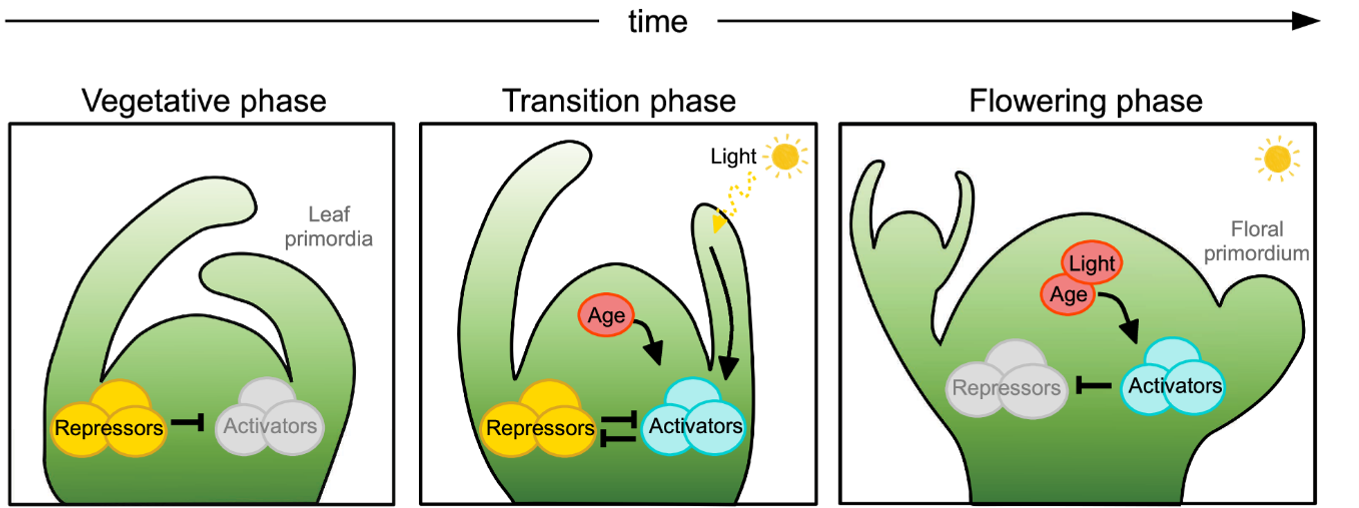 What controls the rate at which the shoot apical meristem (SAM) changes from producing leaves to producing flowers? Gabriel Rodríguez-Maroto, Kang Wang, and colleagues investigated these questions in Arabidopsis thaliana. They found that the transition to flowering depends on a balance between genes that prevent flowering and genes that promote it. APETALA2 (AP2) is a significant repressor, whereas FRUITFULL (FUL) and SUPPRESSOR OF OVEREXPRESSION OF CONSTANS1 (SOC1) activate flowering. By tracking AP2 expression, the researchers discovered that there was no consistent decline in AP2 expression levels. Rather, AP2 first dropped quickly, then more gradually, and finally even more as flowers started to appear. To understand this unusual pattern, the researchers combined genetic experiments with mathematical modelling. Their results suggested that increasing plant age and the activity of SQUAMOSA PROMOTER BINDING PROTEIN-LIKE (SPL) proteins help push the meristem towards flowering. Interestingly, the meristem can temporarily retain features of its previous vegetative state, even after the flowering process has started. This creates a delay called critical slowing down. Overall, the study shows that flowering is not simply an on-off switch. It is a gradual process influenced by the balance between flowering regulators, plant age, and the developmental history of the meristem. (Summary by Gourav Arora @gouravarora.bsky.social) Nat. Commun. 10.1038/s41467-026-76210-2
Genotype-specific sensitivity of wheat kernel number to pre-flowering low light
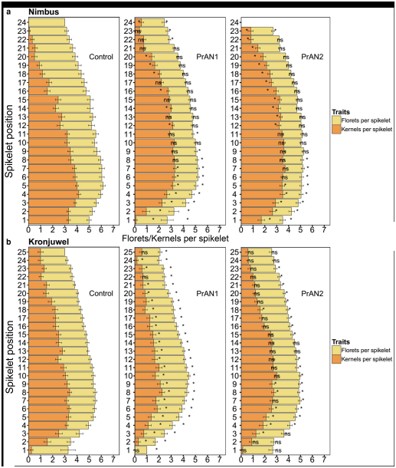 Wheat is one of the world’s most important crops, and increasing its yield is a priority for achieving sustainable global food security. Yield is a complex trait shaped by several components, including kernel number per spike and floret fertility. In a recent study, Sabir et al. tested whether short periods of low light at specific developmental stages reduce kernel number per spike in wheat, and whether the response depends on genotype. They grew 16 wheat winter varieties in controlled growth chambers and applied one week of reduced light at four stages, two before flowering and two after flowering. These stages came from an earlier statistical analysis that had flagged some as sensitive and others as insensitive. Low light during the pre-flowering yellow anther to tipping (YA-TP) stage substantially reduced floret and kernel numbers in most varieties, confirming it as a critical window. Shading at the other pre-flowering stage, or at either post-flowering stage, had little to no effect on kernel number. Sensitivity varied strongly between varieties and was unrelated to year of release. Some varieties (Alidos and Nimbus) showed no significant change in kernel number under any treatment, while others (Kronjuwel and Soissons, among several) lost at least a third of their kernels. Sensitive varieties also differed in their ability to compensate by producing heavier kernels. At the spikelet level, insensitive varieties gained kernels at the top of the spike under shade, while sensitive varieties lost florets and kernels more evenly along the whole spike. Overall, the study confirms experimentally that the YA-TP stage is a key determinant of wheat yield stability under fluctuating light. It also points to genetic variation in this trait that breeding has not yet targeted. Testing a larger set of varieties, and using omics approaches to study why some are insensitive, would be a natural next step. (Summary by Sonia Balyan) Plant Physiol. https://doi.org/10.1093/plphys/kiag277
Tracking protein modifications during salt-induced cell death
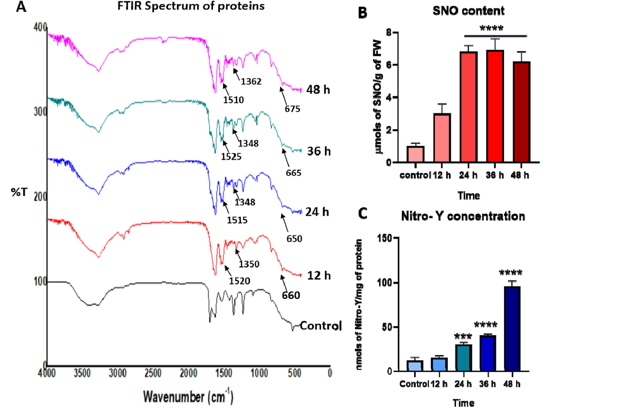 What happens to proteins as plant cells begin to die under salt stress? Ombale and colleagues explored this question in pea (Pisum sativum), focusing on two protein modifications, S-nitrosylation and tyrosine nitration, and how their patterns change during salt-induced programmed cell death (PCD). The researchers exposed pea plants to 150 mM NaCl and examined changes in cellular damage, oxidative stress, and photosynthesis over time. As salt exposure continued, reactive oxygen and nitrogen species accumulated, antioxidant defenses weakened, and cell death increased. Photosystem II was particularly vulnerable, showing a greater decline in activity than photosystem I. A striking observation was the difference in when the two protein modifications were detected. Proteomic analysis identified 40 candidate S-nitrosylated proteins across several time points, whereas 46 candidate tyrosine-nitrated proteins appeared only after 48 hours. Despite having no individual proteins in common, both groups included proteins involved in related cellular pathways, such as metabolism and signaling. Computational predictions also suggested differences in how accessible their potential modification sites were within protein structures. The study highlights how distinct patterns of protein modification accompany the progression of salt-induced cell death, raising new questions about their roles in plant stress responses. (Summary by Deborah Ighalo) J. Plant Physiol. 10.1016/j.jplph.2026.154916
Botrytis virulence enzyme degrades plant defense compounds
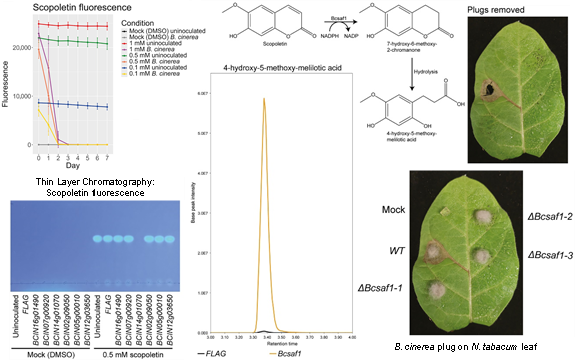 If you have ever bought berries and let them sit in the fridge for a little too long, you are probably already familiar with Botrytis cinerea, the humble grey mold. B. cinerea is a fascinating fungal pathogen with an arsenal of virulence proteins and toxins that contribute to its incredible success as a generalist on foliage, ornamental flowers, and fruit crops. Although plants make many defense compounds that inhibit most fungi, B. cinerea is able to overcome these defenses. Piro et al. examined how it evades the plant defense compound scopoletin, a coumarin-family compound made by many plant genera. In most fungi, scopoletin inhibits fungal spore germination and the formation of infection structures. The authors confirmed that B. cinerea can degrade scopoletin in artificial media and, via a metabolite-transcriptomic co-expression analysis, identified BCIN14g01070 (ABC transporter Bcsaf1) as the gene responsible for scopoletin detoxification. They determined that Bcsaf1 orthologs are found in related pathogenic fungi and share similar enzymatic activity that degrades the coumarin backbone. Finally, Piro and colleagues demonstrated that Bcsaf1 is necessary to completely detoxify scopoletin and for virulence on scopoletin-producing plants like Nicotana tabacum. Interestingly, the ∆Bcsaf1 mutation slows but does not completely nullify scopoletin detoxification by B. cinerea, suggesting that additional work is needed to fully understand the role of Bcsaf1 in B. cinerea growth and virulence across plant hosts. Summary by Iris Mollhoff (@iris.mollhoff) MPMI. 10.1094/MPMI-05-26-0041-R
All roads lead to TOR: Virus-induced fungal genes metabolically converge on TOR signaling
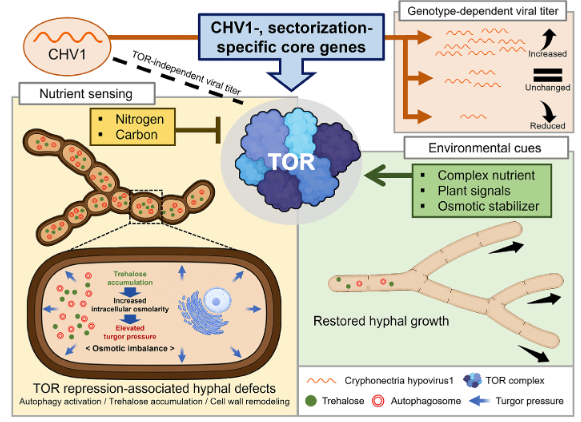 Cyphonectria parasitica is a fungal pathogen responsible for chestnut blight that shows reduced virulence upon infection with Cryphonectria hypovirus 1 (CHV1). Ko and Chun et al. analyzed 12 fungal genes representing diverse protein groups that are upregulated upon CHV1 infection. Interestingly, knocking out any of the 12 genes in Cyphonectria led to a common phenotype of restricted colony growth and reduced conidiation. Additionally, the mutants were sensitive to both carbon and nitrogen sources and limitation. Reduced growth and nutrient sensitivity are regulated by the master regulator TOR pathway, hence the authors tested for trehalose accumulation, a canonical response to TOR inhibition. The mutants accumulated trehalose and showed autophagy that is independent of CHV1. These observations suggest that disruption of these CHV1-responsive genes leads to similar cellular, metabolic and developmental outcomes including inhibition of the TOR pathway, thereby regulating fungal growth. (Summary by Atharv Ambekar) New Phytol. 10.1111/nph.71631
Putrescine (Put) protection: Genetically engineering Arabidopsis to be stress resistant during spaceflight by increasing Put
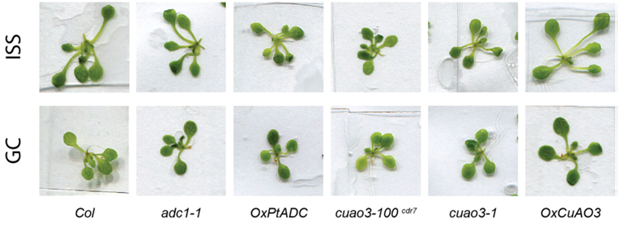 Polyamines such as putrescine (or put), which play essential roles in plant growth, development, and overall success, have been proposed as candidates for metabolic alteration and optimization to enhance plant stress resilience. Growing crops in space will be necessary to support astronauts by providing food, water cycling, oxygen, and waste decomposition, as well as natural materials such as medicines, through future self-sufficient Bioregenerative Life Support Systems (BLSS). However, many challenges remain in achieving full plant potential under the stresses of spaceflight, including microgravity and radiation exposure, both of which significantly influence plant phenotype and genotype. To increase the accumulation of Put in plant tissues and assess its impact on plant stress and growth, Su and Masson modified the Put metabolic pathway in Arabidopsis through two avenues, firstly by increasing expression levels of ARGININE DECARBOXYLASE (ADC) from Poncirus trifoliata in overexpression lines (OxPtADC), and secondly by knocking-out Copper-AMINE OXIDASE3 in mutant lines (cuao3). Using Golden gate cloning to create the constructs and Agrobacterium-mediated transformation, the scientists observed that both genetically engineered lines had fewer Differentially Expressed Genes (DEGs) than wild type, while Gene Ontology (GO) enrichment analysis showed fewer oxidative stress and hypoxia genes being sensitive to the spaceflight environment. Furthermore, the lines did not demonstrate the extended petiole phenotype typically seen in plants under hypoxic conditions. These findings suggest a potential path forward for generating stress tolerant plants engineered for the spaceflight environment. (Summary by Ruth Nichols ) npj Microgravity. 10.1038/s41526-026-00663-4
