

Plant Science Research Weekly: July 18, 2025
Review: Harnessing the power of gene regulatory networks for crop improvement
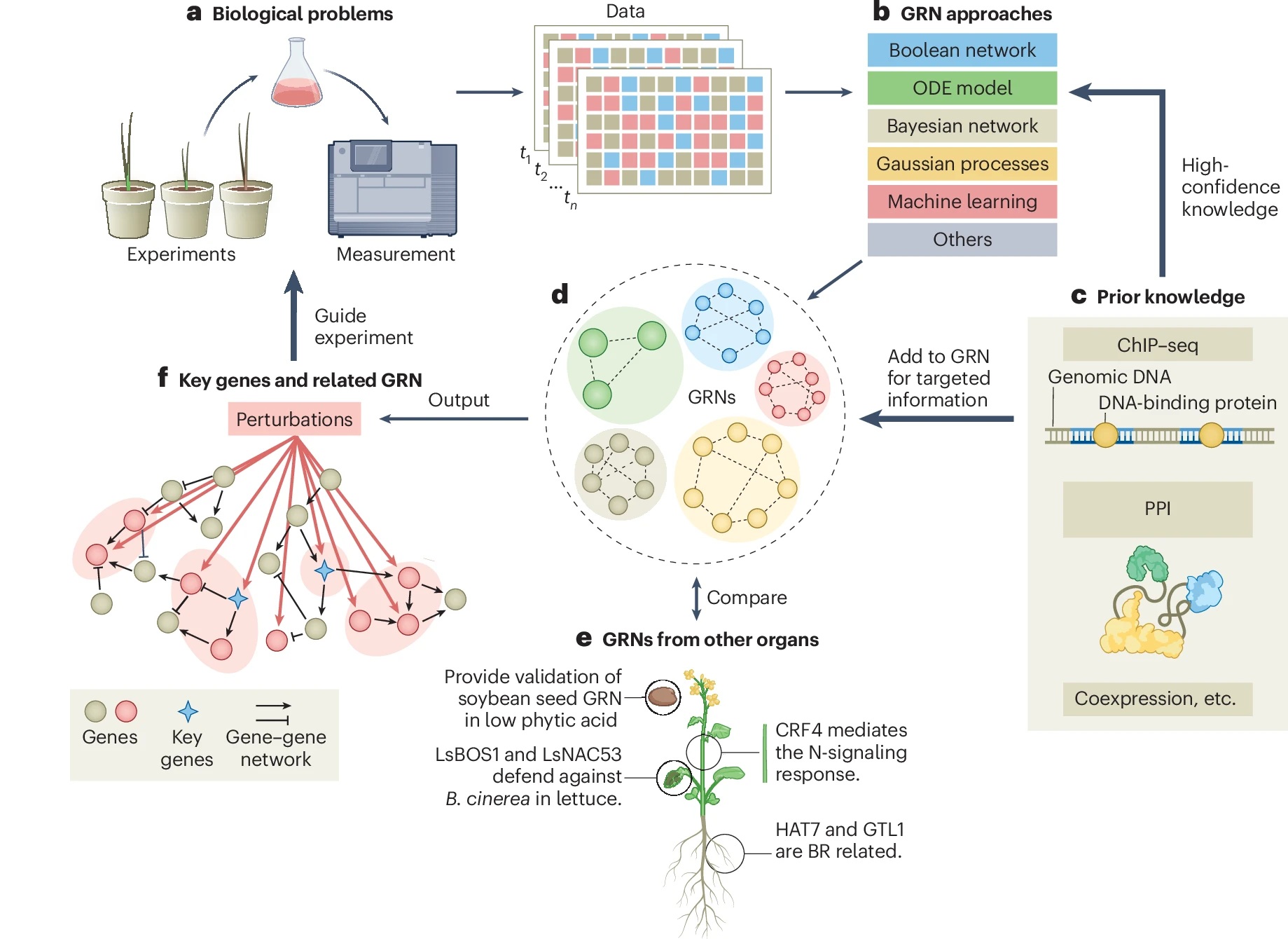 The number of large molecular plant datasets seems to be growing exponentially. With this growth comes an urgent need for researchers to understand how these datasets should be analyzed and integrated to get accurate understandings of what they represent. This fine article by Leong et al. is a good place to start. Trying to build a model of gene regulatory networks is challenging when the data available are limited and inconsistent. For example, many studies look at transcriptional time courses following a stimulus, but a course time series can miss critical short-lived events. Furthermore, mRNA levels are not tightly correlated with protein levels or even protein function, yet we often interpret them in this way. Another challenge lies in integrating datasets across species boundaries. The authors describe several considerations and strategies for identifying and analyzing gene regulatory networks, including a discussion on how these findings can be applied to improve crops through genome editing and synthetic biology approaches. (Summary by Mary Williams @PlantTeaching.bsky.social) Nature Biotechnol. 10.1038/s41587-025-02727-4
Review. Root growth under phosphorus deficiency: Revisiting the role of TOR signaling
 While phosphorus (P) ranks the second most essential mineral nutrient for plant growth, its availability in natural soils is often very low. To cope with this limitation, plant roots have evolved sophisticated molecular mechanisms and phenotypic plasticity to maximize root surface area and enhance P uptake—typically by promoting lateral root and root hair proliferation at the expense of primary root elongation. Several key regulatory nodes have been implicated in the adaptive response to P deficiency, including the phosphate starvation response (PSR) signaling network, the Target of Rapamycin (TOR) pathway, hormonal regulation, and, interestingly, iron (Fe) homeostasis. Focusing on TOR signaling and Fe, Choi and colleagues revisit root growth regulation under P deficiency and propose new perspectives. It has long been observed that P deficiency is accompanied by Fe accumulation in the root, a correlation that may contribute to toxicity symptoms and restricted root growth. More recent studies, however, have looked deeper into the molecular mechanisms, suggesting that Fe, among other regulators, modifies cell wall structure to constrain meristem size, thereby reinforcing growth limitation. Additionally, Fe seems to be required for the proliferation of lateral roots via a TOR-requiring, auxin-dependent mechanism. Although TOR has been implicated in diverse environmental responses, it remains unknown how these diverse pathways interact with TOR. Consequently, the precise roles of these known regulatory nodes—and their potential interactions—remain unresolved, presenting new opportunities for research and application. (Summary by Ching Chan @ntnuchanlab) J. Exp. Bot. 10.1093/jxb/eraf204
When binding isn’t enough: Predicting TF activity through genomic neighborhoods
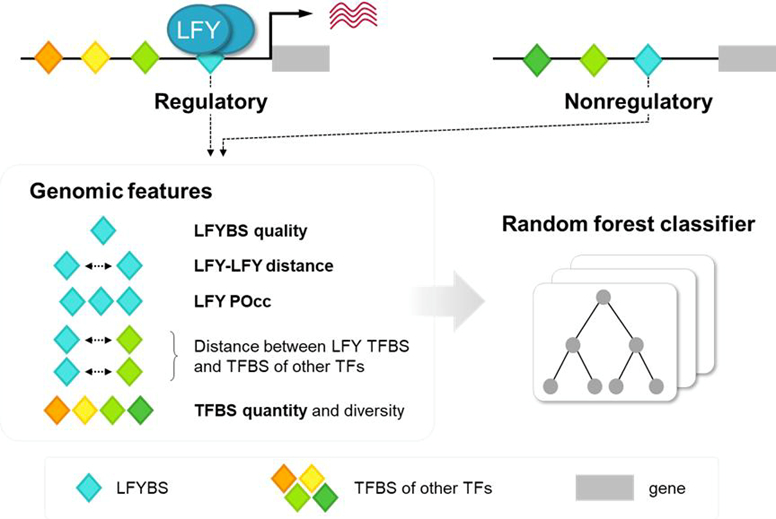 Transcriptional regulation is fundamental for coordinating cellular activities in response to developmental programs and environmental cues. Certain transcription factors (TFs) control the expression of hundreds of genes and are thus considered especially important — these are referred to as master regulators. However, predicting the regulatory activity of a TF remains challenging. While techniques such as ChIP-seq and DAP-seq are routinely used to identify TF binding sites, many of these sites may be non-regulatory. Temporal and tissue-specific expression adds further complexity to sampling and interpretation. Turchi and colleagues addressed this issue by adopting a new machine learning model that uses “genomic context” as input. This model incorporates not only the predicted TF binding sites and their spacing but also — crucially — the presence of other TFs that may influence the activity of the target TF. Using LEAFY (LFY) — a master regulator of flower development in Arabidopsis — as a case study, the authors constructed a dataset to evaluate the model’s ability to distinguish between regulatory and non-regulatory LFY binding sites. Their results show that incorporating genomic context features significantly improves predictive performance over traditional models that rely solely on TF occupancy or position weight matrices. This study offers new insights into how TF activity is regulated and how interactions among TFs contribute to gene expression control. (Summary by Ching Chan @ntnuchanlab) bioRxiv 10.1101/2025.05.23.655699
Directed evolution reveals pD1 mutations that boost photosynthesis under salt stress
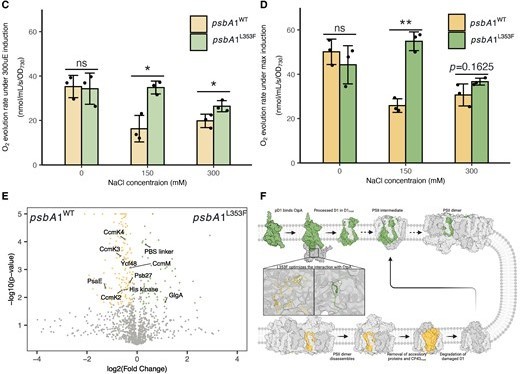 Improving photosynthesis under abiotic stress is essential for enhancing crop productivity. Here, Jiang et al. used short-term accelerated evolution in the cyanobacterium Synechococcus elongatus to uncover genetic mutations that enhance photosynthesis under salt and light stress without compromising growth. Using a hypermutator strain with conditionally suppressed DNA mismatch repair, the team conducted three rounds of directed evolution and screened over 10,000 mutants. Eight elite strains were identified with improved biomass or sucrose productivity under salt stress. Genome sequencing revealed mutations primarily in coding regions, including a consistent cluster of missense mutations at the C-terminal tail of the D1 protein (encoded by psbA1), a key component of photosystem II (PSII). Functional validation showed that L353F, I358N, and H359N mutations in the D1 precursor protein (pD1) increased salt and light stress tolerance likely by enhancing pD1 cleavage efficiency and PSII repair dynamics. These mutations improved photosynthetic capacity and stability, as confirmed by growth assays, oxygen evolution rates, pigment content, and proteomic profiling. Notably, one mutation (H359N) occurs widely across cyanobacteria and red algae, while others (L353F, I358N) are rare or novel, suggesting both conserved and previously untapped mechanisms for stress adaptation. This approach demonstrates that beneficial single-nucleotide changes can enhance both photosynthetic efficiency and stress resilience without compromising growth. The findings provide a blueprint for translational efforts to improve photosynthesis in crops by targeting D1 processing, with implications for future stress-tolerant bioengineering strategies. (Summary by Muhammad Aamir Khan @MAKNature1998) Plant Physiol. 10.1093/plphys/kiaf209
Put your best root forward: How hydrotropism cannibalizes gravitropism to orient root growth towards moisture
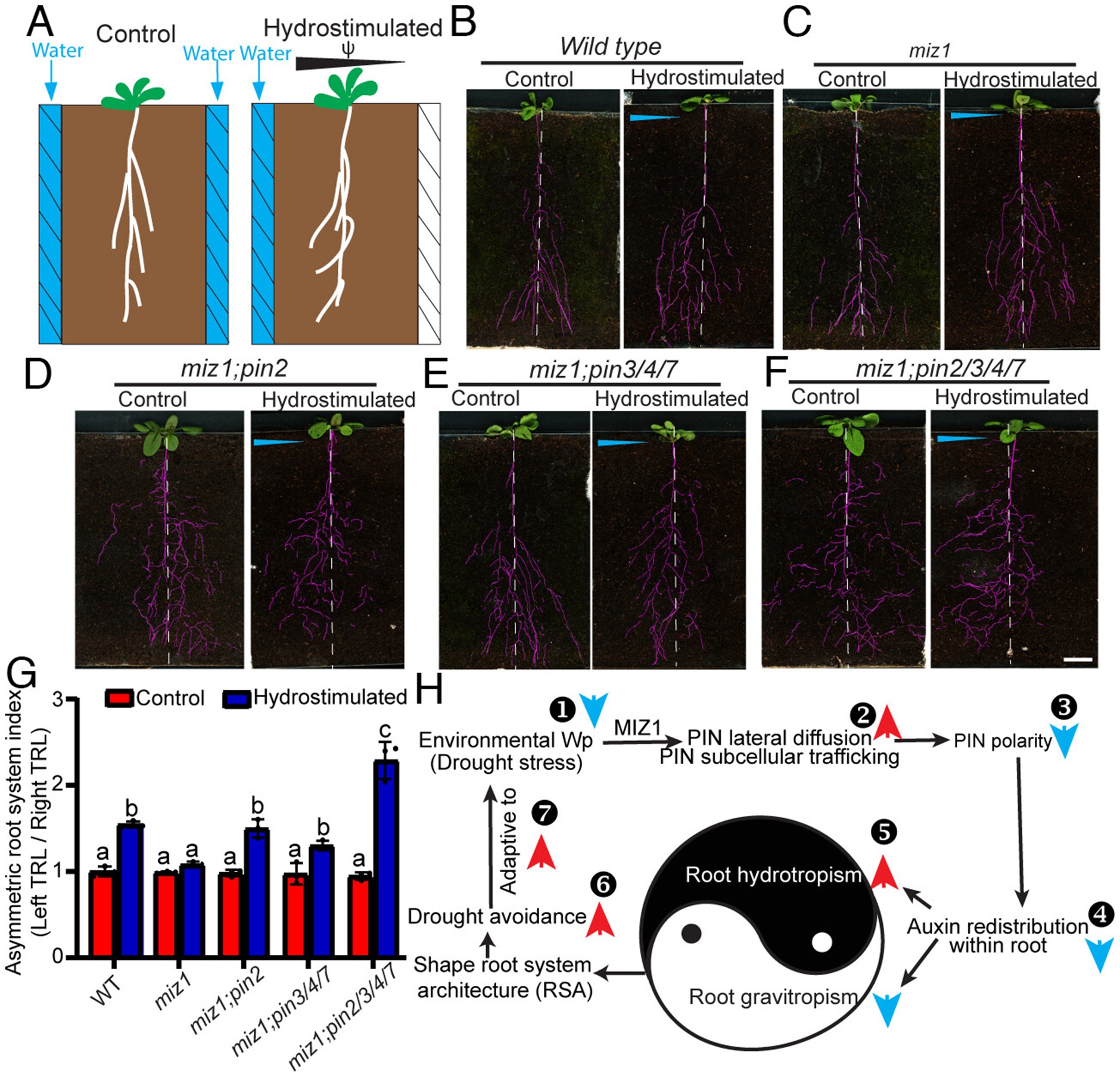 While root gravitropism (growth towards gravity) has an extended history of in-depth research, less is known about root hydrotropism (growth towards water) and about how these two potentially conflicting processes interact with each other. Since soil water distribution is often heterogeneous, plant roots must be able to sense moisture gradients and grow toward areas of higher water potential. This directional growth does not always align with the downward pull of gravity, indicating a potential conflict or interaction with the gravitropic response. Zhang et al. showed that hydrotropism co-opts gravitropism machinery in order to override the latter’s effects on root growth. Mutants of the hydrotropism regulator, MIZU-KUSSEI 1 (MIZ1) do not avert root growth away from sorbitol-infused agar that simulates osmotic stress. Using a clinorotation treatment that simulates microgravity by rotating plants, the authors found that miz1 mutants lose, at least in part, their ability to orient root growth towards gravity, demonstrating crosstalk between gravitropism and hydrotropism. Through a series of expression studies and drought-simulation experiments, the authors concluded that plant roots can perceive decreases in environmental moisture and hijack PIN-FORMED (PIN) auxin efflux transporters to temporarily attenuate gravitropism in favor of seeking water. (Summary by Marvin Jin @MarvinJYS) Proc. Natl. Acad. Sci. USA 10.1073/pnas.2427315122
Gas as a messenger: How plants monitor their barriers
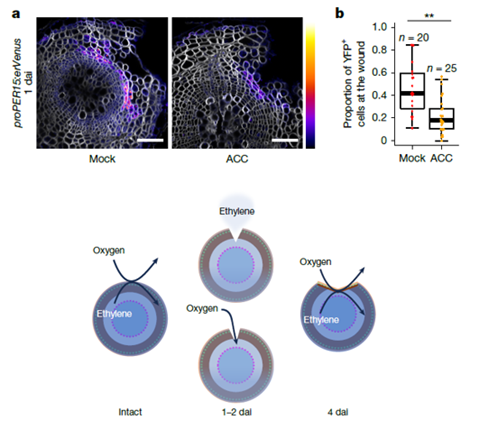 The periderm is a protective outer tissue formed during secondary growth in many seed plants, serving as a barrier against water loss and pathogen invasion. When damaged, it can regenerate to restore its protective function. However, the molecular and cellular mechanisms underlying periderm regeneration remain poorly understood. In this study, Iida et al. investigated periderm regeneration in Arabidopsis thaliana, examining morphological changes, periderm-specific gene expression, and the functionality of the re-established barrier after wounding. The authors found that ethylene signalling negatively regulates periderm regeneration. Treatment with ACC, an ethylene precursor, reduced the expression of key periderm genes and impaired the formation of suberized cell layers. Wounding caused a decrease in ethylene signalling, as ethylene gas diffused out through the injury site. This loss of ethylene appeared to initiate regeneration, and sealing the wound to block gas escape suppressed this response. However, since ethylene alone did not fully inhibit regeneration, the authors investigated the role of oxygen. Using hypoxia-responsive reporters and oxygen microsensors, they showed that wounding allows oxygen to enter the tissue, reducing hypoxia signalling and promoting regeneration. Through gene expression analyses and chemical treatments, they demonstrated that ethylene and hypoxia signalling act additively to inhibit regeneration, and that restoration of the barrier limits gas diffusion, helping terminate the regenerative process. Finally, similar gas-mediated monitoring was observed in wounded inflorescence stems, though possibly involving other volatile signals. Together, these findings reveal a novel gas-based mechanism for monitoring barrier integrity in plants, where ethylene and oxygen create a permissive environment for regeneration, likely acting together with cues from peptides, hormones, or mechanical stress. (Summary by Elisa De Meo, www.linkedin.com/in/elisa-de-meo-25415a20b) Nature, 10.1038/s41586-025-09223-4
The hidden power of water in plant regeneration
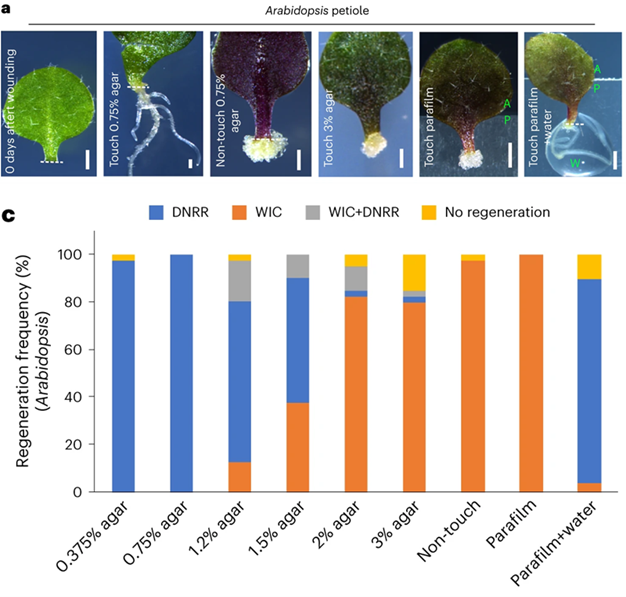 Plants are renowned for their remarkable ability to regenerate tissues and organs. Two typical regeneration pathways—de novo root regeneration (DNRR) and wound-induced callus (WIC) formation—enable recovery from injury but involve entirely different cell fate outcomes. These processes also form the foundation for tissue culture techniques used in plant transformation. A simple yet often overlooked factor that determines regeneration efficiency is water availability. To illustrate this, Kareem and colleagues used detached Arabidopsis leaves—which rely heavily on water signals to maintain cell viability—to investigate the key determinants of regeneration outcomes. One might expect that physical contact and nutrient availability from the culture matrix would promote DNRR. Surprisingly, however, the authors found that either non-contact conditions or contact with a 3% agar matrix (low water availability) led to WIC formation, but not root regeneration. In contrast, contact with a 0.75% agar matrix (high water availability) or direct water supply successfully induced DNRR. These findings reveal that water availability is a major factor dictating plant regeneration fate. Through a combination of reporter lines, mutants, and microscopy, the authors further demonstrated that external water signals are integrated into the auxin signaling cascade, triggering polar auxin transport and ultimately determining whether root regeneration or callus formation occurs at the wound site. (Summary by Ching Chan @ntnuchanlab) Nature Plants 10.1038/s41477-025-02029-2
Unusual cell death pathway in maize endosperm
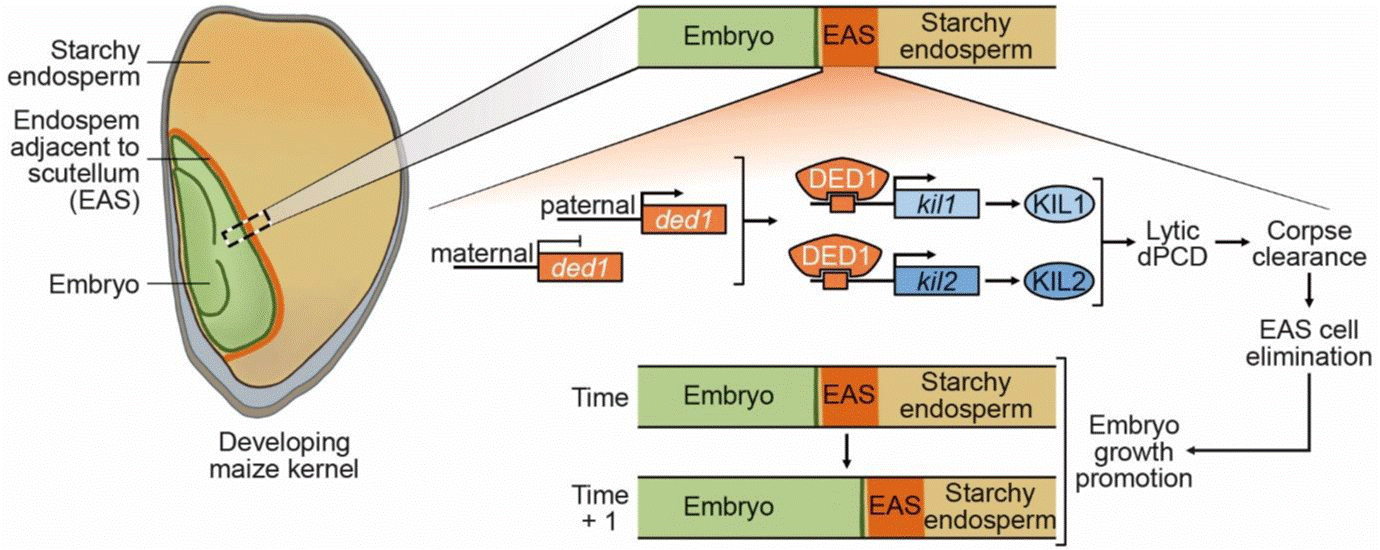 An interesting new study by Doll et al. addresses one of the most complex and important plant developmental processes, that of seed formation, with a focus on maize. Like other seeds, the maize seed (kernel) includes the next generation embryo, surrounded by various maternal tissues as well as the triploid endosperm that provide nutrients to the embryo before and after dormancy and germination. Unlike Arabidopsis seeds, where the endosperm degrades and transfers nutrients to the developing embryo prior to dormancy, in maize seeds the endosperm tissues persist. Although the cells of the endosperm die, the tissue only fully degrades and transfers nutrients to the embryo during germination. However, the maize endosperm is complex, and a distinct tissue type has been identified that is called the embryo-adjacent to scutellum (EAS) tissue. Using single-nucleus RNA sequencing, the authors found that this special region of the endosperm fully degrades, and in mutants that block this degradation embryo growth is inhibited – this tissue is reminiscent of Arabidopsis endosperm that degrades to provide space for the embryo to grow. Interestingly, this EAS degradation is regulated by a paternally expressed imprinted gene. This study raises the possibility of tweaking the developmental balance between embryo and endosperm to promote the food quality of corn kernels. (Summary by Mary Williams @PlantTeaching.bsky.social) Plant Cell 10.1093/plcell/koaf162
Herbivore bites promote plant growth in the succeeding year
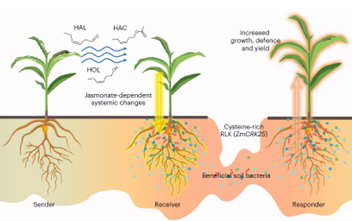 In Chinese, there is an old poem suggesting that livestock bites promote crop yield in the succeeding year. In this new work, Hu et al. provide evidence to support the traditional wisdom and propose the mechanism behind it. Previous studies showed that herbivore bites on leaves induce the release of volatiles, which activate jasmonate-dependent signalling in neighbouring plants and promote their immunity. The current study by Hu et al. suggests that the volatiles also promote plant growth in the succeeding year. The induced jasmonate-dependent signalling in the neighbouring plants alters rhizospheric microbiome structure to bring forth the lasting effect on plant growth through a process known as plant-soil feedback (PSF). The authors isolated the enriched rhizospheric microbes and showed that the microbes promote plant growth by reprogramming gene expressions in the roots. Using maize as the model, a plasma membrane-localized cysteine-rich receptor-like protein kinase (ZmCRK25) in root was identified as the mediator of the PSF. In addition to maize, such a PSF was also demonstrated in other crops including wheat, barley, rice, and tea. Providing a new insight, the current study shows that herbivore bites on leaves and the subsequent jasmonate-dependent signalling induced in the neighbouring plants can drive PSF, expanding the spatial and temporal dimensions of plant-plant interaction studies. (Summary by Yee-Shan Ku @YeeShanKu1) Nature Plants 10.1038/s41477-025-01987-x

