


Plant Science Research Weekly: January 16th, 2026
Founders review: Forty years of research into hormone mimics, inhibitors, and agrochemicals
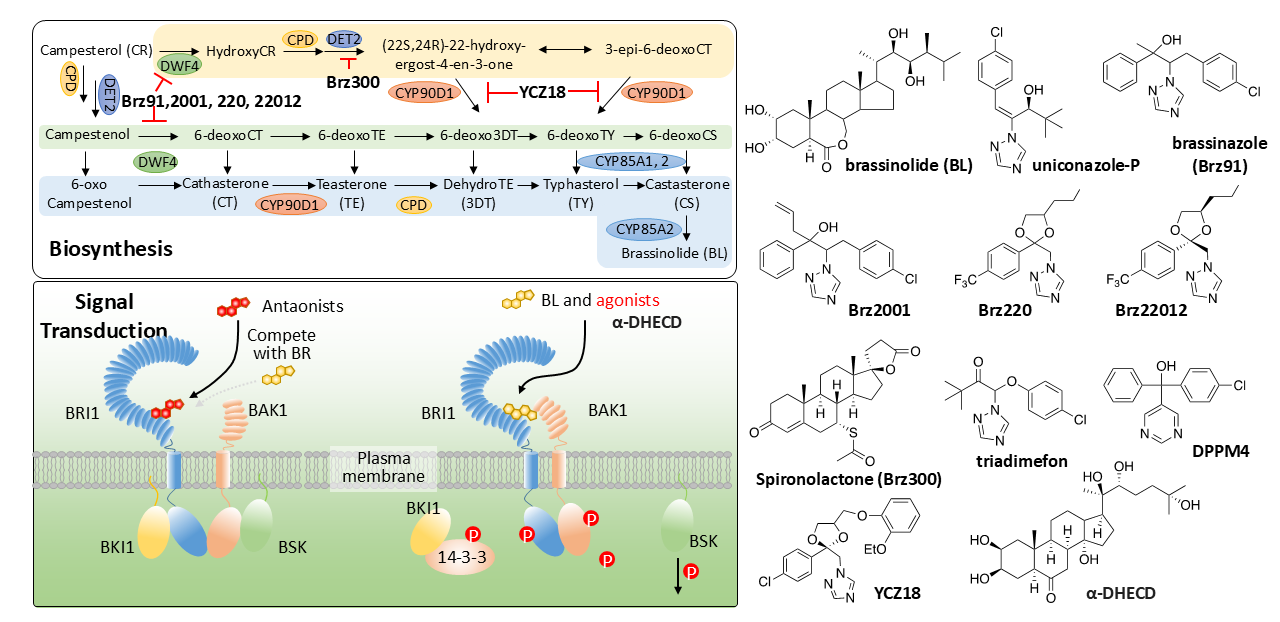 This review, by Tadao Asami, looks back at his career as a scientist who designs and synthesizes small, physiologically active molecules with applications in research and agriculture. It’s an impressive history documenting how the methods used for such rational design have evolved over the past five decades. He describes his research projects in terms of the hormone pathways they affect, including abscisic acid, brassinosteroids, strigolactones, ethylene, gibberellins, and salicylic acid. Each story starts with a discussion of what the hormone does in plants, what was known at the time he started working on it, what is known now, and a description of how the research team went about designing and synthesizing small molecule agonists or antagonists. In some cases the researchers set about synthesizing molecules that are structurally similar to the hormone and tested them for biological activity. Other projects started with the known structure of a protein that binds the hormone, and set about designing molecules that would interact with the hormone-binding site. Still others began with a chemical library screen. I recommend this article to all who are interested in plant hormones, small molecule design, or any aspect of plant physiology. (Summary by Mary Williams @PlantTeaching.bsky.social) Plant Physiol. 10.1093/plphys/kiaf403
Review: RUBY: a genetically encoded visible reporter for plant biology
 A major challenge in plant biology is observing molecular events. Reporter systems such as GUS and GFP have underpinned breakthroughs in gene regulation, cell signalling and development, yet each has its constraints: Fluorescent proteins demand microscopes and low background autofluorescence, and GUS requires destructive staining. To overcome these limitations, researchers repurposed betalain biosynthesis (the pigment that makes beet red). The result, RUBY: a single polycistronic cassette encoding CYP76AD1, DODA and a glucosyltransferase, all driven by the same promoter, which converts endogenous tyrosine into red–purple pigments visible to the naked eye. Since its first report by He et al. (2020), RUBY has been rapidly adopted in Arabidopsis, maize, rice, soybean, citrus, cotton and many other species. Its initial impact was the replacement of antibiotic and herbicide selection, but its remit has since broadened to report hormone response, RNA silencing, splicing, protein–protein/DNA interactions, distinguish haploids, and detecting chemicals. Because pigment accumulation can be seen within days using transient expression and quantified with simple solvent extraction, methods previously confined to specialised facilities can now be explored more widely. With RUBY, invisible gene activity turns into colour, allowing us to watch live molecular biology unfold at whole-plant scale. (Summary by Charlay Wood). Trends Plant Sci. 10.1016/j.tplants.2025.05.017.
A shape-shifting plant receptor expands the landscape of small-molecule sensing
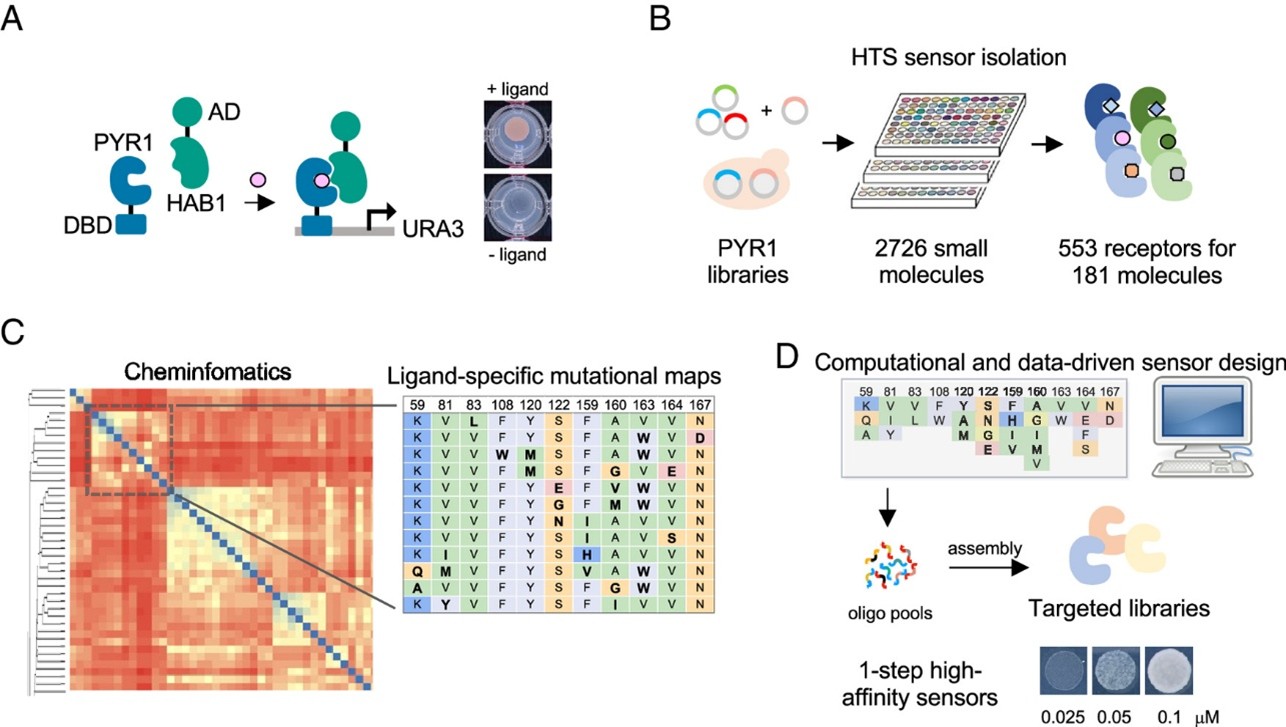 Designing small-molecule biosensors that are both sensitive and versatile remains a central challenge in synthetic biology, yet such tools are indispensable for environmental monitoring, cellular control, and emerging biotechnologies. In this study, Tian and colleagues exploit an unexpected feature of the plant abscisic acid receptor PYR1: its remarkable capacity to accommodate chemically diverse ligands. Previously, as a sensor scaffold for cannabinoids and pesticides, PYR1 demonstrates an unusually malleable ligand-binding pocket that can be reshaped to recognize structurally unrelated compounds. To systematically define the binding scope of PYR1, the authors generated a mutant library and coupled ligand recognition to a yeast reporter system. Upon ligand binding, PYR1 interacts with its effector protein HAB1, activating a pathway that rescues uracil auxotrophy. Screening this system against a diverse panel of 2,726 FDA-approved drugs and natural products yielded 553 functional sensors, corresponding to 6.6% of the tested molecules. Notably, environmentally significant ligands such as the explosive 2,4,6-trinitrotoluene (TNT) and persistent “forever chemicals” known as per- and polyfluoroalkyl substances (PFAS) emerged as prominent targets. Using the mutant collection, the authors further identified high-affinity receptors for these priority compounds. Collectively, this large-scale interaction dataset highlights PYR1 as a powerful and adaptable platform, opening new avenues for data-driven biosensor engineering and the rational design of receptors tailored to pressing environmental and technological needs. (Summary by Ching Chan @ntnuchanlab @ntnuchanlab.bsky.social) PNAS 10.1073/pnas.2519924122
TaMYB-D7 alleles mediate leaf pigmentation in response to nutrient status in wheat
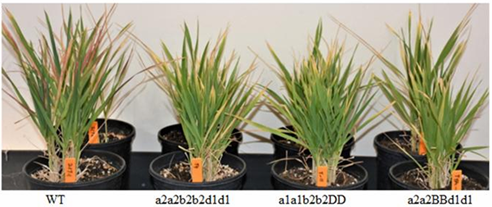 Nitrogen and phosphorus are essential macronutrients for wheat (Triticum aestivum L.) growth and development, and phosphorus deficiency is often associated with purple pigmentation in leaves due to anthocyanin accumulation. For farmers and growers, this pigmentation can be read as a sign of phosphorus deficiency. A recent study by Zhang et al. found that contrasting leaf colors in two wheat cultivars grown under low phosphorus and nitrogen conditions were due to a single nucleotide change in the TaMYB-D7 gene, resulting in an amino acid substitution. Cultivars carrying the TaMYB-D7b allele (Gly50) displayed a clear purple pigmentation response, whereas those harboring the TaMYB-D7a allele (Ser50) remained green.The researchers validated the role of TaMYB-D7 in regulating the purple phenotype by disrupting the three homeologous genes in the responsive cultivar. The edited plants did not accumulate purple pigments throughout their life cycle and showed reduced expression of chalcone synthase 2-like (TaCHSL2), a gene involved in purple pigment biosynthesis. Ultimately, this work has practical implications for breeding, highlighting the need to consider allelic differences in TaMYB-D7 to ensure that a green phenotype is not mistaken for nutritional sufficiency. (Summary by Flavia Darqui @flavia-darqui.bsky.social) Plant Physiology 10.1093/plphys/kiaf224
Membrane-associated proteins perceive and transduce early heat stress signals
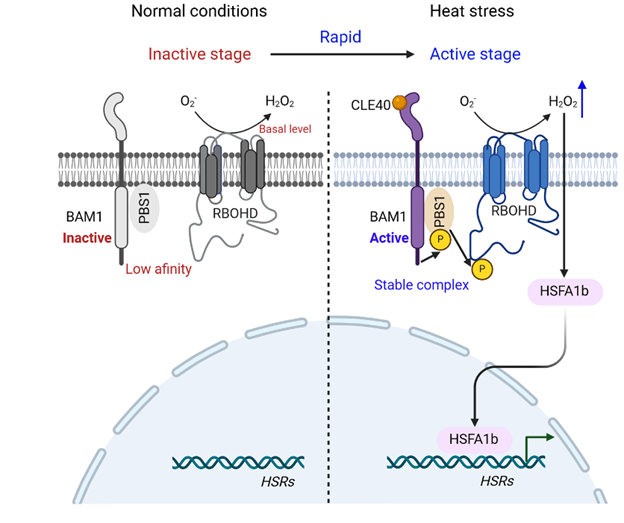 Elucidating the pathways in which plants can recognize and respond to heat stress is a key step in developing more resilient plants and crops. Work by Li et al. provides a more in-depth understanding of the early factors in heat stress-responsive (HSR) gene expression in Arabidopsis. They first identified BAM1 and PBS1, two Receptor-Like Kinases (RLK) associated with the plasma membrane. Through co-immunoprecipitation and bimolecular fluorescence complementation assays, they show that these proteins have limited interactions under standard temperatures but begin to interact quickly under high heat. The mechanism associated with the heat-induced interactions of these RLKs remains to be investigated, but analysis of transgenic plants showed that the peptide CLE40 increases BAM1 activity and promotes BAM1-PBS1 association. Regardless of the exact upstream factors, the BAM1-PBS1 complex produces phosphorylated PBS1 proteins. After phosphorylation, PBS1 then associates with the H2O2-producing protein RBOHD, enhancing RBOHD activity. This increases H2O2 levels within cells, activating the transcription factor HSFA1b by increasing protein stability and nuclear localization. RNA-seq data demonstrates that over 1,200 genes differentially expressed under heat stress occur through the BAM1-PBS1-RBOHD network, thus showing how early recognition of heat stress can remodel gene expression. This work provides a novel and robust understanding of plant thermotolerance, providing further evidence for a link between plasma membrane dynamics and heat-stress signaling. (Summary by Reed Arneson @Reed_Arneson) Molecular Plant 10.1016/j.molp.2025.10.021
Pollination before flowers: Infrared as ancient pollination cue
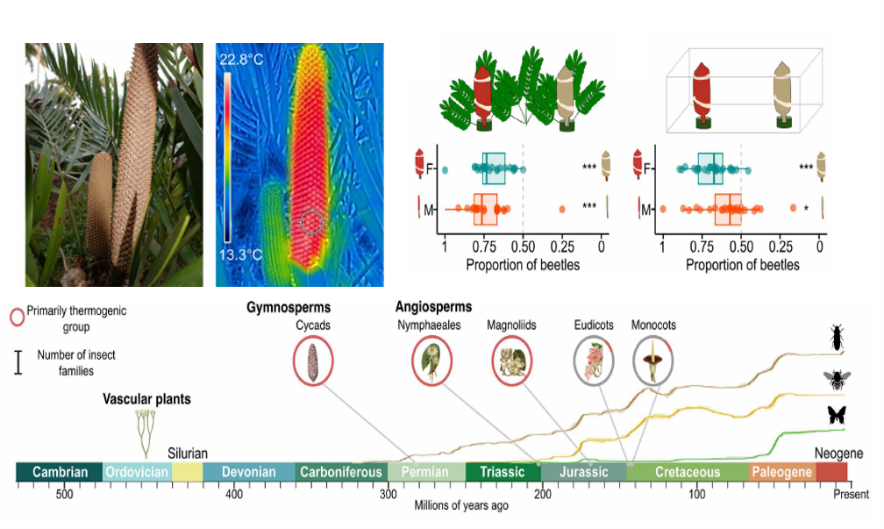 When we talk of pollination, we often imagine colorful flowers and scents that attract insects to the flowers. However, flowers are a hallmark of angiosperms. How cone-bearing gymnosperms attract their pollinators has been a long-standing question. In a recent study, Valencia-Montoya et al. investigated how cycads, one of the oldest living lineages of seed plants, are pollinated by insects (beetles). They found that heat, in the form of infrared radiations (IR), acts as an ancient pollination signal. Using thermal imaging, the authors showed that heat production in the cones is restricted to the sporophylls (reproductive organs), which are enriched in mitochondria and starch. This thermogenesis is the effect of upregulation of AOX1 in mitochondrial electron transport, which dissipates energy in the form of heat. Interestingly, cone heating follows a circadian rhythm, creating a thermal-based “push–pull” pollination system: males cones heat first to attract beetles for pollen collection, followed by thermogenesis in female cones to facilitate pollen transfer. Using 3D-printed cone models, the authors confirmed that beetles preferred models with higher temperature, and that touching the cones was not necessary. Scanning electron microscope further showed beetles antenna tips perceive IR signals via thermosensitive sensilla containing abundant neurons that respond selectively to warming. Removal of the antennae tip abolished responses to IR without affecting odor responses. A thermosensitive ion channel, TRPA1(B) expressed in antennal neurons was identified as key mediator of thermal sensing. Taken together, these findings suggest that IR signals predate colorful floral displays during pollination evolution. (Summary by Priyanka Babuta) Science 10.1126/science.adz1728
An antibody-based probe enables visualization of active viral replication in living cells
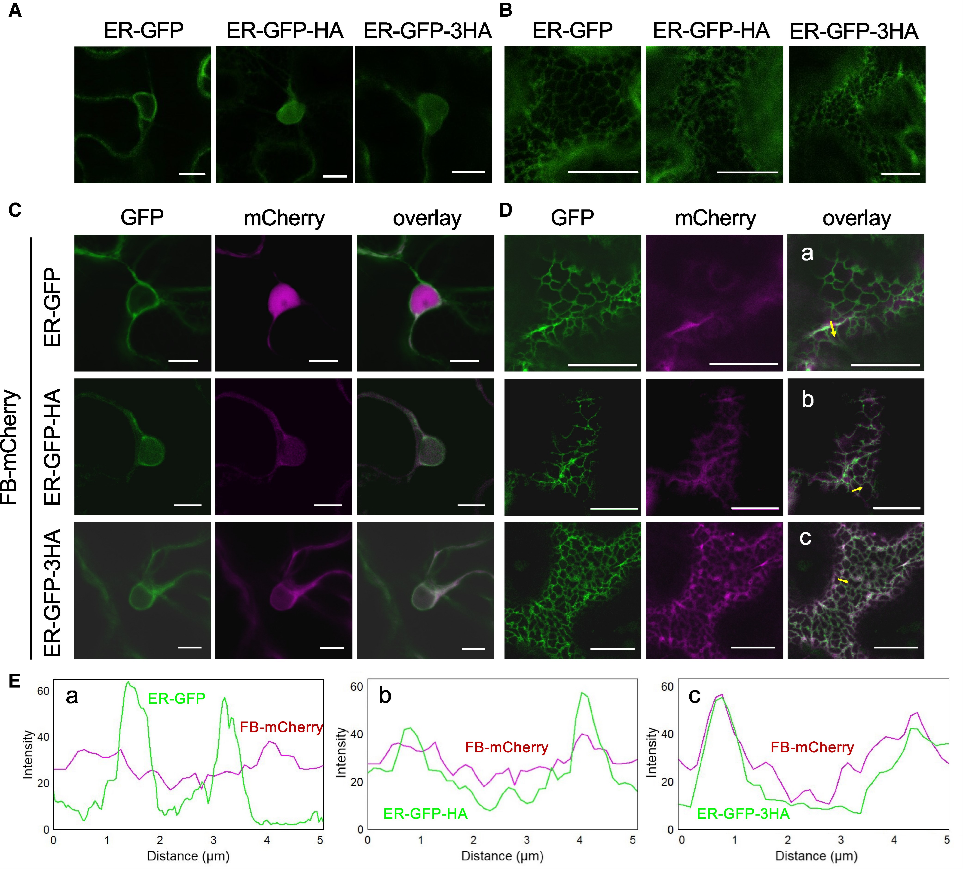 One of the main challenges in plant virology is detecting the active replicase enzyme of positive-strand RNA viruses in living cells, since adding fluorescent tags often prevents it from functioning. A recent study in Plant Physiology by Ishihara et al. has found a way around this problem. The researchers adapted the human influenza hemagglutinin (HA) frankenbody (FB), a genetically encoded single-chain antibody fragment that binds to a small HA epitope, for use in plant cells. They used a two-part, virus replication-inducible system so the FB-mCherry probe was expressed only in cells infected with Plantago asiatica mosaic virus (PlAMV). This approach kept probe levels under control and avoided background signals that could hide the specific labeling of an HA-tagged, fully functional viral replicase. Using live-cell imaging, they saw that the active PlAMV replicase forms small, distinct structures near the endoplasmic reticulum and plasmodesmata. These labeled granules were next to spots of double-stranded RNA, which is a sign of active viral replication, confirming they are real viral replication complexes. This FB-based system is the first flexible method for watching a working plant virus replicase in real time, and it could help researchers study how these complexes form and interact with the host cell. (Summary by Jahed Ahmed) Plant Physiol. 10.1093/plphys/kiaf240
Reprogramming plant development: How Ustilago maydis hijacks auxin signaling to build galls
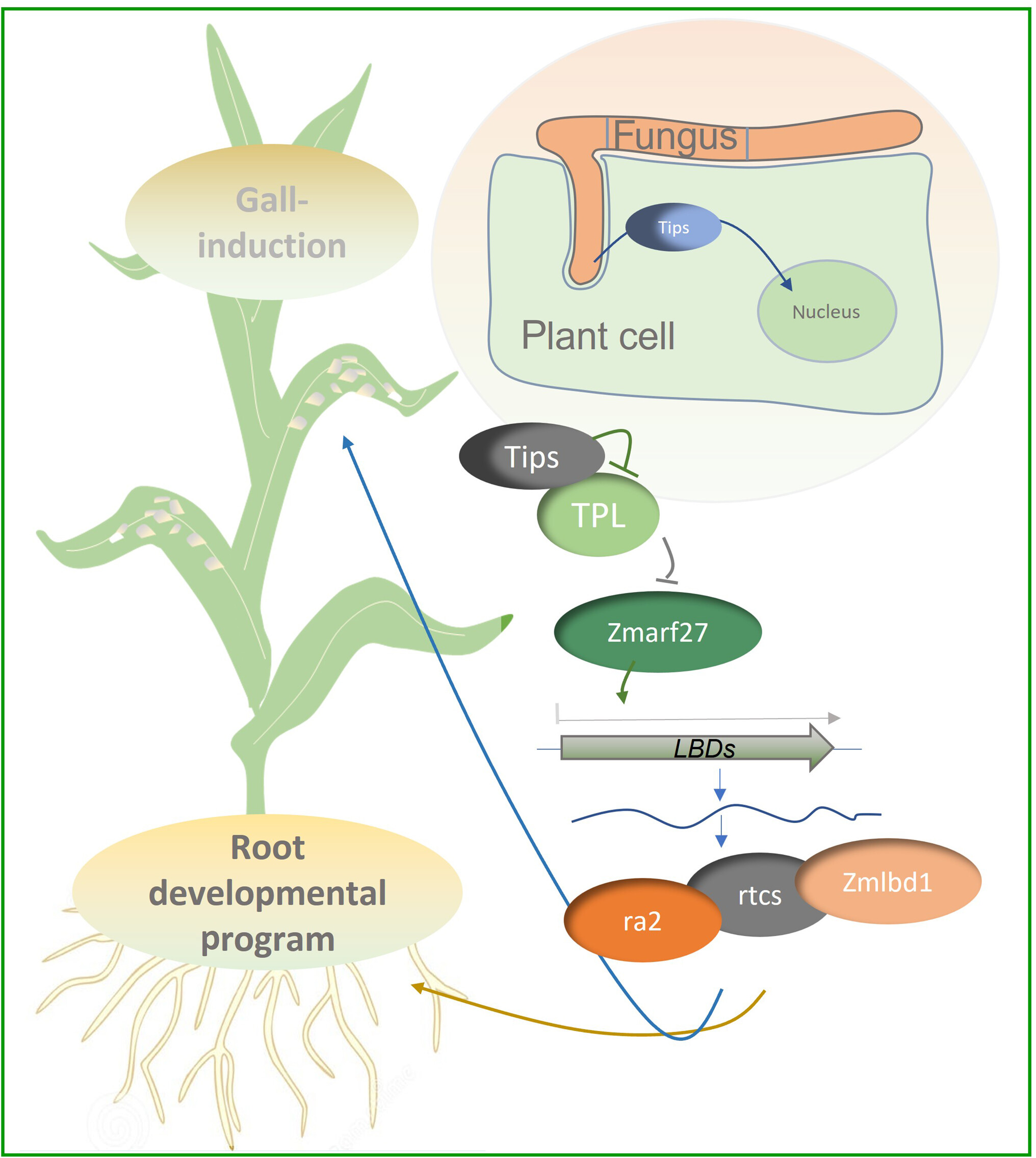 Plant pathogens often succeed not by brute force, but by subtly rewiring host developmental programs. Ustilago maydis, the basidiomycete fungus responsible for maize common smut, exemplifies this strategy by inducing tumor-like galls on aerial organs of its host. Although the U. maydis genome encodes hundreds of predicted secreted proteins, the effectors that directly drive gall formation have remained largely elusive. Previous work revealed that U. maydis infection elevates auxin levels in maize and that at least ten fungal effectors (including Tip proteins) converge on TOPLESS (TPL) transcriptional corepressors to modulate auxin signaling, a pathway essential for biotrophic growth. To dissect the downstream consequences of TPL interference, Khan and colleagues expressed individual Tip effectors in Arabidopsis. Tip induction caused chlorophyll loss, growth arrest, and alterations in root architecture. Based on their phenotypic outputs, the authors classified TPL-interacting effectors into two functional classes. Notably, class II effectors triggered hormone-independent, callus-like structures in roots that retained pluripotency and could regenerate shoots. Genetic analyses demonstrated that these phenotypes require ARF7/ARF19-mediated auxin signaling and involve transcriptional activation of LATERAL ORGAN BOUNDARIES DOMAIN (LBD) genes. Consistently, maize mutants in LBD homologs showed reduced gall formation. Together, this work reveals how fungal effectors hijack conserved auxin-TPL-ARF-LBD modules to reprogram host cell fate, opening new avenues to understand, and potentially disrupt, fungus-induced tumorigenesis in plants. (Summary by Ching Chan @ntnuchanlab @ntnuchanlab.bsky.social) New Phytologist 10.1111/nph.70843

