
ICAR2025 Workshop
At the International Conference on Arabidopsis Research (ICAR2025) in Ghent, the workshop “Resolving Heterogeneity in Plants with Imaging and Omics” brought together researchers from across the world to explore one of the most intriguing and rapidly evolving frontiers in plant science: cellular heterogeneity.
When we think of a single plant- or even a single leaf or root – we often imagine its cells working in unison. But the reality is far more complex. Even cells that look identical, with the same DNA and environment, can behave very differently. This variation -known as cellular heterogeneity – can take many forms. Two cells next to each other might express genes and proteins at completely different levels. Some cells might divide, while others stay dormant. Some might respond to environmental cues strongly, while others hardly react at all. Far from being just noise, this hidden diversity is increasingly seen as a fundamental aspect of how plants function, adapt, and survive. It shapes a wide range of processes from development to environmental responses. For decades, however, traditional microscopy and bulk omics approaches each captured only parts of this story: microscopy revealed individual cells with high spatial resolution but could track only a few molecular features, while bulk omics detected a wide range of molecules yet averaged signals across all cells, masking true diversity and spatial context that drive tissue function.
Today, tools like advanced imaging, single-cell (sc) sequencing, and spatial omics offer new ways to study the hidden diversity within plant tissues. By combining these approaches, researchers can uncover layers of cellular complexity, variation, and interaction that were hard to detect with traditional techniques. This makes it possible to ask deeper questions: How is heterogeneity generated? How is it regulated? And how does it help plants cope with a constantly changing world?
In this workshop, four invited speakers working at the forefront of these questions showcased how they are tackling these questions, from developing new methods to studying stress, development, and plant-parasite interactions.
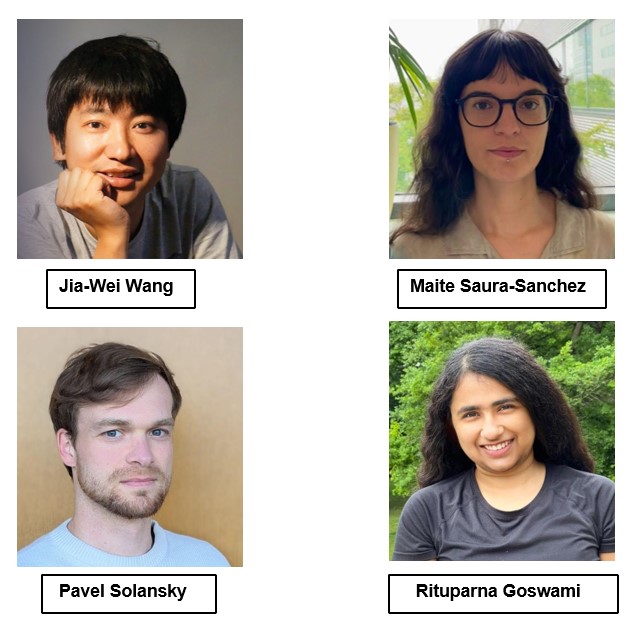
Jia-Wei Wang (CAS Center for Excellence in Molecular Plant Sciences, Shanghai, China) shared their newest study on scRNA-seq and comparative biology. He introduced an improved protoplast preparation method, FX-Cell, that facilitates scRNA-seq analysis in challenging plant species and tissues. By establishing single-cell transcriptome atlases across diverse vascular plant species, his team brings cross-species comparative transcriptomics to the cell-type level. Their work revealed a previously uncharacterized cell type in ferns and gymnosperms and identified cell type foundational genes associated with the major cell type of vascular plants, thereby accelerating gene discovery.
Maite Saura-Sanchez (VIB-UGentCenter for Plant Systems Biology, Ghent, Belgium) presented a compelling study that used scRNA-seq to reveal initial events during early stages of root-knot nematode infection. These parasites reprogram certain root cells into giant feeding cells, which are crucial for the nematode’s survival. By comparing infected and uninfected roots, the team found a distinct group of cells with unique gene expression profiles – likely the earliest steps in giant cell formation – and identified potential regulators. What makes this study particularly powerful is its cross-species perspective: the same types of transcriptional changes occurred in both Arabidopsis and rice, suggesting that plants might use shared molecular pathways to respond to nematode infection. This work provides a valuable set of molecular targets that could be used to develop nematode-resistant crop varieties in the future.
Pavel Solanský (The Center for Plant Molecular Biology (ZMBP), University of Tübingen, Germany) shared his PhD work titled “Transcriptomic Atlas Highlights the Dynamics and Regulatory Landscape of Early Leaf Development”. This work built a single-cell transcriptomic atlas of shoot apical meristem (SAM) to understand the early leaf development trajectory. Most notably, the atlas captured leaf founder cells in the SAM and revealed that their core transcription factor module synergistically regulates auxin response and the canalization of auxin transport through a feed-forward loop, offering a key molecular roadmap for understanding leaf organogenesis.
Rituparna Goswami (Sainsbury Laboratory Cambridge University, Cambridge, UK) closed the session by focusing on how plants may actively use heterogeneity as a strategy for stress survival. Her postdoctoral work focused on heat stress responses in Arabidopsis, tracking the expression of a stress-responsive gene by using fluorescent reporters. They found clear variation not only between plants but also among individual cells within the same plant: under identical conditions, some cells strongly activated the gene, while others remained inactive. So, where does this variation come from? Their results showed that it isn’t simply random noise. Instead, it reflects how the plant’s stress response network is wired, creating a spectrum of responses across cells. This cellular heterogeneity may itself be part of a protective strategy, giving plants flexibility to cope with unpredictable conditions. Rituparna’s work adds an important dimension to the workshop by highlighting the importance of understanding not just that plant cells vary, but how and why such variation is regulated.
Panel discussion – Current challenges and future directions
After the talks, the speakers were joined by Yanling Yu (University of Freiburg, Germany) and Simon Tack (Ghent University, Belgium) for an interactive open discussion. The first topic of the discussion was current technical limitations that make resolving heterogeneity challenging. The panelists highlighted that, despite rapid progress in single-cell and spatial techniques, isolating high-quality cells from complex plant tissues – especially in crops or field samples – remains a major hurdle. Different species and rare tissue types bring unique obstacles, and robust and accessible protocols are still missing for many systems.
What made this session especially valuable was how actively the audience engaged in the discussion. Several participants also openly shared their own technical struggles, which made it clear that many of these issues are shared and worth discussing together. This openness reminded everyone that progress depends not just on big discoveries, but also on solving everyday obstacles as a community.
The discussion closed with thoughts on what the next decade could bring in this field, including progress in spatial omics technologies, multimodal imaging, and making them more accessible for routine experiments. Many people also highlighted the importance of improving data analysis tools and skills, since making sense of increasingly complex single-cell and spatial datasets is becoming one of the biggest challenges. And as one of the participants reminded us, clear standardized protocols will be just as vital as the tools themselves for turning this hidden variation into a deeper understanding of how plants grow, adapt, and thrive.
Closing thoughts
This workshop brought together inspiring talks that shed light on plant heterogeneity and a lively discussion about the shared hurdles, ideas, and future directions for this field. A great turnout made the session feel genuinely worthwhile and was a clear sign that this topic is gaining real interest among researchers.
There is still so much more to learn about the role of cellular heterogeneity in plants, but the energy and openness we saw at the workshop showed that this community is ready to keep pushing these questions forward. Combining advanced imaging and omics will be essential for uncovering the patterns within this complexity, and for turning this hidden variation into deeper insights about how plants grow, adapt, and thrive.
______________________________________________
About the Authors
Hantao Zhang is a first year Ph.D. student in Peking University National Biomedical Imaging Center. He is specializing in plant multimodal imaging and plant cell biology. He hopes to use various imaging techniques to solve biological problems in plant development. You can connect him with: [email protected].
As a co-organizer of this workshop, Hantao gained a lot of expertise in conference organization and research. He believes he learnt the workshop’s basic elements and processes, realizing that a successful conference needs organizers to discuss many aspects and handle many. Accurate time estimation and control are crucial, as only when every part goes as planned can we better retain the audience. He met with more outstanding researchers in the field and expanded his knowledge, and anticipates that this experience will benefit his future work and study.
Katarína Heldesová is a Ph.D. candidate at the Plant Science and Biodiversity Centre, Slovak Academy of Sciences. Her research focuses on plant cell wall dynamics. She develops novel molecular probes and applies imaging approaches to explore how cell wall polysaccharide remodeling drives plant developmental processes. Connect on LinkedIn: Katarína Heldesová | X: @Katka_Heldesova
As a PhD student, co-organizing this workshop was both exciting and rewarding for Katarina. She is incredibly grateful to be invited by organizers Tatsuya Nobori (The Sainsbury Laboratory, Norwich, UK) and Ignacio Rubio-Somoza (CRAG, Barcelona, Spain) to help shape a space for discussion on a topic that’s gaining real momentum in plant science. On a practical level, helping to run this session taught her a lot about the behind-the-scenes side of science – from communicating with speakers and planning the flow of talks, to finding ways to make everyone feel included in the discussion. She says it was a chance to build skills that she couldn’t receive by doing experiments at my bench. She stresses the need for such spaces to bring people together across methods and topics because she believes that’s where new questions (and maybe even some answers) often start.

