


Recognizing Plant Cell authors: Bastian Oldenkott
The Plant Cell, The Plant Cell: Author ProfilesBastian Oldenkott, first author of Reciprocal complementation with moss and angiosperm editing factors
Current Position: PhD Candidate in the Department for Molecular Evolution belonging to the Insitute for Cellular and Molecular Botany (IZMB) of the Rheinische Friedrich-Wilhelms-Universität Bonn
Education:…

2-in-1-GEFIs: Biosensors for two plant signals at one time
Research, The Plant Cell, The Plant Cell: In a NutshellWaadt et al. use a suite of genetically encoded biosensors to monitor signaling compound concentration changes and how they overlap in time and space. Plant Cell https://doi.org/10.1105/tpc.19.00892
By Rainer Waadt
Background: To survive, plants need to sense the environment and adjust their growth…

Recognizing Plant Cell authors: Jiaqi Sun
The Plant Cell, The Plant Cell: Author ProfilesJiaqi Sun, first author of LUNAPARK Is an E3 Ligase that Mediates Degradation of ROOT HAIR DEFECTIVE3 to Maintain a Tubular ER Network in Arabidopsis
Current Position: Post-Doc Research Fellow, Biology Department, McGill University
Education: B. Sc. in Agriculture from Zhejiang University, China;…

Recognizing Plant Cell authors: Fugui Zhu
The Plant Cell, The Plant Cell: Author ProfilesFugui Zhu, first author of A CEP Peptide Receptor-like Kinase Regulates Auxin Biosynthesis and Ethylene Signaling to Coordinate Root Growth and Symbiotic Nodulation in Medicago truncatula
Current Position: Postdoc, China Agriculture University
Education: Ph.D. in China Agriculture University; B.S.…
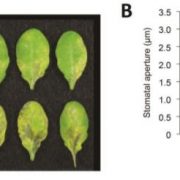
No Entry: SIF2 Closes Stomatal “Doors” to Bacteria by Making Guard Cells SLAC(1)
Research, The Plant Cell, The Plant Cell: In BriefBacteria use stomatal pores as a point of entry to invade plant leaves. As a first line of defense, plants attempt to counteract this attack by restricting bacterial entry simply by closing the stomata. This happens via reduction in turgor pressure of the two guard cells flanking the stomatal pore, the…

How a motor keeps its track from wandering
Research, The Plant Cell, The Plant Cell: In a NutshellGanguly et al. establish that a transporter protein helps stabilize cell wall deposition sites.
Plant Cell https://doi.org/10.1105/tpc.19.00700
By Anindya Gangulya and Ram Dixit
Department of Biology and Center for Engineering Mechanobiology, Washington University in St. Louis, MO 63130, USA
a…

It takes two to tango: two GNOMs have to activate ARF1 together
Research, The Plant Cell, The Plant Cell: In a NutshellBrumm et al. investigate how the protein GNOM activates dimers of the small GTPase ARF1 and inserts them very close to each other during vesicle formation. The Plant Cell (2020) https://doi.org/10.1105/tpc.20.00240
By Sabine Brumm 1,2 and Gerd Jürgens 1, ZMBP, University of Tübingen (1), Sainsbury…

How Do Plants Adapt to Dark and Bright Light Conditions?
Research, The Plant Cell, The Plant Cell: In a NutshellKimura et al. illuminate a molecular mechanism to allow germinating seedlings of Arabidopsis thaliana to adapt to dark and bright light conditions during hypocotyl phototropism. Plant Cell https://doi.org/10.1105/tpc.19.00926
By Taro Kimura and Tatsuya Sakai; Graduate School of Science and Technology,…
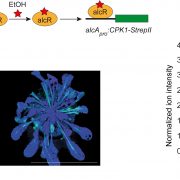
Calcium signaling in senescence
Research, The Plant Cell, The Plant Cell: In a NutshellDurian et al. searched for phosphorylation substrates of Arabidopsis CALCIUM DEPENDENT PROTEIN KINASE1 and found that it phosphorylates ORE1, a master regulator of senescence, demonstrating a link between calcium signaling and cell death. Plant Cell https://doi.org/10.1105/tpc.19.00810
By Guido…