

New Phytologist Tansley Medal finalists essays
Plant Science Research Weekly, Research0 Comments
/
The New Phytologist Tansley Medal is awarded to an early career scientist for excellence in plant science. The essays submitted by each of the five finalists are published in the March 2017 of New Phytologist, and make good reading. We agree with the sentiments of the editors, “warmest congratulations…

Recognizing featured Plant Cell first authors, January 2017
Research, The Plant Cell, The Plant Cell: Author Profiles
Recently, we’ve been profiling first authors of Plant Cell papers that are selected for In Brief summaries. Here are the first-author profiles from the December issue of The Plant Cell.
Michael Sandmann, featured first author of Targeting of A. thaliana KNL2 to centromeres depends on the conserved…
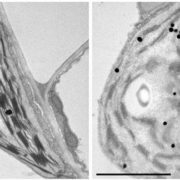
Photodamaged Chloroplasts Are Targets of Cellular Garbage Disposal
Research, The Plant Cell, The Plant Cell: In BriefIN BRIEF by Gregory Bertoni [email protected]
Autophagy, or "self eating," is the process cells use to consume unwanted intracellular structures such as damaged organelles, excess membranes, and unneeded cellular proteins (Mizushima and Komatsu, 2011). Typically, the unwanted structure becomes surrounded…
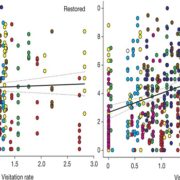
Ecosystem restoration strengthens pollination network resilience and function ($)
Plant Science Research Weekly, ResearchHow does ecosystem restoration affect ecosystem services such as pollination? Kaiser-Bunbury et al. analysed 64 plant-pollinator networks across four restored and four unrestored communities. Restoration involved the removal of all exotic plants (nearly 40,000 individuals). After restoration, over a…
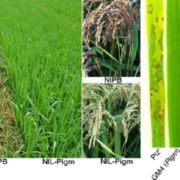
Two clustered NLR genes with opposing functions in rice blast resistance and yield ($)
Plant Science Research Weekly, ResearchThe indigenous Chinese rice variety Gumei 4 (GM4) shows durable and specific resistance to the rice blast fungal pathogen Manaporthe oryzae. Deng et al. mapped and sequenced the resistance locus Pigm, and found that it contains a cluster of 13 NLR (nucleotide-binding leucine-rich repeat) genes, three…
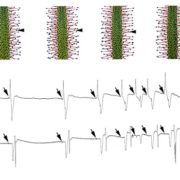
Electrical and hormonal signals of prey capture in sundew ($)
Plant Science Research Weekly, ResearchWithout eyes, mouths or noses, how do carnivorous plants know that they’ve captured prey? Previous studies in various carnivorous species have shown that electrical signals as well as the jasmonate defense hormones contribute to prey detection. Krausko et al. examined these signals in leaves of the…
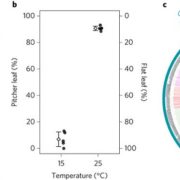
Convergence in the molecular basis of carnivory
Plant Science Research Weekly, ResearchCephalotus follicularis is a heterophyllous pitcher plant that makes two types of leaves, carnivorous and non-carnivorous. By growing plants at different temperatures, Fukushima et al. were able to get plants to produce one of the two leaf forms. They sequenced the plant’s genome and compared transcriptomes…
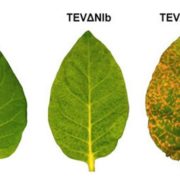
Rewiring carotenoid biosynthesis in plants using a viral vector
Plant Science Research Weekly, ResearchA healthy human diet should include phytonutrients such as carotenoids. Several approaches including classical breeding and transgenic plant production have been used to increase carotenoid abundance in plant tissues; challenges to these approaches include feedback controls, cell toxicity due to abnormally…
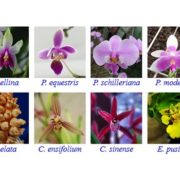
Orchidstra 2.0 – A transcriptomics resource for the orchid family ($)
Plant Science Research Weekly, ResearchThere are more than 25,000 species in the Orchidaceae, the orchid family. Chao et al. have updated and restructured the Orchidstra database, which now houses more than half-a million protein-coding genes from 18 species (12 genera and five subfamilies). Access and explore it at http://orchidstra2.abrc.sinica.edu.tw.…