


Extremely flexible infection programs in a fungal plant pathogen
Blog, Plant Science Research Weekly, Research, Research BlogFilamentous plant pathogens have developed an extra-ordinary level of dynamic genome architecture that adapts to changing host environment in the best possible way to promote infection. There are very limited studies describing the impact of this genome plasticity on phenotypic variation. Haueisen et…
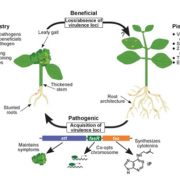
Evolutionary transitions between beneficial and phytopathogenic Rhodococcus
Blog, Plant Science Research Weekly, Research, Research BlogRodococcus bacteria are often identified as causal agents in disease outbreaks. Savory et al. analyzed 60 isolates from diseased plants. By comparing these new isolates and previous isolates, they found that 64 of 66 pathogenic isolates carry a linear virulence plasmid, and that all but four carried…
What We're Reading: December 22nd
Blog, Research, Research Blog, WWR Full PostReview: On the selectivity, specificity and signaling potential of long-distance movement of messenger RNA
Regulation of transcription occurs at the cell-type specific level, but transcribed messenger RNA is mobile and can move between tissues through plant vasculature, serving as a long distance…
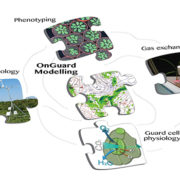
OnGuard2 Computational Platform Tracks Guard Cell Processes
Research, The Plant Cell, The Plant Cell: In a NutshellWang et al. discover unexpected connections between humidity and ion transport using a model that bridges guard cell-to-leaf scales https://doi.org/10.1105/tpc.17.00694
By Maria Papanatsiou
Background: Plants rely on stomata on the leaf epidermis for their survival. Stomata are small pores formed…
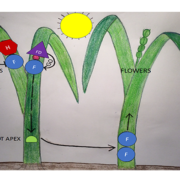
How Signals in Plant Leaves Influence Flowering
Research, The Plant Cell, The Plant Cell: In a NutshellBrambilla et al. describe antagonistic signals in rice leaves that control flowering https://doi.org/10.1105/tpc.17.00645
By Vittoria Brambilla
Background: A plant’s lifecycle is marked by a major switch occurring when the plant stops producing leaves and starts to make flowers. This switch is…
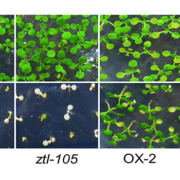
How Plants Clear Toxic Proteins
Research, The Plant Cell, The Plant Cell: In a NutshellGil et al. explore ZTL-mediated protein quality control https://doi.org/10.1105/tpc.17.00612
By Kyung-Eun Gil
Background: As sessile organisms, plants have evolved various mechanisms to adapt to environmental changes. Under stressful conditions such as high temperatures, proteins are misfolded…
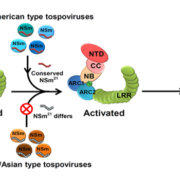
Broad-Spectrum Disease Resistance in Tomato
Research, The Plant Cell, The Plant Cell: In a NutshellBroad-Spectrum Disease Resistance in Tomato
Zhu et al. examine how a plant receptor protein confers broad-spectrum resistance to various tospovirus pathogens https://doi.org/10.1105/tpc.17.00180
By Min Zhu, Savithramma P. Dinesh-Kumar, and Xiaorong Tao
Background: Highly evolved microbes cause…

Funding Opportunity: 2018 Botany in Action Fellowship
Blog, Funding OpportunitiesThe Phipps Conservatory and Botanical Gardens (Pittsburgh, PA) 2018 Botany in Action Fellowship program is currently accepting proposals for this unique fellowship, which fosters the development of the next generation of plant-based scientists who are committed to both excellent research and educational…
Point of View: A transatlantic perspective on 20 emerging issues in biological engineering studies
Blog, Plant Science Research Weekly, Research, Research Blog“Horizon scanning” describes the process of trying to rationally predict the future. Wintle et al. describe the results from a horizon-scanning exercise to identify emerging issues in biological engineering. The authors used an iterative approach to identify key issues in the near and longer-term…