

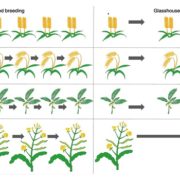
Speed breeding is a powerful tool to accelerate crop research and breeding
Blog, Plant Science Research Weekly, Research, Research BlogNat. Plants. The current rate of crop plant breeding, limited by the long generation time of crop plants, is insufficient to address the needs caused by the enormous increase in the human population accompanied by climate change. Watson et al. have recently presented a method called ‘Speed breeding’…

Perception and reading strategies of scientific papers depends on academic career stage
Activities, Blog, Education, Plant Science Research Weekly, Research, Research Blog, UndergraduatePLOS One. Katharine Hubbard (@KEHplantsci) and Sonja Dunbar (@PlantSciSonja) are enthusiastic proponents of student-centered teaching, including guiding undergraduate students through the reading of scientific papers. In this new work they’ve evaluated how undergraduate students compare to graduate…

Ten simple rules for drawing scientific comics
Blog, Plant Science Research Weekly, Research, Research BlogPLOS Comp. Biol. No doubt, science communication is a struggle for many scientists and science institutions. There is an increasing need to improve public science understanding and/or engagement. Good science communication is crucial to help recruit next generation scientist, highlight science’s role…

What We're Reading: January 12th edition
Blog, Research, Research Blog, WWR Full PostFocus Issue: Cellular Dynamics
Plant Physiology has released a focus issue on the topic of Cellular Dynamics, which includes Updates on topics ranging from Actin Dynamics to Wall Growth. The Editorial by Szymanski, Bassham, Munnik, and Sakamoto provides an excellent overview of the current state of…

Highlights of Plant Science 2017
Blog, Research, Research BlogDuring the final week of 2017 we reminded you of some of the big stories and successes that came from our community. These stories were highly accessed through the ASPB and Plantae.org blogs, our many social media sites, and our journal websites. Originally publised as a set of six posts, we've assembled…

LRX Proteins play a crucial role in pollen grain and pollen tube cell wall development
Blog, Plant Science Research Weekly, Research, Research BlogLeucine-rich repeat extensins (LRXs) are proteins involved in cell wall growth and are therefore required for plant growth processes. Fabrice et al. use pollen tube development in Arabidopsis thaliana as a vegetative plant growth model to elucidate the role of LRXs in these cellular processes. All 4…

Disruption of actin filaments in Zea mays by bisphenol A depends on their crosstalk with microtubules
Blog, Plant Science Research Weekly, Research, Research BlogBisphenol A (BPA) is known for its negative impact on mammalian cell lines and, recently, as an emerging environmental pollutant. BPA, readily taken up and metabolized by plants, results in many growth and developmental defects, from disrupted mitotic microtubule (MT) arrays to altered calcium fluctuations…
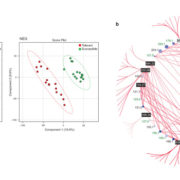
Ash leaf metabolomes reveal differences between trees tolerant and susceptible to ash dieback disease
Blog, Plant Science Research Weekly, Research, Research BlogOver the last two decades, Ash dieback (ADB) has been sweeping through Europe killing or damaging a large proportion of European common ash trees (Fraxinus excelsior). ADB results from infection by wind borne spores of the fungus Hymenoscyphus fraxineus. As ADB spread and the scientific research…
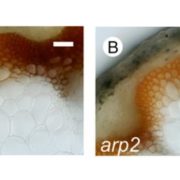
Arabidopsis thaliana plants lacking the ARP2/3 complex show defects in cell wall assembly and auxin distribution
Blog, Plant Science Research Weekly, Research, Research BlogThe plant cytoskeleton determines cell shape and integrity by delivering cellulose microfibrils and other cell wall components to the plasma membrane and cell wall. Auxin is involved in establishing the polarity of cell expansion and auxin distribution is partly regulated by actin. Sahi et al. examine…