


SIMPEL tool to elucidate dynamics of complex metabolism
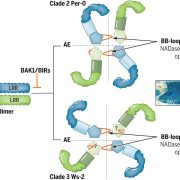
Plant Science Research WeeklyCellular metabolism involves flux through metabolic routes, which can be measured using stable isotope (13C,15N) tracers. High-resolution mass spectrometry (HRMS) and transient isotope labeling studies offer an opportunity to get an in-depth understanding of metabolism in specific contexts. In this new…
Plant Science Research Weekly: March 15, 2024
WWR Full PostReview: Synthetic algal genomes
As photosynthetic organisms, algae can harness solar energy to do useful things, from environmental cleanup to producing fuels and other beneficial molecules. This review by Goold et al. provides an overview of how algae can be valuable platforms for synthetic biology…
Photorespiration: Wasteful or useful?
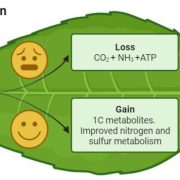
The Plant Cell: In a NutshellRosa-Téllez et al. explore the role of glycine flux regulation by photorespiration in maintaining nitrogen, carbon, and sulfur balance in plants.
https://doi.org/10.1093/plcell/koad256
Sara Rosa-Téllez, Andrea Alcántara-Enguídanos and Roc Ros Palau.
Institut de Biotecnologia i Biomedicina…

Plant Physiology Spotlights December First Authors
Blog, Community, Plant Physiology: Author ProfilesBehind the Plant Physiology manuscripts are researchers, professors, professionals and students dedicated to advancing the field of plant science. You’ve seen our First Authors on Twitter and Facebook— now, read more about why they chose to pursue plant sciences and click on the links below the pictures…
From cell layers to complex petal shapes
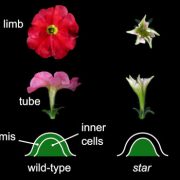
The Plant Cell: In a NutshellChopy et al. investigate the layer-specific contribution of the petunia homolog of DEFICIENS (PhDEF) in petal tube and limb development.
https://doi.org/10.1093/plcell/koad258
Background: Petals are not only beautiful, but they are also very important floral organs that have co-evolved with different…
Review: SynBio takes on roots and the rhizosphere
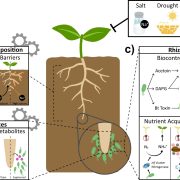
Plant Science Research WeeklyThis is an excellent introduction to how synthetic biology can be used to program plants for climate resilience by engineering them to respond predictably and in ways beyond those that evolution has explored, through the use of controllable synthetic gene circuits. Ragland et al. describe how precise…
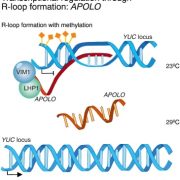
Review: Long noncoding RNAs and the art of being influential without protein
Plant Science Research WeeklyAdvances in sequencing technologies have led to a tremendous growth in the number of long noncoding RNAs (lncRNAs) being identified in plants, but identifying their function lags behind. Here, Ramirez Gonzales and Blom et al. draw on lessons from studies in mammalian systems and highlight several known…
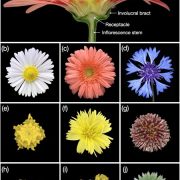
Review: Development and evolution of the Asteraceae inflorescence
Plant Science Research WeeklyAsteraceae, also known as Compositae or the daisy family, is one of the largest plant families and comprises 10% of all flowering plants. Members of this family are found in habitats worldwide. The unique inflorescence, called a capitulum, is a key innovation of the family and contributes to its success.…
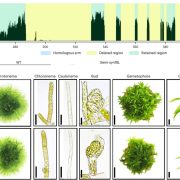
Moss phenotype unaffected by removal of repetitive sequences from genome
Plant Science Research WeeklyGenome complexity in multicellular organisms is often associated with repetitive sequences from Transposable Elements (TEs). TE function, importance for genome integrity, and dispensability have not been completely characterized. In prokaryotes and simple eukaryotes, genome synthesis (production of…