

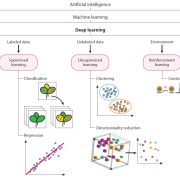
Review: Deep learning in image-based plant phenotyping
Plant Science Research WeeklyAs a writer and an editor, I am horrified by the idea that thinking can be replaced by artificial intelligence. But I do recognize that deep learning / machine learning / artificial intelligence can provide major opportunities for data analysis, as eloquently described in this review article by Murphy…
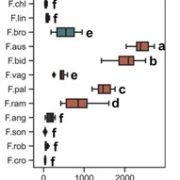
Understanding the role of metabolites in the evolution of C4 photosynthesis
Plant Science Research WeeklyPlants that use C4 photosynthesis, whereby carbon is concentrated around RuBisCo in bundle sheath cells, have high water and nitrogen use efficiencies. Thus, understanding how C4 photosynthesis evolves is of much interest. The Flaveria genus provides a unique opportunity for this, as it contains species…
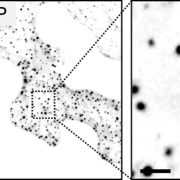
Functional insights into the TPLATE complex: A key player in clathrin-mediated endocytosis in plant cells
Plant Science Research WeeklyTransporting cargo within a cell may seem straightforward, but it is actually an intricate task. At the plasma membrane in plant cells, this complexity is navigated by a process known as clathrin-mediated endocytosis. Central to this process are two key players: adapter protein AP-2 and the TSET/TPLATE…
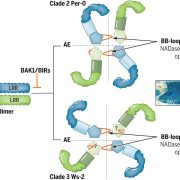
Every pair is special!
Plant Science Research WeeklyThe identification and characterization of resistosome complexes, formed by the oligomerization of intracellular nucleotide-binding leucine-rich repeat receptors (NLRs), has recently been a major focus in the field of plant immunity. Some NLR genes occur as head-to-head pairs encoding proteins that function…
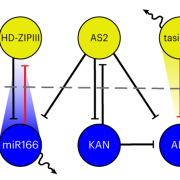
A diffusible small-RNA-based Turing system dynamically coordinates organ polarity
Plant Science Research WeeklyThe establishment of adaxial-abaxial polarity during the growth of the leaf primordium is a prerequisite for the formation of the flat, thin leaves observed in most (but not all) plants. The micro-RNAs tasiARF and miR165/6, which form concentration gradients within leaf primordia, are major contributors…
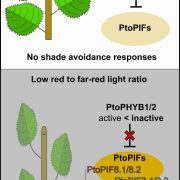
Shade avoidance responses in Chinese white poplar rely on shared and unique roles of phytochrome-interacting factors
Plant Science Research WeeklyShade avoidance syndrome (SAS) is a set of adaptive growth responses to low red to far-red light ratios. SAS includes petiole and internode lengthening and upward bending of leaves (hyponasty). In Arabidopsis, PHYTOCHROME B (PHYB) and PHYTOCHROME INTERACTING FACTORS (PIFs) are implicated in these responses.…
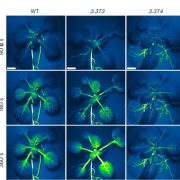
Glutamate receptors shape plant systemic wound signaling and anti-herbivore defense
Plant Science Research WeeklySystemic immunity, where local plant interactions with microbes or insects trigger enhanced resistance in distant organs, has parallels to the nervous system in animals. In plants, GLUTAMATE RECEPTOR-LIKE (GLR) genes have a pivotal role in long-distance wound signal transmission and the initiation of…
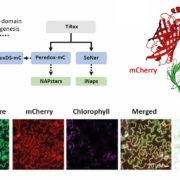
NAPstars: the new stars of the redox imaging toolbox!
Plant Science Research WeeklyRedox reactions are an integral part of cellular metabolism and nicotinamide adenine dinucleotide phosphate or NADP is an essential component due to its capacity to be oxidized or reduced. To get a better understanding of cellular redox homeostasis, precise quantification and visualization of NADP redox…
Visualizing plant intracellular inorganic orthophosphate distribution
Plant Science Research WeeklyPhosphorus is the second most essential macronutrient in terms of limiting plant growth, acquired in the form of orthophosphate (Pi) by plant roots. The intricate processes of sensing, uptake, transport, storage, utilization, and cellular compartmentalization of Pi are finely orchestrated by a complex…