


Minimum requirements for changing and maintaining endodermis cell identity in the Arabidopsis root ($) (Nature Plants)
Plant Science Research WeeklyForward-genetic, loss-of-function studies have been invaluable in identifying factors necessary for the formation of the root endodermis. Drapek et al. used an ectopic expression approach to identify factors that are sufficient to produce endodermal-like cells in different root regions. They found that…
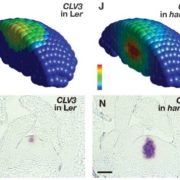
HAIRY MERISTEM with WUSCHEL confines CLAVATA3 expression to the outer apical meristem layers ($) (Science)
Plant Science Research WeeklyThe interaction between transcription factors WUSCHEL (WUS) and CLAVATA3 (CLV3) controls the size of the meristem. Although WUS is known to activate CLV3 expression, their expression domains don’t fully overlap, with CLV3 being restricted to the upper part of the meristem. Previously, in the multiple…

OST1 activation by the brassinosteroid-regulated kinase CDG1-Like 1 in stomatal closure ($) (Plant Cell)
Plant Science Research WeeklyAs gatekeepers between the outside world and the interior of the leaf, guard cells are extraordinarily sensitive to their environment. Closing keeps out pathogens and keeps in water vapor, but opening is needed to admit CO2. The web of interactions that control stomatal aperture are also correspondingly…
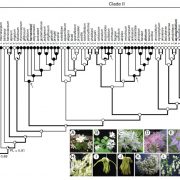
The fate of scent in insect- vs. wind-pollinated flowers ($) (Ann. Bot)
Plant Science Research WeeklyFlower traits (mainly flower colour, position, shape, size, reward and scent) in present-day plants are the result of past selection pressures. Among these traits, scent is a crucial component mediating pollinator attraction, and is often greatly reduced in abiotic-pollinated plants. Wang et al. characterize…
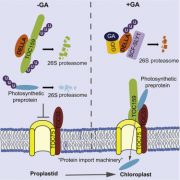
Chloroplast biogenesis controlled by DELLA-TOC159 interaction in early plant development (Curr. Biol.)
Plant Science Research WeeklyPlant photosynthesis occurs in the chloroplast, the green organelles that are the most famous members of the plastid family. Chloroplast biogenesis starts with illumination at germination, when the colorles, non-photosynthetic proplastid acquires photosynthetic activity as it greens. Gaining photosynthetic…
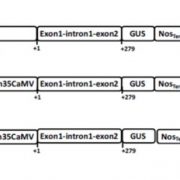
A single cis-element that controls cell-type specific expression in Arabidopsis (bioRxiv)
Plant Science Research WeeklyMulticellular organisms have different tissues that carry out diverse and specialized functions, and tissue-specific expression is the feature that gives each tissue its specific protein content. Despite its importance, the mechanisms that control spatial patterning is poorly understood. In this work,…
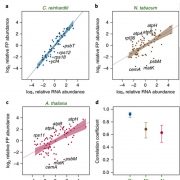
Divergent strategies to maintain steady state protein levels in algal and angiosperm chloroplasts (Nature Plants)
Plant Science Research WeeklyPlants and their algal predecessors both utilize chloroplasts for photosynthesis and other essential metabolic processes. The endosymbiotic origin and subsequent co-evolution of this autotrophic organelle introduced striking regulatory mechanisms combining both prokaryotic and eukaryotic strategies for…
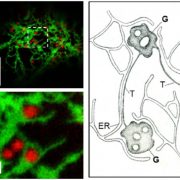
What We’re Reading: August 10
Blog, WWR Full PostGenome assemblies of maize lines Mo17 and W22: Extensive intraspecific variation, and resource for functional biology
The maize genome is largely composed of transposable elements, which is one reason maize has been such a powerful genetic model. However, these transposons also mean that there is…
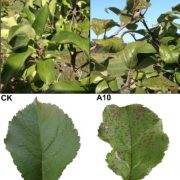
Modulation of Resistance Genes: Two Paths to Alternaria Resistance in Apple
The Plant Cell, The Plant Cell: In BriefApple (Malus x domestica) is a major fruit crop worldwide that faces production losses due to many pathogens. Among them, Alternaria alternata is a fungal pathogen that causes necrotic leaf spots (see Figure), defoliation, and moldy fruit cores and constitutes a serious threat to orchards. Different…