

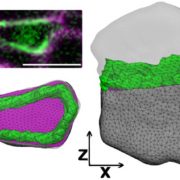
Busted: Finding Cells Whose Division Planes Defy Prediction
Blog, The Plant Cell, The Plant Cell: In BriefEvery plant organ, from tuber to tepal, is formed by cells that divide along precisely placed cell plates. While much is known about the molecular biology behind cell plate formation (e.g., Gu et al., 2016), why cells divide where they do is much less clear. Dividing cells have much in common with soap…

Recognizing Plant Physiology first authors: Qin Hu
Plant Physiology, Plant Physiology: Author ProfilesQin Hu, first author of GhCPK33 negatively regulates defense against Verticillium dahliae by phosphorylating GhOPR3
Current Position: Post-Doctoral position at the National Key Laboratory of Crop Genetic Improvement, Huazhong Agricultural University (China)
Education: PhD in Crop Science, Huazhong…

Recognizing Plant Cell first authors: Byung Ha Lee
The Plant Cell, The Plant Cell: Author ProfilesByung Ha Lee, first author of Arabidopsis protein kinase D6PKL3 is involved in formation of distinct plasma-membrane aperture domains on the pollen surface
Current Position: Postdoctoral Researcher, Department of Molecular Genetics and Center for Applied Plant Sciences, The Ohio State University,…

Recognizing Plant Physiology first authors: Asis Shrestha
Plant Physiology, Plant Physiology: Author ProfilesAsis Shrestha, first author of An ancestral allele of pyrroline-5-carboxylate synthase1 promotes proline accumulation and drought adaptation in cultivated barley
Current Position: Doctoral student, Plant Breeding, INRES, University of Bonn, Germany
Education: Masters of Science in Agriculture Sciences…

Recognizing Plant Physiology first authors: Shumaila Muzammil
Plant Physiology, Plant Physiology: Author ProfilesShumaila Muzammil, first author of An ancestral allele of pyrroline-5-carboxylate synthase1 promotes proline accumulation and drought adaptation in cultivated barley
Education: Doctorate, University of Bonn, Germany
Non-scientific interests: Traveling, reading
Brief Bio: I completed my MSc (hons)…
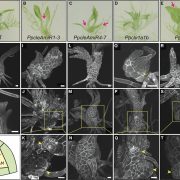
CLAVATA allowed 3D growth in land plants (Curr. Biol.)
Plant Science Research WeeklyLand plants had to acquire new ways to occupy the terrestrial environment, including the innovative shooting system with organs in a radial position. This new 3D form of growth was possible thanks to the capacity to rotate stem cells divisions through different orientation planes. In Arabidopsis the…
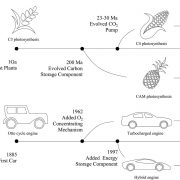
Review: What do cars and plants have in common? (PLOS One)
Plant Science Research WeeklyPlants and cars need energy and are powered by a process that has changed depending on the environment: photosynthesis, in the case of plants and an engine in the case of cars. Hartzell and coworkers make an analogy in the evolution of the original C3 pathway and the evolution of the internal combustion…

Recognizing Plant Physiology first authors: Jesús Beltrán
Plant Physiology, Plant Physiology: Author ProfilesJesús Beltrán, first author of Specialized Plastids Trigger Tissue-specific Signaling for Systemic Stress Response in Plants
Current Position: Postdoctoral Research Associate at The Pennsylvania State University
Education: BSc in Biology, MPhil in Biology, PhD in Biology-Plant Science
Non-scientific…
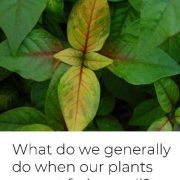
Mentoring Lessons from Plants (Pub. Philos. J.)
Plant Science Research WeeklyEverybody mentors, but usually without much training in how to be an effective mentor. I recommend that you have a look at Beronda Montgomery’s short article, “From Deficits to Possibilities: Mentoring Lessons from Plants on Cultivating Individual Growth through Environmental Assessment and Optimization.”…