

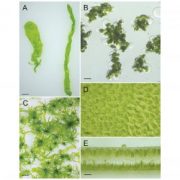
Insights into the evolution of multicellularity from the sea lettuce genome (Current Biol. - $)
Plant Science Research WeeklyThe transition from unicellular to multicellular life forms occurred across multiple kingdoms, and in plants is correlated with the expansion of gene families involved in extracellular matrix formation and cell cycle regulation. Green seaweeds acquired their plant-like body independently of other lineages…
Magazine Feature: Can botanic gardens save all plants? (Current Biol. - $)
Plant Science Research WeeklyIn the past botanic gardens served many purposes ranging from providing tranquil environment, spreading crops to places far away from their natural environment and providing emerging botanists with live samples. Currently, botanic gardens provide entertainment and education for millions of visitors.…
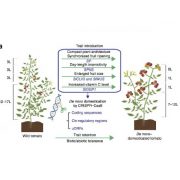
Domestication of wild tomato is accelerated by genome editing (Nature Biotech. - $)
Plant Science Research WeeklyWild tomato, Solanum pimpinellifolium, exhibits remarkable tolerance to salt stress and bacterial spot disease. Domestication of S.pimpinellifolium requires adjustment of day-length sensitivity, plant compactness, fruit size and the fruit could benefit from increased vitamin C content. Li et al. used…
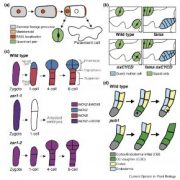
Review - A plane choice: coordinating timing and orientation of cell division during plant development (Current Opinion in Plant Bio)
Plant Science Research WeeklyAsymmetric cell division is instrumental to development of specialized cells, while symmetric cell division underlies proliferative growth. The defects in cell division plane arise when transition between the G1 to S stage is accelerated, suggesting that the signals leading to division plane position…
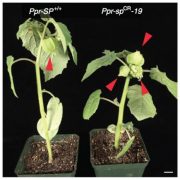
Rapid improvement of domestication traits in an orphan crop by genome editing (Nature Plants - $)
Plant Science Research WeeklyOrphan crops, like groundcherry (Physalis pruinosa), are regionally important but are not grown on large commercial scale as they never went through a breeding cycle. Precision gene editing techniques, such as CRISPR/Cas9, can alter the most important agronomic traits in relatively short time. Lemmon…
Members of the Arabidopsis FORKED1-LIKE gene family act to localize PIN1 in developing veins (J Exp Bot.)
Plant Science Research WeeklyVascular system is one of the adaptive features for terrestrial plants. Polar localization of PIN1 is essential for creating directional auxin flow, resulting in vein pattern formation. Mariyamma et al. propose that FORKED1 (FKD1) and its homologues control the PIN1 polar localization. The team identified…
Structural analysis of HTL and D14 proteins reveals the basis for ligand selectivity in Striga (Nature Comm.)
Plant Science Research WeeklyStrigolactones induce germination of parasitic plant Striga, which causes more crop loss in Africa than any other parasite. Karrakins are structurally related to strigolactones, yet they do not induce Striga germination. By studying the structure and substrate recognition of strigolactone and karrakin-binding…
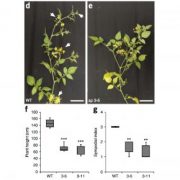
De novo domestication of wild tomato using genome editing (Nature Biotech - $)
Plant Science Research WeeklyBreeding of crops typically focuses on yield increase, and is accompanied with the loss the genetic diversity, reduced nutritional value as well as susceptibility to environmental stress. As many domestication traits exhibit simple Mendelian inheritance patterns, Zsögön et al. targeted known domestication…
What We're Reading: October 5
WWR Full PostGuest editor: Magdalena Julkowska
Magdalena is a PostDoc at King Abdullah University for Science and Technology (KAUST, Saudi Arabia) working with Prof. Mark Tester. Her main interests are (1) salt-induced changes in root-to-shoot ratio in Arabidopsis, (2) study the expression patterns in plants…