


Recognizing Plant Physiology first authors: Lucas Busta
Plant Physiology, Plant Physiology: Author ProfilesLucas Busta, first author of Identification of genes encoding enzymes catalyzing the early steps of carrot polyacetylene biosynthesis
Current Position: NSF Plant Genome Postdoctoral Research Fellow, University of Nebraska
Education: 2016 Ph.D. Analytical Chemistry University of British Columbia,…

Recognizing Plant Physiology first authors: Kazunari Nozue
Plant Physiology, Plant Physiology: Author ProfilesKazunari Nozue, first author of Network analysis reveals a role for salicylic acid pathway components in shade avoidance
Current Position: Staff Research Associate, University of California, Davis, California
Education: Ph. D and M.S. in Biology, Tokyo Metropolitan University, Tokyo, Japan; B.A.…

NRT1.1 involved in balance between NH4+ uptake and assimilation ($) (Plant Physiol)
Plant Science Research WeeklyAmmonium (NH4+) is an inorganic nitrogen source that is the preferred source for some plant species (e.g., rice and tea) but can be toxic in high amounts. The nitrate transporter NRT1.1 is involved in mediating the effects of toxic NH4+, as well as functioning in NO3- and auxin transport, NO3- signaling…

Integrated regulation of apical hook development by EIN3/EIL1 and PIFs ($) (Plant Cell)
Plant Science Research WeeklyThe apical hook helps to protect the fragile cotyledons and shoot apical meristem while pushing through the soil, and hook angle determines the success of emergence from soil. Multiple hormones and light signals have contrasting roles in the regulation of hook formation; e.g., auxin, ethylene and gibberellic…
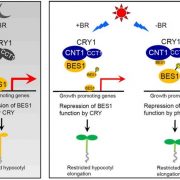
CRY1 interacts with BES1 to regulate BR signaling and photomorphogenesis (Plant Cell)
Plant Science Research WeeklyPlants perceive blue light through cryptochrome (CRY) photoreceptors that are responsible for photomorphogenesis, flowering, and circadian rhythms. At the same time, brassinosteroid (BR) represses photomorphogenesis. In this article, Wang et al. demonstrated CRY1-mediated inhibition of BR signaling as…
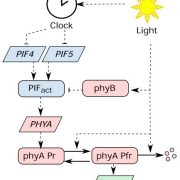
Dawn and photoperiod sensing by phytochrome A ($) (PNAS)
Plant Science Research WeeklyPlants perceive the change of seasons based on measuring the duration of daylight. Flowering is a major seasonal response that depends on photoperiod. In this study, Seaton et al. looked at the role of phytochrome A (phyA) in photoperiod sensing. PHYA is the direct target of PIF4 and PIF5 transcription…
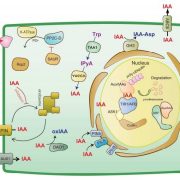
Manipulation and sensing of auxin metabolism, transport and signaling ($) (Plant Cell Physiol)
Plant Science Research WeeklyAuxin is involved in a diverse array of developmental processes as well as biotic and abiotic stress responses. The chemical–genetic approach is a powerful tool to decipher the auxin signaling pathway. In this review, Fukui and Hayashi have provided a comprehensive overview about the structure, molecular…
What We're Reading: October 26th
WWR Full PostThis week’s edition is guest edited by Arif Ashraf, a PhD student at Iwate University, Japan and Graduate Student Ambassador of ASPB. His research interest is understanding the hormonal interplay in primary root development of Arabidopsis thaliana. He blogs about plant science (http://www.aribidopsis.com/).…

Recognizing Plant Physiology first authors: Eleanore T. Wurtzel
Plant Physiology, Plant Physiology: Author ProfilesEleanore T. Wurtzel, first author of Changing form and function through carotenoids and synthetic biology
Current Position: Professor, Lehman College and The Graduate School, The City University of New York
Education: B.S. in Biochemistry, Ph.D. in Molecular Biology and Biochemistry (SUNY Stony Brook);…