


Plant Physiology Focus issue on biotic stress
Plant Science Research WeeklyThe April 2019 issue of Plant Physiology includes a set of papers addressing biotic interactions between plant and pathogens or pests. As the editors indicate, progress on this topic has been rapid and significant. Key topics explored in reviews and research articles include: the roles of plant hormones,…

Review: Tackling plant phosphate starvation by the roots (Devel. Cell)
Plant Science Research WeeklyThe root is remarkably responsive to nutrient status of both the local environment and the whole plant. These external and internal factors affect the expression of transporters, interactions with mycorrhizal symbionts and also the overall pattern of growth and development of the root system. In this…

CRISPR-Chip: Detection of gene variants in unamplified DNA using graphene field-effect transistors ($) Nature Biomed Engineering
Plant Science Research WeeklyCRISPR-Chip combines the selectivity of CRISPR-Cas gene recognition with the sensitivity of a graphene-based field-effect transistor. It contains an immobilized complex of catalytically deactivated Cas9/CRISPR and an appropriate guide strand attached to a graphene surface. When this complex recognizes…
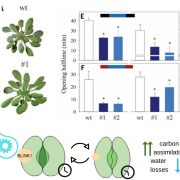
Optogenetic manipulation of stomatal kinetics improves carbon assimilation, water use, and growth ($) (Science)
Plant Science Research WeeklyOptogenetics is a biotechnique that uses light-sensitive molecules to regulate cell activity. In plants, stomatal aperture mediates both CO2 uptake for photosynthesis and water loss by transpiration. The carbon-water trade-off control affects water use efficiency (WUE). Here, Papanatsiou et al. studied…
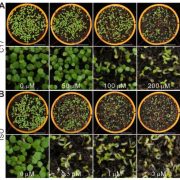
Generating novel, dual herbicide-resistant crops using CRISPR-mediated gene editing (Plant Physiol)
Plant Science Research WeeklyThere is an ever-growing need for novel herbicides as more weeds are becoming resistant to commonly used herbicides. In a recent report from Hu et al., the authors identified that a previously described cellulose biosynthesis-inhibiting chemical, C17, possesses an herbicidal quality. The authors showed…
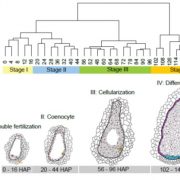
High-temporal-resolution transcriptome landscape of early maize seed development (Plant Cell)
Plant Science Research WeeklySeeds determine the yield and quality of the plants. In maize, seed development initiates from a double fertilization event where one pollen sperm fuses with the egg and the other with the central cell of female gametophyte to produce the progenitors of embryo and endosperm, respectively. The embryo…
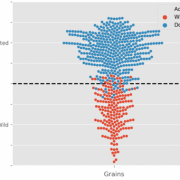
3D characteristics of grain reveal differences between domesticated and wild relatives in wheat and barley (Plant J)
Plant Science Research WeeklyGrain related traits play key roles in determining the total grain yield. However, traditionally manual measurement can not investigate grain seed from multiple angles. To visualize a 3D structure of grain, X-ray based images were captured for a single spike/grain from multiple angles. Because of strong…
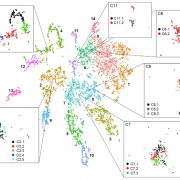
Single-cell RNA sequencing reveals developmental trajectories of Arabidopsis root cells
Plant Science Research WeeklyNew advances in sequencing technologies have made possible the understanding of the dynamics of developmental processes in an unprecedented manner. In a recent study, Denyer, Ma, et al. profiled nearly 5,000 cells from Arabidopsis roots using single-cell RNA sequencing technology. Gene expression profiles…
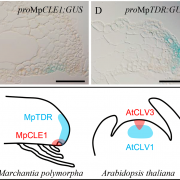
Control of proliferation in the haploid meristem by CLE peptide signaling in Marchantia polymorpha (PLOS Genetics)
Plant Science Research WeeklyThe peptide/hormones CLE (CLAVATA3/EMBRYO SURROUNDING REGION-related) and their receptors are a fascinating cell signal system that regulates meristems activity in angiosperms and is crucial for the establishment of 3D forms. How this system works in bryophytes is very relevant to understand its evolution…