

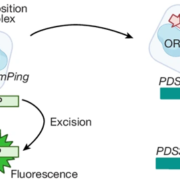
Transposase-assisted target-site integration for efficient plant genome engineering
Plant Science Research WeeklyGenome editing stands at the forefront of scientific innovation, offering transformative possibilities to manipulate the genetic code of plants, animals, and humans. A critical bottleneck for its application in modern crop improvement is the low frequency and error-prone integration of foreign DNA into…
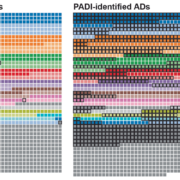
Identification of plant transcriptional activation domains
Plant Science Research WeeklyActivation domains (AD) are parts of transcription factor proteins (TFs) that bind the transcriptional machinery (coactivator complexes) and lead to transcriptional activation. However, identifying ADs is challenging because they are often part of intrinsically disordered regions, which lack a defined…
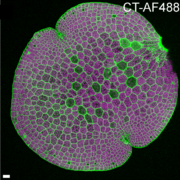
CarboTag for live-imaging of plant cell walls
Plant Science Research WeeklyRecently, we have gained tremendous insights through live-cell imaging using fluorescent tags that bind specifically to various cellular components. Here, Besten et al. present a new set of cell wall-specific tags that bind specifically to cell walls and reveal selected wall properties. The authors developed…
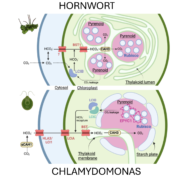
Characterization of pyrenoid-based CO2-concentrating mechanism in hornworts
Plant Science Research WeeklyPyrenoids are structures that concentrate carbon dioxide around Rubisco, most commonly studied in green algae such as Chlamydomonas. However, hornworts, one of the three types of bryophytes (along with liverworts and mosses) also have a pyrenoid-based CO2-concentrating mechanism (pCCM), unique among…
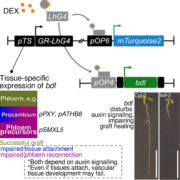
Tissue-specific interference reveals complex roles for auxin signalling in procambial cells during graft healing in Arabidopsis
Plant Science Research WeeklyFor hundreds of years, we have propagated plants clonally by grafting, i.e. the union of a scion and a rootstock to form a new plant. To be successful, a graft junction must heal: tissues must attach, and vascular bundles reconnect, in a process known to involve auxin. Here, Serivichyasw at et al. investigate…
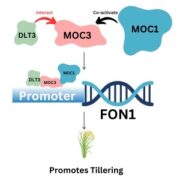
Rice tiller production regulated by sustained expression of FON1
Plant Science Research WeeklyNumber of tillers is one of the major determinants of yield in rice. MONOCULM1 (MOC1) and MOC3 have been reported to regulate tiller formation by promoting axillary bud formation and elongation of buds. MOC1 interacts with MOC3 and promotes the expression of FLORAL ORGAN NUMBER 1 (FON1), which increases…
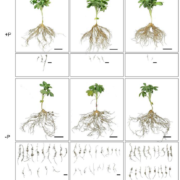
The white lupin trehalase gene regulates cluster root formation and function under phosphorus deficiency
Plant Science Research WeeklyPhosphorus (P) is an essential nutrient for plant growth and development. Under P deficiency, white lupin develops cluster roots (CR), specialized root structures that enhance soil exploration and nutrient acquisition. While sugar signaling, particularly sucrose, has been shown to play a role in the…
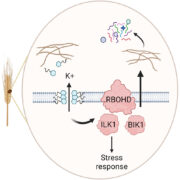
Pathogen cyclic lipopeptide virulence factors promote disease by inducing membrane leakage
Plant Science Research WeeklyPathogens deploy an array of molecules to create favorable conditions and promote infections in host plants. These molecules are well-known for suppressing host immunity, rendering them more susceptible. However, two recent reports suggest that some pathogen-produced virulence factors may also act independently…
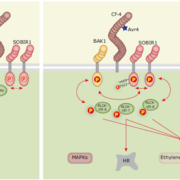
Receptor-like cytoplasmic kinases of different subfamilies differentially regulate immune responses
Plant Science Research WeeklyCell surface receptor complexes act as the first line of defense in detecting pathogens and preventing invasion. Upon recognizing extracellular immunogenic patterns, a cascade of signaling relays occurs, mediated by phosphorylation events among a large array of membrane-associated proteins. These proteins…