


SAM-seq: A novel approach for unraveling plant epigenetic complexity
Plant Science Research WeeklyThe complex interplay between nucleosome positioning, DNA methylation, and chromatin accessibility is crucial for genome regulation in eukaryotic organisms. However, current chromatin profiling methods, which rely on short-read sequencing, fail to characterize highly repetitive genomic regions and cannot…

Altering cold-regulated gene expression decouples the salicylic acid–growth trade-off
Plant Science Research WeeklyEnhancing plant defense against pathogens and pests often incurs a cost to essential physiological functions such as growth and reproduction, creating a trade-off. This phenomenon is evident in genetic studies across various plant models and agricultural breeding programs. Salicylic acid (SA) is a well-known…

Development of a structure-switching aptamer-based nanosensor for salicylic acid detection
Plant Science Research WeeklyAptamers are single-stranded DNAs that fold into tertiary structures that bind specifically to various targets, allowing them to serve as probes or sensors. In this study, Chen et al. introduce a cutting-edge aptamer-based nanopore thin film sensor designed to detect salicylic acid (SA), an important…
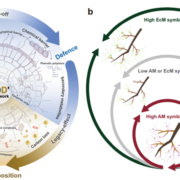
Unveiling root trait syndromes in trees: Evolutionary insights into mycorrhizal partnerships
Plant Science Research WeeklyPlants, particularly long-lived trees, need to balance nutrient acquisition, herbivore and pathogen defence, and ultimately organic matter decomposition. The intricate relationship between these processes is crucial for the survival and growth of trees over their extended lifespans. Zheng et al. investigated…

Forests endure as critical carbon sinks
Plant Science Research Weekly
The global forest carbon sink is vital for mitigating climate change by absorbing CO2 and offsetting nearly half of fossil-fuel emissions. Over the past three decades, this sink has remained stable with minor fluctuations, but its future is threatened by deforestation, forest ageing, and climate…
Plant Science Research Weekly: August 16, 2023
WWR Full PostReview. Lighting the way: Compelling open questions in photosynthesis research
Photosynthesis is fundamental to life on Earth and a topic that all plant biologists should have a good understanding of, but it is also an incredibly complex set of processes, reactions and structures spanning great temporal…
The Plant Cell Features June First Authors
Blog, Community, The Plant Cell: Author ProfilesBehind the manuscripts are researchers, professors, professionals and students dedicated to advancing the field of plant science. You’ve seen our First Authors on Twitter and Facebook— now, read more about why they chose to pursue plant sciences and click on the links to read their articles.
Peizhe…
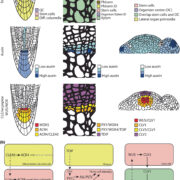
Review: Stem cells of the vascular cambium
Plant Science Research WeeklyVascular cambium cells are meristematic cells responsible for secondary growth. Lineage tracing studies in Arabidopsis and poplar show the presence of single bifacial stem cells in each radial cell file that produce xylem inwards and phloem cells outwards. In a recent review, Wybouw et al. discuss the…
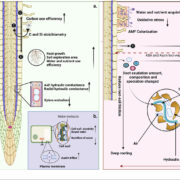
Review: Role of silicon in drought tolerance
Plant Science Research WeeklyThere is increasing evidence that silicon (Si) application to soils or leaves can promote plant growth through various means, including enhancing tolerance to abiotic and biotic stresses, but the mechanisms of this growth promotion are not always clear. Here, Bardhan et al. review how Si can promote…