

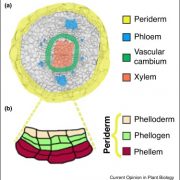
Review. The development of the periderm: the final frontier between a plant and its environment (COPB)
Plant Science Research WeeklyCampilho et al. have written an interesting review about the molecular basis of periderm development. During secondary growth (increase in girth) of most gymnosperms and dicots, the outer epidermal layer is gradually replaced by the periderm, which facilitates gas exchange and defense. Periderm is composed…
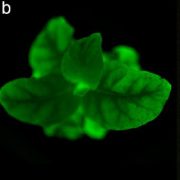
Plants with self-sustained luminescence (bioRxiv)
Plant Science Research WeeklyNothing beats being able see gene expression in real time and space. In recent years, plant biologists have made great strides in understanding plants by using the visual reporters GUS, green fluorescent protein (and other fluorescent proteins) and luciferase. Each of these requires either a substrate…
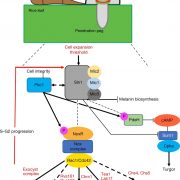
A sensor kinase controls turgor-driven plant infection by the rice blast fungus ($) (Nature)
Plant Science Research WeeklyMagnaporthe oryzae, the causal organism of blast disease in rice and wheat, is the most devasting pathogen in rice production. During infection, it develops a germ tube that forms an infection structure called the appressorium. Through septin-mediated reorganization of the cytoskeleton, a high amount…
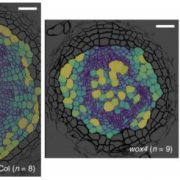
Transcriptional regulatory framework for vascular cambium development in Arabidopsis roots ($) (Nature Plants)
Plant Science Research WeeklyPlant vascular tissues continue to proliferate post-embryogenesis via the cambium, a lateral meristem. Until recently the transcription factors regulating meristem maintenance and promoting differentiation were still unknown. In this paper, Zhang et al. identified multiple transcription factors using…

Optimal levels of PLETHORA2 for root regeneration capacity (Cell Reports)
Plant Science Research WeeklyPlants can regenerate organs after damage, or even regenerate a whole plant. The regeneration efficiency is different across the organism. In this study, Durgaprasad et al. studied the factors that determine regeneration competence across Arabidopsis roots. They focussed on PLETHORA2 (PLT2), a gene involved…

Approaches to improve soil fertility in sub-Saharan Africa (J Exp Bot)
Plant Science Research WeeklyFood security is a major issue in sub-Saharan Africa, aggravated by rapid population growth and low soil fertility. Stewart et al. explore approaches to improve soil fertility, hence food production, in this region. They argue for a holistic approach that addresses not only yields, but also poverty reduction…

Viewpoint: The Poisonous Pollens, why do they exist? (New Phytol)
Plant Science Research WeeklyBesides being the carrier of male gametes in plants, pollen cells also unexpectedly contained some toxic properties that are collectively called “Pollen Defensive Compounds”. This raises the question: what is the evolutionary significance of these toxic compounds? In this Viewpoint by Rivest and…
Plant Science Research Weekly: October 25th
Blog, WWR Full PostReview: Interplay between turgor pressure and plasmodesmata during development
Plasmodesmata, small cytoplasmic channels connecting adjacent cells, allow small molecules to move and redistribute information and resources. Plasmodesmatal aperture is highly regulated, which is crucial to development…

Regulation of Pavement Cell Morphogenesis
Plant Physiology, Plant Physiology: On The InsideSimple plant cell morphologies, such as cylindrical shoot cells, are determined by the extensibility pattern of the primary cell wall, which is thought to be largely dominated by cellulose microfibrils, but the mechanism leading to more complex shapes, such as the brick-shaped or jigsaw-like patterns…