

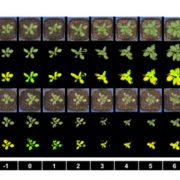
The use of high throughput phenotyping for assessment of heat stress-induced changes in Arabidopsis (bioRxiv)
Plant Science Research WeeklyWith global temperatures rising, tolerance to heat is becoming increasingly important as a breeding target for crop plants, but it is a highly complex response that includes processes including plant cooling capacity, growth recovery, and maintenance of photosynthesis. Using Arabidopsis, Gao et al. developed…
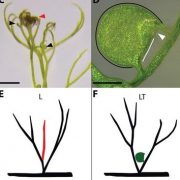
Evolution of carnivorous traps from planar leaves through simple shifts in gene expression (Science)
Plant Science Research WeeklyWhen is a leaf not a leaf? When it’s a trap. Just about everyone, including Charles Darwin, has been fascinated by carnivory in plants, which involves the development of structures that capture or trap food. Whitewoods, Gonçalves, Cheng et al. investigated how traps form in the humped bladderwort…

Genetic contribution of paleopolyploidy to adaptive evolution in angiosperms (Mol Plant)
Plant Science Research Weekly
Genetic contribution of paleopolyploidy to adaptive evolution in angiosperms
Comparative genomics has revealed that the angiosperms have experienced numerous whole-genome duplications (WGD), which have been proposed to have contributed to their global dominance. Following WGD, many of the…
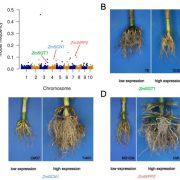
Shared genetic control of root system architecture between Zea mays and Sorghum bicolor (Plant Physiol)
Plant Science Research WeeklyRoot research got a boost from Arabidopsis grown on Petri plants, but what do you do if you study something bigger, or want to see how roots grow in soil? Zheng et al. developed a new set of tools they call CREAMD-COFE [Core Root Excavation using Compressed-air (to extract the roots from soil), and Core…
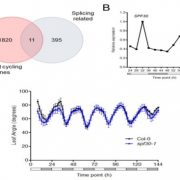
Global transcriptome analysis reveals circadian control of splicing events in Arabidopsis thaliana (bioRxiv)
Plant Science Research WeeklyDevelopmental programming, metabolism and plant growth are regulated by the circadian rhythm that integrates environmental signals and plant growth. In this paper, Romanowski et al. have used the RNAseq approach to determine post-transcriptional regulation in Arabidopsis thaliana, specifically alternate…

Plant science research weekly: November 29
Blog, WWR Full PostReview: Design and engineering of advanced plant optogenetics systems
Optogenetics uses light-sensitive proteins to trigger specific outputs in the cell in response to particular wavelengths of light. Many optogenetic systems use chimeric proteins that contain different sensor and effector domains;…

Recognizing Plant Cell authors: Karnelia Paul
The Plant Cell, The Plant Cell: Author ProfilesKarnelia Paul, co-first author of A tripartite interaction among the basidiomycete Rhodotorula mucilaginosa, N2-fixing endobacteria, and rice improves nitrogen nutrition in plants
Current Position: PhD student in Department of Biotechnology and Dr. B.C. Guha Centre for Genetic Engineering and Biotechnology,…

Recognizing Plant Cell authors: Chinmay Saha
The Plant Cell, The Plant Cell: Author ProfilesChinmay Saha, co-first author of A tripartite interaction among the basidiomycete Rhodotorula mucilaginosa, N2-fixing endobacteria, and rice improves nitrogen nutrition in plants
Current Position: Faculty in Genome Science, School of Interdisciplinary Studies, University of Kalyani, Kalyani-741235,…
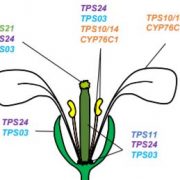
Attract or Defend: The CYP-associated Versatility of Terpenoids
Research, The Plant Cell, The Plant Cell: In BriefFloral scent, a blend of volatile organic compounds (VOCs), is a communication signal central to plant interactions. For example, VOCs attract pollinators when flowers are opened (Muhleman et al., 2015).
However, some plants do not cross-pollinate and depend less on VOCs. Flowers are fragile structures…