

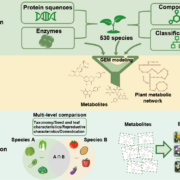
PCMD: an interactive library for comparative metabolomics studies
Plant Science Research WeeklyAlbert Einstein once said, “The only thing that you absolutely have to know is the location of the library.” Libraries house vast troves of information for readers to explore, analyze, and use. With the exponential increase in data, libraries have also evolved into digital databases and online platforms.…
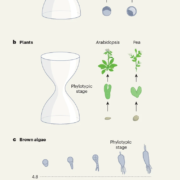
The ”hourglass” model of embryogenesis extends to brown algae
Plant Science Research WeeklyThe hourglass model of embryogenesis was proposed in the 1990s, and extended to green plants and fungi in the 2010s. During animal embryogenesis, the very earliest stages (post fertilization) are morphologically quite different from each other, and the later stages are quite different, but in the middle…
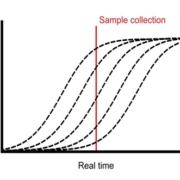
Single-plant omics provides transcriptional insights into the transition from the vegetative to reproductive phases
Plant Science Research WeeklyPlants undergo a series of physiological processes when transitioning from the juvenile to the vegetative phase, and then vegetative to the reproductive phase. RNA-Seq offers substantial potential for uncovering the transcriptional landscape underlying these developmental transitions. However, developmental…
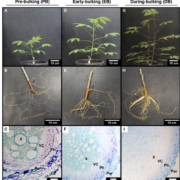
Phloem loading and subcellular transport drive carbon storage in cassava roots
Plant Science Research WeeklyCassava (Manihot esculenta) is a vital starchy crop essential for food security in Sub-Saharan Africa, South America, and Southeast Asia. A recent study on cassava by Rüscher et al. provides important insights into the plant’s sugar control mechanisms as the roots expand, produce large amounts of…
Plant Science Research Weekly: November 1, 2024
WWR Full PostSpotlight: The role of fossils for reconstructing the evolution of plant development
I suspect if we asked someone to describe a fossil we’d hear a lot about dinosaur bones. Certainly, science museums are full of fossilized animal remains, which have greatly informed our understanding of animal…
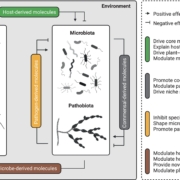
Virtual issue: The chemical language of plant–microbe–microbe associations
Plant Science Research WeeklyDon’t miss this exciting Virtual Issue from New Phytologist on “plant-microbe-microbe” interactions. That’s not a typo – many of the articles address the signals that coordinate such multi-factorial interactions, as there is a growing recognition that interrelations between microbes influence…
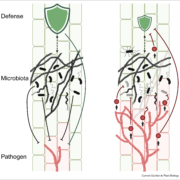
Review. Microbial tug-of-war: How plants and pathogens manipulate microbiomes
Plant Science Research WeeklyThe composition of plant-associated microbes is influenced by plant genetics, immune responses, environmental factors, and interactions between microbes. During disease development, the microbial community at infection sites changes due to tissue damage, altered immune responses, and manipulation via…
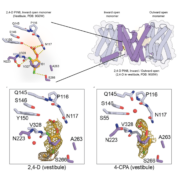
PIN auxin transporters also transport auxin-like herbicides (and more?)
Plant Science Research WeeklyAuxin is an extremely important plant hormone that must be precisely controlled. Auxin-like herbicides have been developed that are often more stable than the natural auxins, thus their application can damage the plant. Here, Schulz, Ung et al. investigated how these auxin herbicides move in plant tissues.…

Unveiling vacuole biogenesis: Tubular networks are present in plant meristem cells
Plant Science Research WeeklyA recent paper by Scheuring and colleagues investigates vacuole biogenesis in meristematic cells of Arabidopsis thaliana, challenging earlier models of vacuole formation. Vacuoles are crucial organelles responsible for various cellular functions, yet their formation has remained puzzling for quite some…