

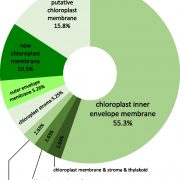
Cold-Induced Proteomic Changes in the Chloroplast Envelope
Plant Physiology, Plant Physiology: On The InsideAs a cold-hardy species, Arabidopsis (Arabidopsis thaliana), is a useful model for the investigation of the molecular and physiological mechanisms underlying cold acclimation in plants. Chloroplasts harbor the enzymatic machinery required for photosynthetic CO2 fixation, starch production, nitrite and…
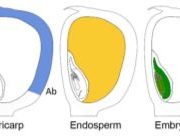
The Way Out: A Transcriptionally Unique Group of Endosperm Cells Implicated in Nutrient Export to the Embryo
Research, The Plant Cell, The Plant Cell: In BriefSuccessful development of the maize (Zea mays) kernel requires proper nutrient transport and signaling among its genetically distinct components: the embryo that gives rise to the next generation, the endosperm that nourishes the embryo, and the maternal tissues that surround the embryo and the endosperm…

Regulation of Carotenoid Pigmentation in Flowers
Research, The Plant Cell, The Plant Cell: In a NutshellStanley et al. Identify a protein in the model plant monkeyflower (Mimulus) required for chromoplast development and carotenoid biosynthesis. Plant Cell https://doi.org/10.1105/tpc.19.00755
By Lauren Stanley and Yao-Wu Yuan, University of Connecticut
Background: Carotenoids are yellow, orange,…
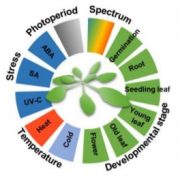
The R-loop: An Additional Chromatin Feature for Gene Regulation in Arabidopsis
Research, The Plant Cell, The Plant Cell: In BriefR-loops are three-stranded nucleic acid structures composed of a DNA-RNA hybrid and a displaced single-stranded DNA. R-loops are stable structures as they form an intermediate A/B conformation of the RNA-DNA hybrid that is more stable than the B form of dsDNA or A form of the dsRNA. Recent evidence reveals…

SHORTROOT coordinates phloem development via two pathways
Research, The Plant Cell, The Plant Cell: In a NutshellKim et al. examine how plants coordinate sieve element and companion cell development.
Plant Cell https://doi.org/10.1105/tpc.19.00455
By Hyoujin Kim1 and Ji-Young Lee1,2, School of Biological Sciences, College of Natural Science, Seoul National University, 1 Gwanak-ro, Gwanak-gu, Seoul 08826,…

Update: How plants sense and respond to stressful environments (Plant Phys)
Plant Science Research WeeklyA longstanding question in plant science is how plants “know” that they are under threat. The identification of cell-surface receptors that identify conserved pathogen patterns sheds some light on biotic stress perception, but what about abiotic stresses such as excessive heat or drought? Lamers…

Perspective: Multiscale computational models for crop improvement (Plant J)
Plant Science Research WeeklyThroughout the plant science community, the use of computational or in silico analyses which precede traditional studies are gaining traction to identify research opportunities. Multiscale computational models are those which assimilate data from all biological system levels from gene to ecosystem. Benes…
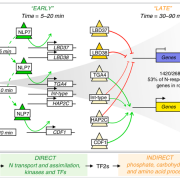
Transient genome-wide interactions of the master transcription factor NLP7 initiate a rapid nitrogen-response cascade (Nature Comms.)
Plant Science Research WeeklyTranscription factors (TFs) and their genome-wide targets form gene regulatory networks that allow organisms to respond to stimuli. However, conventional biochemical assays only identify a subset of the TF-target interactions. In this paper, Alvarez et al. elucidate the genetic network of NIN-LIKE PROTEIN…

DRT111/SFPS splicing factor controls ABA sensitivity during seed development and germination (Plant Physiol)
Plant Science Research WeeklyAbscisic acid (ABA) acts on different plant physiological and developmental processes by quite complex mechanisms. In fact, some of these processes interact with light signaling and some are controlled by alternative splicing. In this paper, Punzo et al. show that DRT111 – a splicing factor previously…