

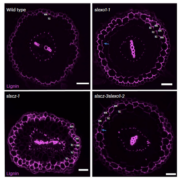
Regulation and function of a polarly localized lignin barrier in the exodermis
Plant Science Research WeeklyThe endodermal Casparian strip (CS) is a conserved lignin-based barrier in plant roots that seals the endodermal apoplastic space. Most angiosperms possess an additional root cell type, the exodermis, which also forms a barrier. However, its regulation remains poorly understood as this cell type is absent…
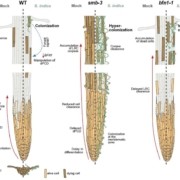
Capping your occupancy: programmed cell death as a mechanism to restrict microbial colonization of the root tip
Plant Science Research WeeklyThanks to the continued shedding and renewal of root cap cells, plant roots are able to extend into further reaches within the soil column overcoming physical barriers and potential microbial attacks, or so we assumed. Charura et al. explored the latter hypothesis showing that timely programmed cell…
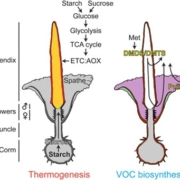
Smelly plant: What are they feeding you?
Plant Science Research WeeklyWhile flowers are typically associated with pleasant fragrances, every few years a certain part of the rainforests of Sumatra is filled with the pungent odor of rotting flesh. This smell emanates from the inflorescence of the titan arum, or corpse plant, which heats up during flowering in a process known…
Plant Science Research Weekly: December 20, 2024
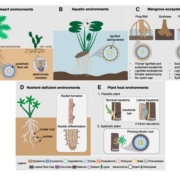
WWR Full PostWhen form fits function: the value of root diversity to survival
For a plant, form is function. Despite the diversity of forms that exist in nature, plant root diversity is notoriously understudied compared to their aerial counterpart. This review by Ramachandran and Ramirez et al. aims to revitalize…
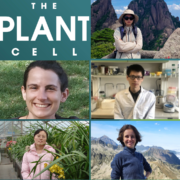
The Plant Cell Features October First Authors
Blog, Community, The Plant Cell: Author ProfilesBehind the manuscripts are researchers, professors, professionals and students dedicated to advancing the field of plant science. You’ve seen our First Authors on Twitter and Facebook— now, read more about why they chose to pursue plant sciences and click on the links to read their articles.
Jingming…
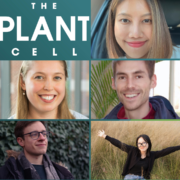
The Plant Cell Features August First Authors
Blog, Community, The Plant Cell: Author ProfilesBehind the manuscripts are researchers, professors, professionals and students dedicated to advancing the field of plant science. You’ve seen our First Authors on Twitter and Facebook— now, read more about why they chose to pursue plant sciences and click on the links to read their articles.
Anthony…
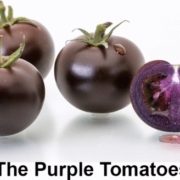
Review: Bringing purple tomatoes to market
Plant Science Research WeeklyThis interesting article by Cathie Martin and Eugenio Butelli describes the process through which purple, anthocyanin-accumulating tomatoes were brought to the US market, from idea to business plan to regulatory status review and finally direct-to-consumer sales. Although these tomatoes have demonstrated…
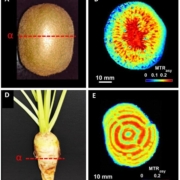
Metabolites through the looking glass with CEST MRI
Plant Science Research WeeklyNon-invasive imaging technologies like computed tomography and magnetic resonance imaging (MRI) have revolutionized medicine by improving diagnostics and guiding treatment. Due to its versatility, MRI also holds potential for plant sciences, where it can be used to visualize and quantify metabolites…
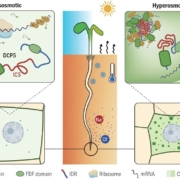
Crowd control by DCP5 - a new cytoplasmic osmosensor
Plant Science Research WeeklyOsmosis, driving water uptake and transport, is crucial for plants. It supports nutrient uptake, turgidity, and overall plant health. In hyperosmotic conditions, caused by drought, salinity, and cold stress, water loss triggers osmotic responses. A key question is: what sensors detect osmotic changes?…