


MYB30 Regulates Photomorphogenesis via Interactions with Active Phytochromes and PIFs
Research, The Plant Cell, The Plant Cell: In BriefMYB proteins are a group of transcription factors that are highly conserved in all vertebrates and were first implicated in avian myeloblastosis (leukemia). Subsequently, they were shown to be cellular proto-oncogenes that regulate production of blood cells in animals. MYB proteins contain a DNA-binding…

Recognizing Plant Physiology authors: Zhongtao Jia
Plant Physiology, Plant Physiology: Author ProfilesZhongtao Jia, first author of The root foraging response under low nitrogen depends on DWARF1-mediated brassinosteroid biosynthesis
Current position: Postdoctoral Researcher, Leibniz Institute of Plant Genetics and Crop Plant Research (IPK), Gatersleben, Germany
Education: PhD in Molecular Plant…

Guard cell starch-derived glucose drives fast stomatal opening kinetics
Research, The Plant Cell, The Plant Cell: In a NutshellFlütsch et al. examine how starch degradation and light-regulated membrane transport control stomatal opening kinetics.
Plant Cell https://doi.org/10.1105/tpc.18.00802
By Sabrina Flütsch and Diana Santelia
Institute of Integrative Biology, ETH Zürich, Zürich, Switzerland
Background: Stomatal…
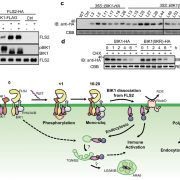
Ligand-induced monoubiquitination of BIK1 regulates plant immunity (Nature)
Plant Science Research Weekly
The plant immune system has been a keenly researched area in plant sciences in the past decade. Elicitors present in microbes are compounds that induce response from plants when under attack. These elicitors are conserved in many pathogens and are called microbe associated molecular patterns (MAMPs).…
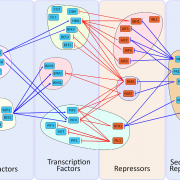
Review: The bHLH network underlying plant shade-avoidance (Physiol. Plant.)
Plant Science Research WeeklyShade avoidance is a complex phenomenon in which plants avoid shade by altering their developmental program in various ways including early flowering, hypocotyl elongation, and more. Many photoreceptors and transcription factors (TFs) are involved in regulating shade avoidance, including the bHLH (basic…
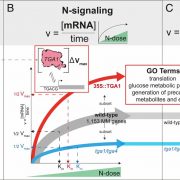
Nutrient dose-responsive transcriptome changes driven by Michaelis–Menten kinetics underlie plant growth rates (PNAS)
Plant Science Research WeeklyPlants can increase their growth and biomass proportionately to an increase in nutrient dose and, conversely, their growth is limited by limiting nutrients. In this study, Swift et al. explored the molecular underpinnings of the nutrient dose-response phenomenon. The authors first show that nitrogen-dose…
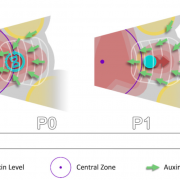
How do auxin temporal dynamics regulate patterning? (eLIFE)
Plant Science Research WeeklyAuxin forms spatial gradients that are implicated in organ morphogenesis. However, it is not known how temporal auxin gradients are integrated with the spatial information. In this paper, Galvan-Ampudia, Cerutti et al., showed using a ratiometric quantitative auxin reporter (quantitative DII-VENUS) that…
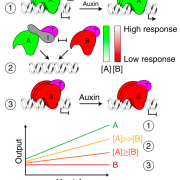
Design principles of a minimal auxin response system (Nature Plants)
Plant Science Research WeeklyAuxin controls virtually all facets of growth and development. This plant hormone is sensed by TIR1/AFB F-box receptors which promote ubiquitin-mediated degradation of AUX/IAA transcriptional repressors, releasing ARF transcription factors from inhibition. Phylogenetic analyses divide the ARF family…
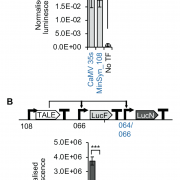
Plant synthetic promoters to fine tune expression of engineered genes (bioRxiv)
Plant Science Research WeeklySynthetic genetic circuits allow the reconstruction of metabolic pathways in plant systems for production of many natural products including pharmaceuticals. A challenge in genetic engineering these circuits is precisely and predictably regulating gene expression, especially when genes may be desired…