


Matthew Dwyer: Plant Physiology First Author
Plant Physiology: Author Profiles
Matthew Dwyer, first author of "Light-dependent phosphorylation of THRUMIN1 regulates its association with actin filaments and 14-3-3 proteins"
Current Position: Postdoctoral position in the Kerfeld Lab at Michigan State University, East Lansing, MI (Starting in September)
Education: B.S. in Biology,…

Fayezeh Aarabi: Plant Physiology First Author
Plant Physiology: Author Profiles
Fayezeh Aarabi, first author of "Sulfur Deficiency Induced genes affect seed protein accumulation and composition under sulfate deprivation"
Current Position: Postdoctoral researcher at Max Planck Institute of Molecular Plant Physiology
Education: BS in Agricultural Engineering, Agronomy &…

Home Delivery for Chloroplast Membrane Proteins
The Plant Cell: In a NutshellAnderson et al. show how the Arabidopsis protein GET3B acts as a targeting factor for proteins important in chloroplast development. Plant Cell. https://doi.org/10.1093/plcell/koab145.
By Donna Fernandez and Stacy Anderson, Department of Botany, University of Wisconsin-Madison, Madison, Wisconsin…

Review: Root plasticity under abiotic stress (Plant Physiol.)
Plant Science Research WeeklyFor millennia, humans have selected desirable traits in the above-ground part of plants, but below-ground traits have been only indirectly selected for. Thus, roots are ripe for optimization, and hold particular promise in efforts to make crops more resilient and efficient. This Update, by Karlova et…
Plants People Planet Special Issue: Mycorrhizas for a changing world
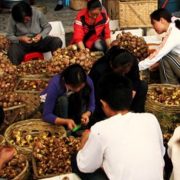
Plant Science Research WeeklyPlants People Planet is a relatively young journal that launched in 2019. It’s aim is to explore aspects of plant science directly relevant to our daily lives, and how plant science is communicated to the public. The Sept 2021 issue has a focus on mychorrhizas, which it explores through several opinion,…
Review: Evolutionary innovations driving abiotic stress tolerance in C4 grasses and cereals (Plant Cell)
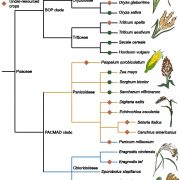
Plant Science Research WeeklyGrasses fall into two clades, the more temperate BOP clade of C3 grasses (Bambusoideae, Oryzoideae, and Pooideae subfamilies), and the more tropical PACMAD clade of C3 and C4 grasses (Panicoideae, Arundinoideae, Chloridoideae, Micrairoideae, Aristidoideae, and Danthonioideae subfamilies). This review,…
TEM1 combinatorially binds to FLOWERING LOCUS T and recruits a Polycomb factor to repress the floral transition in Arabidopsis (PNAS)
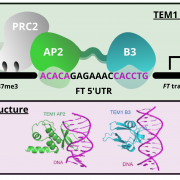
Plant Science Research WeeklyGene expression is primarily controlled by transcriptional regulatory proteins able to recognize and bind short DNA sequences in downstream targets. Understanding how DNA-binding proteins achieve high precision and switch on/off the transcription of selected genes at a specific developmental stage or…
Potential evidence for transgenerational epigenetic memory in Arabidopsis thaliana following spaceflight (Commun. Biol.)
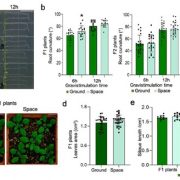
Plant Science Research WeeklyTransgenerational memory can occur through epigenetic regulation of gene expression (for example through DNA methylation) when plants have been exposed to abiotic stresses. Transferring a specific biochemical adaption to the next generation of plants can help the plant counter stress. Here Xu et al.…
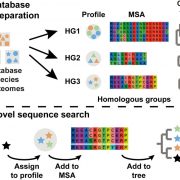
SHOOT: Phylogenetic gene search and ortholog inference (bioRxiv)
Plant Science Research WeeklyBLAST (basic local alignment search tool) is more than 30 years old, and most readers have probably had the opportunity to BLAST a sequence. BLAST takes an input sequence and searches databases for closely related sequences. However, this tool uses only sequence information to find close matches. Hypothetically,…