

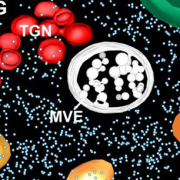
Review: 3D electron microscopy for imaging organelles in plants and algae (Plant Physiol)
Plant Science Research WeeklyHave you noticed that the quality and resolution of cell images has been getting better and better? Weiner et al. review the recent advances in 3D electron microscopy (EM) technologies that have provided these strikingly beautiful and informative images. Like “classic” transmission EM, EM tomography…
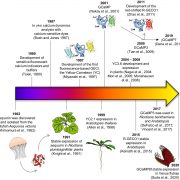
Review: Illuminating the hidden world of calcium ions in plants with a universe of indicators (Plant Physiol)
Plant Science Research WeeklyCalcium ions (Ca2+) are ubiquitous and essential signals, with a very steep concentration gradient from outside to inside the cell. Numerous studies from across the kingdoms have demonstrated that transient Ca2+ fluxes convey information of many types. Here, Grenzi et al. provide an Update on the tools…

Review: The long road to engineering durable disease resistance in wheat (Curr. Opin. Biotechnol.)
Plant Science Research WeeklyThis review by Wulff and Krattinger is a beautifully written “must read”. As the title suggests, it takes the reader on a journey of scientific progress, starting from the “first controlled cross between two wheat species” to the present, with a look into the future. Triticum aestivum (bread…
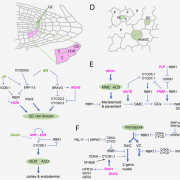
Review: Cycling in a crowd: coordination of plant cell division, growth and cell fate (Plant Cell)
Plant Science Research WeeklyUnlike animal cells, plant cells cannot migrate due to the presence of interconnected rigid cell walls, thus plant development relies on a continuous supply of new cells, (fueled by the cell cycle) to form new organs throughout their life. This excellent review by Sablowski and Gutierrez focuses on the…
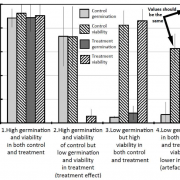
Seed biologists beware: End-of-trial estimation of initial viability may be error-prone (preprints)
Plant Science Research WeeklyAssessing the viability of ungerminated seeds at the end of a trial is a common practice in seed germination experiments. By doing this, researchers aim to establish the number of viable seeds that were sown in an experiment and estimate germination parameters accordingly. Still, can we be sure that…

Ten simple rules for choosing a PhD supervisor (PLOS Comput. Biol.)
Plant Science Research WeeklyChoosing a PhD supervisor is one of the most important and difficult decisions of an academic career. This new entry by Jabre et al. in the “Ten simple rules” series endeavors to highlight some of the factors to consider when faced with this decision. These span from the early steps of identifying…
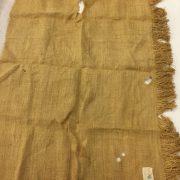
Lessons on textile history and fibre durability from a 4,000-year-old Egyptian flax yarn (Nature Plants)
Plant Science Research Weekly“Food, fuel, and fiber” sometimes is used to describe our utter dependence on plants, but often, other than cotton, the “fiber” part is under appreciated. However, there is a growing interest in bio-based materials, both for their greater recyclability and as an alternative to petroleum-derived…
Plant Science Research Weekly: October 8, 2021
WWR Full PostReview: 3D electron microscopy for imaging organelles in plants and algae
Have you noticed that the quality and resolution of cell images has been getting better and better? Weiner et al. review the recent advances in 3D electron microscopy (EM) technologies that have provided these strikingly beautiful…

Keith E. Duncan: Plant Physiology First Author
Plant Physiology: Author Profiles
Keith E. Duncan, first author of "X-ray microscopy enables multiscale high-resolution 3D imaging of plant cells, tissues, and organs"
Current Position: Research Scientist in Chris Topp’s lab at the Donald Danforth Plant Science Center, and Director of X-ray Imaging Facility
Education: BS in Biology,…