


Rachel M. McCoy: Plant Direct First Author
Plant Direct: Author Profiles
Rachel M. McCoy, first author of "Allelopathy as an evolutionary game"
Current Position: Postdoc in Dr. Ying Li’s lab at Purdue University
Education: Ph.D. in Horticulture (Purdue University); B.S. in Biology (University of Evansville)
Non-scientific Interests: cats, gardening, baking, traveling,…

Yang Gao: The Plant Cell First Author
The Plant Cell: Author Profiles
Yang Gao, first author of "Chloroplast translational regulation uncovers nonessential photosynthesis genes as key players in plant cold acclimation"
Current Position: Postdoctoral researcher in the research group of Translational Regulation in Plants headed by Dr. Reimo Zoschke at the Max Planck Institute…

Jiaqi Hou: Plant Physiology First Author
Plant Physiology: Author Profiles
Jiaqi Hou, first author of "The Histone Deacetylase 1/ GSK3/SHAGGY-Like Kinase 2/ BRASSINAZOLE RESISTANT 1 Module Controls Lateral Root Formation in Rice"
Current Position: PhD Student, College of Life Sciences, Wuhan University
Education: B.S., School of Life Science and Technology, Wuhan Polytechnic…

Min-Yao Jhu: Plant Physiology First Author
Plant Physiology: Author Profiles
Min-Yao Jhu, first author of "Heinz resistant tomato cultivars exhibit a lignin-based resistance to field dodder (Cuscuta campestris) parasitism"
Current Position: Postdoctoral research associate at Crop Science Centre, Department of Plant Sciences, University of Cambridge, Cambridge, UK.
Education:
Ph.D.…
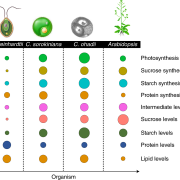
Carbon flux through photosynthesis and central carbon metabolism show distinct patterns between algae, C3, and C4 plants (Nature Plants)
Plant Science Research WeeklyPhotosynthesis is an attractive target for improving crop yields, and tailoring downstream photosynthesis-associated metabolism is a relatively unexplored path for achieving this. Chlorella ohadii is the fastest growing photosynthetic organism identified, has high photosynthetic rates, and can survive…
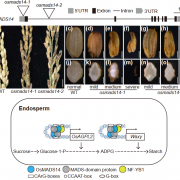
OsMADS14 and NF-YB1 cooperate in the direct activation of OsAGPL2 and Waxy during starch synthesis in rice endosperm (New Phytol.)
Plant Science Research WeeklyRice grain is mainly composed of starch, which provides the necessary energy and sugars for successful germination and seedling development. Since rice is the most widely consumed crop, studying the regulators that control starch synthesis is crucial to ensure food security for more than half the world‘s…
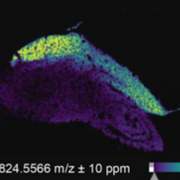
Shielding the oil reserves: the scutellum as a source of chemical defenses (Plant Physiol.)
Plant Science Research WeeklyIf you work with grasses, you are probably familiar with the scutellum –the shield-like cotyledon typical of seeds from these plants. This structure has a renowned role in transferring nutrients to the growing embryo. However, Murphy and colleagues show us that not only does this structure look like…

Structural organization of the spongy mesophyll (New Phytol.)
Plant Science Research WeeklyDespite a large variation in leaf morphology, laminar leaf anatomy is largely conserved, comprising two developmentally distinct mesophyll tissues, the palisade and spongy mesophyll. Spongy mesophyll cells along with intercellular spaces form an interconnected network to maximize the surface area for…

Microtubule-based perception of mechanical conflicts controls plant organ morphogenesis (Sci. Adv.)
Plant Science Research WeeklyMorphogenesis is a critical process in plants and animals that allows a cell, tissue, or organism to reach its final shape. In Arabidopsis thaliana, the formation of lateral root primordia (LRP) is an excellent example of organ morphogenesis that involves cell remodeling throughout differential growth…