

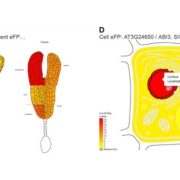
So Much Data, So Little Time: ePlant Steps into the Breach for Plant Researchers
Blog, Research, Research Blog, The Plant Cell, The Plant Cell: In Brief0 Comments
/
The ever-increasing amount of data available to researchers has come with similarly increasing cognitive loads in efforts to use these data. Even when data sets are stored in well-curated databases, it can be time-consuming to master the specific tools harbored at each site and cumbersome to move between…
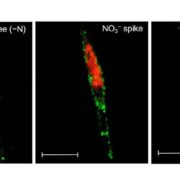
An Emerging Model Diatom to Study Nitrogen Metabolism
Blog, Research, Research Blog, The Plant Cell, The Plant Cell: In BriefCarbon and nitrogen metabolism are intricately linked in all organisms and are tightly regulated to maintain growth, homeostasis, and other cellular activities. In plants and algae, photosynthesis provides both carbon skeletons and the reductant needed for assimilation of inorganic NO3¯ by nitrate reductase…
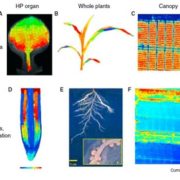
Review: Plant phenomics, from sensors to knowledge
Blog, Plant Science Research Weekly, Research, Research BlogTardieu et al. have written a comprehensive and very readable overview of the current state and future challenges of plant phenomics, which they define as “the development and application of the suite of tools and methods used for three major goals — (1) capturing information on structure, function…
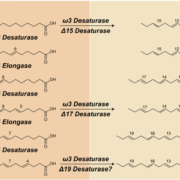
Medicine is not health care, food is health care: Plant metabolic engineering, diet and human health
Blog, Plant Science Research Weekly, Research, Research BlogA diet consisting of a wide range of plant matter is optimal for human heath, but due to various historical and social factors (including the relatively high cost of fresh fruit and vegetables), many people don’t get the nutrients they need. Biofortification of staple foods like rice through breeding…

Identification of novel growth regulators in plant populations expressing random peptides
Blog, Plant Science Research Weekly, Research, Research BlogKnowing that many small molecules act as growth regulators, chemical genomics endeavors to identify novel growth-regulating compounds through screening thousands of randomly generated molecules. Knowing that many peptides also act as growth regulators, Bao et al. used a similar approach to look for novel…
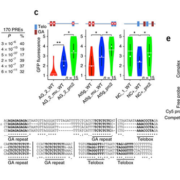
Cis and trans determinants of epigenetic silencing by Polycomb repressive complex 2 ($)
Blog, Plant Science Research Weekly, Research, Research BlogPolycomb repressive complex 2 (PRC2) stably regulates gene expression by initiating repressive histone methylation (specifically, trimethylation of histone H3 at Lys27, H3K27me3). Xiao et al. investigated how PRC2 targets the genes it silences. They identified several Polycomb response elements (PREs)…
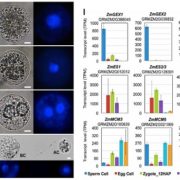
Zygotic genome activation occurs shortly after fertilization in maize
Blog, Plant Science Research Weekly, Research, Research BlogA plant’s life begins with the fusion of haploid egg and sperm cells to produce a diploid zygote. Many of the processes that control early development are under the control of the maternal genome, but at some point there is a shift towards zygotic control. Chen et al. investigated when this shift occurs…
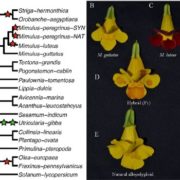
Emergence of subgenome dominance across time and ploidy
Blog, Plant Science Research Weekly, Research, Research BlogMany plants are not simple diploids (two copies of each chromosome) but are instead are the result of various forms of polyploidization (for example, whole-genome duplication or interspecific hybridization). Polyploidization can disrupt well-established controls over gene expression levels, transposon…
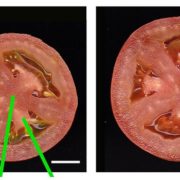
Tomato fruit weight controlled by Cell Size Regulator
Blog, Plant Science Research Weekly, Research, Research BlogMu et al. mapped a QTL previously shown to control fruit weight in tomato, and named the responsible gene Cell Size Regulator (CSR). They found that CSR-D, the derived allele, increases cell size and is widespread in Solanum lycopersicum var. lycopersicum, but not in ancestral tomatoes with smaller fruit.…