

Preparing for and Surviving Academic Interviews
BlogPart of the Self-Reflection; series by and for early-career researchers
Your application has arrived at the top of the stack and you have passed the phone/web interview evaluation! Now all you have to do is ace the academic interview to land that faculty position you’ve been dreaming of for…
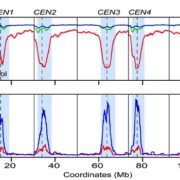
Initiation of meiotic recombination is regulated by epigenetic marks and chromatin structure (Genome Res.)
BlogMeiotic recombination is an important source of genetic diversity by allowing the reshuffling of parental alleles during meiosis. It requires the generation of DNA double-strand breaks (DSBs) initiated by the activity of the SPO11 protein complex. In plants, the impact of chromatin structure and DNA…

How to listen, download and subscribe to The Taproot podcast
BlogThe Taproot podcast digs beneath the surface to understand how scientific publications in plant biology are created. In each episode, co-hosts Liz Haswell and Ivan Baxter take a paper from the literature and talk about the story behind the science with one of its authors.
How to listen
On a computer,…

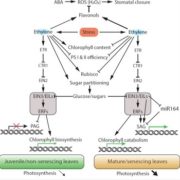
Update: Ethylene exerts species-specific and age-dependent control of photosynthesis
Blog, Plant Physiology, Plant Physiology: UpdatesBy Johan Ceuster and Bram Van de Poel
Abstract
The volatile plant hormone ethylene plays a regulatory role in many developmental processes and in biotic and abiotic stress responses. One of the under-explored actions of ethylene is its regulation of photosynthesis and associated components such…
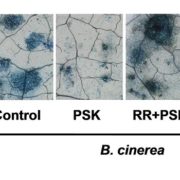
Pentapeptide Protection of Botrytis-Infected Tomato by Phytosulfokine
Blog, The Plant Cell, The Plant Cell: In BriefFungal pathogens such as Botrytis cinerea can cause devastating losses to agricultural crops – ask any strawberry, grape, or tomato grower. To prevent these losses, plants can summon a variety of immune responses by recognizing specific molecules associated with pathogen attack and/or internal damage.…
Developing a database for your lab rules and protocols
BlogPart of the “Self Reflection” series by and for early-career researches
After an hour-long search, you’re pouring over an old notebook from a previous post-doc in the lab, trying to recreate a protocol that your lab thought you would never use again. There's an upside-down y with a squiggle…

Autophagy: Both Friend and Foe in Pseudomonas Infection
Blog, The Plant Cell, The Plant Cell: In BriefEukaryotes use two major systems for getting rid of unwanted proteins: the ubiquitin proteasome system and autophagy. The proteasome degrades ubiquitinated proteins. Autophagosomal vesicles encapsulate cellular waste and either deliver it to the vacuole or fuse with a lysosome. Animal cells use autophagy…
Trust but Verify: A Lesson in Technology Limitations and Error Propagation
Blog, The Plant Cell, The Plant Cell: In BriefBy C. Robin Buell
Unlike molecular biology techniques that are routinely used in individual investigator labs, the high cost of infrastructure historically has resulted in genome sequencing being performed at genome centers in which quality control and quality assessments are a mainstay, and it is…