

Bacteria exploit autophagy for proteasome degradation and enhanced virulence in plants (Plant Cell)
Blog, Plant Science Research WeeklyAutophagy has been defined as non-specific self-eating to obtain material that will be used for key processes within the cell. Even through authophagy has been demonstrated to be very important, its role during plant-bacteria interactions is not well known. Üstün et al. examined interactions between…
Plantae Job Center - Post your resumes and jobs today
Blog0 Comments
/
ASPB and Plantae have already set a tone of collaboration and constant improvement by and for plant scientists. In keeping with our commitment to providing the best recruitment resources for our members, we are excited to announce the launch of our new and expanded online employment resource: the Plantae…

Plant Biology 2018 Career Fair is Coming - May 15, 2018
Blog, Careers, Careers - Blog
Find your next position – or your next hire – at Plant Biology 2018 Career Fair in conjunction with the Plantae Career Center.
Are you an employer? Post your jobs and then sign up for space in our on-site interview booths. Jobs will be marked with a special icon to let people know you…

Why do we need mathematical modeling in biology?
BlogBig data can be analyzed in many different ways, depending on the scientific questions that need to be answered. Bioinformatics and computational biology are relatively more common terms for data analysis methods that borrow heavily from the fields of math and computer science. In this blog post I discuss…
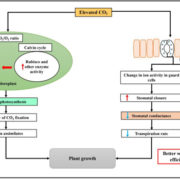
Review: New insights into the cellular mechanisms of plant growth at elevated atmospheric carbon dioxide (Plant Cell Environ) $
Blog, Plant Science Research Weekly, Research, Research BlogElevated CO2 (eCO2) encourages plant growth through increased photosynthetic rates and lower stomatal conductance. However, eCO2 also has knock-on effects on plant secondary metabolism, which can also affect plant growth. In this review, Gamage et al explore these ‘post-photosynthetic’ effects…
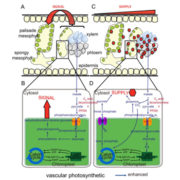
Review: C4-like photosynthesis has important functions in C3 plant vasculature (JXB)
Blog, Plant Science Research Weekly, Research, Research BlogIn contrast to the much-studied photosynthetic processes in C4 plant vasculature, the processes in the cells surrounding C3 veins remain much less understood. Here, there appears to be a partial and more spatially-separated C4 pathway, which has been observed in several species including rice, Arabidopsis,…
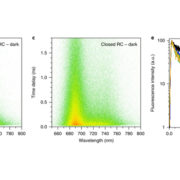
Dynamic feedback of the photosystem II reaction centre on photoprotection in plants (Nat Plants) $
Blog, Plant Science Research Weekly, Research, Research BlogThe light reactions of photosynthesis are under constant regulation in order to continue operating efficiently and avoid photodamage in a fluctuating light environment. One mechanism to avoid photodamage is the dissipation of excess excitation energy as heat, which can be determined by measuring non-photochemical…
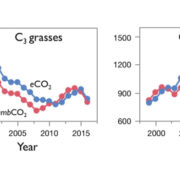
Unexpected reversal of C3 versus C4 grass response to elevated carbon dioxide during a 20-year field experiment (Science) $
Blog, Plant Science Research Weekly, Research, Research BlogIt is widely accepted that the growth of C3 plants responds more to elevated CO2 (eCO2) than that of C4 plants, since photosynthesis in C3 plants is more limited by the current atmospheric CO2:O2 ratio due to the oxygenase activity of Rubisco. This has been established empirically in short-term eCO2…
Natural variation within a species for traits underpinning C4 photosynthesis (Plant Physiol)
Blog, Plant Science Research Weekly, Research, Research BlogWhile C4 photosynthesis is relatively well understood, the research community is still some distance from converting a C3 crop to one that performs C4 photosynthesis. There are many reasons for this, including the complex requirement to reconstitute Kranz leaf anatomy in a C3 species, and the elusive…