


Recognizing Plant Cell first authors: Rahul Bhosale
Blog, The Plant Cell, The Plant Cell: Author ProfilesRahul Arvind Bhosale, first author of A spatiotemporal DNA endoploidy map of the Arabidopsis root reveals roles for the endocycle in root development and stress adaptation
Current Position: Research Fellow at Department of Plant Sciences, University of Nottingham, UK.
Education: PhD in Biochemistry…

National Geographic features Plant Cell editor Zach Lippman, on gene editing
Blog, The Plant Cell, The Plant Cell: NewsPlant Cell Editor Zach Lippman and his work are featured in this National Geographic article, "Why Gene Editing Is the Next Food Revolution"
Tucked into a suburban Long Island neighborhood, a 12-acre plot may be growing the future.
Under a blistering July sun, Zachary Lippman bends over…
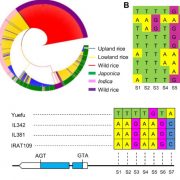
Li Zichao, research group of China Agricultural University, made new progress in the research on drought resistance mechanism of water and upland rice
Blog, Plant Physiology, Plant Physiology: EditorialsPress release from The World of Seeds, translated by Google Translate
Rice and upland rice are two ecological types of Asian cultivated rice that are differentiated under different water conditions, and their drought resistance is significantly different. Therefore, mining the drought-resistant genes…
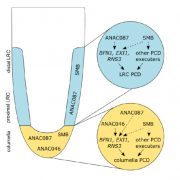
New insights in cell death in plants might generate new leads for weed control
Blog, The Plant Cell, The Plant Cell: NewsSource: SeedQuest
Some plants like the giant sequoia trees can grow into the “Largest Living Things on Earth”. Ironically, most of a tree’s biomass is actually not alive, but is formed by persistent cell corpses that are collectively called wood. Wood development is terminated by a tightly controlled…

The mysterious Pilostyles is a plant within a plant
Blog
Pilostyles are only visible when their fruit and flowers erupt out of their host plants.
The Conversation/Wikipedia
Steve Wylie; Jen Mccomb, and Kevin Thiele, University of Western Australia
In 1946, forestry officer Charles Hamilton found something unusual on a shrubby native pea plant…
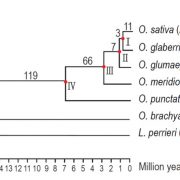
Escape from Centromere Land
Blog, The Plant Cell, The Plant Cell: In BriefAs plant biologists, we do love to consider the physiological adaptations plants have made to being sessile organisms—unlike animals, plants cannot move away from adverse environmental conditions such as high temperature, etc. We commonly consider such responses for organisms, but what about genes?…
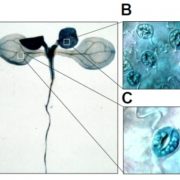
CDL1-OST1 Interaction as a Focal Point of Brassinosteroid-Abscisic Acid Hormone Signaling Crosstalk
Blog, The Plant Cell, The Plant Cell: In BriefPlants integrate signals in the form of light, humidity, temperature, CO2 concentrations and daily circadian rhythms. In addition, plants encounter pathogens, pests, herbivores and other stressors. Physiological processes like responding to stimuli, plant growth and development are usually governed and…
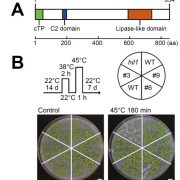
Heat Trims the Fat: HIL1 Functions in Lipid Homeostasis
Blog, The Plant Cell, The Plant Cell: In BriefGlobal climate change is one of the most pressing issues facing our world today. The impact of increasing temperatures can be felt in diverse areas, including human health and disease, natural ecosystems, and food security. In the agricultural sector, deciphering how plants respond to changing environmental…
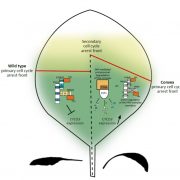
Arabidopsis Leaf Shape Regulation
Blog, Plant Physiology, Plant Physiology: On The InsideLeaf morphology, both between species and within the same organism,
is diverse: leaves can be simple or compound; they can have margins that are smooth or serrated, and they can be flat or have various curvatures. In Arabidopsis, leaf development starts with extensive cell proliferation throughout…