


Plant Synthetic Biology Collection - Cloning Systems
Blog, Collections, Synthetic Biology0 Comments
/
This collection includes advances in modular cloning systems with potential applications in plant synthetic biology.
elink.io | See Original

The Plantae Job Center - January 9, 2019
Blog, Careers, Careers - Blog
Internship Posts:
Recent Job Posts:
Make the most of your profile on Jobs.Plantae.org:
· Upload your resume/CV, so you can apply for jobs faster
· Make your resume/CV public, so employers can find you
· Set up Job Alerts, so you’ll get an email any time a job that fits…

A Positive Regulatory Loop for Systemic Acquired Resistance
Blog, The Plant Cell, The Plant Cell: In a NutshellWang et al. find a positive feedback loop consisting of MPK3/6, WRKY33, ALD1, and pipecolic acid regulates local immune amplification contributing to systemic acquired resistance in Arabidopsis thaliana. Plant Cell https://doi.org/10.1105/tpc.18.00547
By Yiming Wang, Jürgen Zeier, and Kenichi Tsuda…
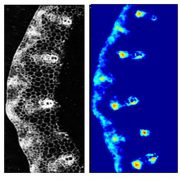
New imaging technique developed for the quantitative visualization of sucrose in plants
Blog, Plant Physiology(Translated from the original)
Regina Devrient Press and Public Relations
Leibniz Institute of Plant Genetics and Crop Plant Research
Sucrose is the primary transport form of sugar in plants. It therefore plays an essential role as an energy source, but also as a signal generator under…

US Students are experiencing food insecurity, so what can we do to help?
BlogThe decrease in food security for students is a troublingly common problem on university campuses.
Guest post by Sterling Field
I often frame my research on plant adaptation to flooding in terms of the need for food security in a changing climate. While this is a great way to start a conversation…
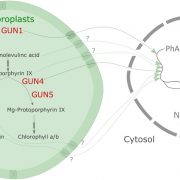
Another gun Dismantled: ABSCISIC ACID INSENSITIVE4 Is Not a Target of Retrograde Signaling
Blog, Plant Physiology, Plant Physiology: News and ViewsBy Amna Mhamdi and Charlotte M.M. Gommers
The nuclear genome encodes the majority of chloroplast-localized proteins and, in return, chloroplasts exert some control over nuclear gene expression via so-called retrograde signals. These signals derive from developing chloroplasts (referred to as biogenic…
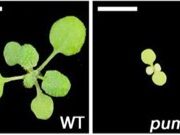
Moonlighting Enzymes: How Often Are We Missing Secondary Functions?
Blog, Plant Physiology, Plant Physiology: News and ViewsWe think of enzymes as highly specific catalysts that carry out one reaction and show nearly absolute substrate specificity. However, absolute specificity is the exception, not the rule, as most enzymes accept several structurally similar substrates. Moreover, many enzymes catalyze alternative reactions…
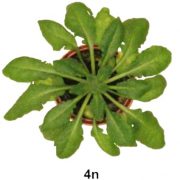
Plant Cell Wall Composition: Does Ploidy Matter?
Blog, Plant Physiology, Plant Physiology: News and ViewsMost of the carbon dioxide sequestered by plants during photosynthesis is converted into sugars and stored into polysaccharide-enriched cells walls that constitute the majority of the plant biomass. While plants have long been considered a valuable resource of biomaterials for the chemical and textile…

Challenging Conventional EDI Wisdom Resource Round Up
Blog
About the Inclusivity in the Plant Sciences Workshop
This past January, a group of diverse and passionate individuals from across the field of plant sciences convened at the Howard Hughes Medical Institute campus in Chevy Chase, MD to participate in the Inclusivity in the Plant Sciences strategic…