

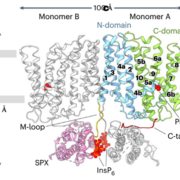
Structural insights into PHO1: A key regulator of phosphate translocation in plants
Plant Science Research WeeklyPhosphorus (P) is an essential macronutrient required for plant growth, development, and reproduction. It is primarily absorbed by plant roots in the form of orthophosphate (Pi). The root-to-shoot translocation of Pi depends on a crucial xylem-loading process mediated by PHOSPHATE 1 (PHO1), a Pi efflux…
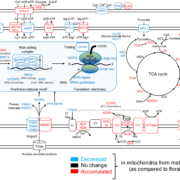
High-energy requiring pollen grains have specialized mitochondria
Plant Science Research WeeklyImagine you’re on a quest to deliver a package, racing against the competition. How do you prepare? Pollen grains and the pollen tubes that they form are essentially package-delivery systems. Their purpose is to deliver genetic information (sperm cell nuclei) to the ovule. Once the task is completed,…
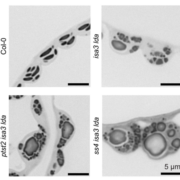
You’ve gotta starch somewhere: Evidence for an alternative starch granule initiation pathway
Plant Science Research WeeklyStarch is the major storage carbohydrate in plants, and in Arabidopsis leaves it forms granules in the chloroplasts to supply energy during the night when photosynthesis is inactive. These semicrystalline granules are made of glucose chains, which can be mostly unbranched (amylose) or highly branched…
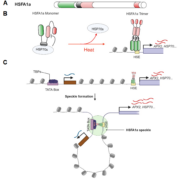
Prion-like domains of sensory HSFs remember heat
Plant Science Research WeeklyThe heat shock response, a rapid transcriptional response to heat, was first observed nearly 60 years ago, and has long been a paradigm for understanding gene responses to exogenous cues. The family of genes encoding heat shock factors (HSFs) is greatly expanded in plants. These HSFs serve as key regulators…

How a model C4 plant, Setaria viridis, copes with prolonged heat
Plant Science Research WeeklyDue to anthropomorphic global warming, 2024 was the first year during which the global mean temperature was more than 1.5° above pre-industrial levels. Clearly, understanding how high temperatures affect plant physiology is an urgent priority. In this new study, Zhang et al. did a multi-parameter study…
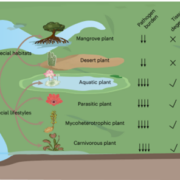
Streamlining the immune system: How plants adapt to reduced pathogen pressure
Plant Science Research WeeklyAlthough plants are sessile organisms unable to escape pathogen invasions, they are well equipped with defense mechanisms. Cell surface-localized pattern-recognition receptors (PRRs) detect extracellular signals and initiate pattern-triggered immunity (PTI), while nucleotide-binding leucine-rich repeat…
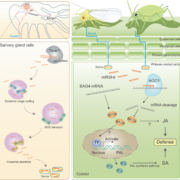
Double attack! Herbivore insects feed on plants and silence their genes
Plant Science Research WeeklyIn the natural environment, plants are constantly attacked by animals. Plant immunity is regulated by a network of genes and hormones including salicylic acid (SA) and jasmonic acid (JA). A recent study suggests that herbivore insects threaten plants with concerns more than the bite. Han et al., found…
Plant Science Research Weekly: February 7, 2025
WWR Full PostReview: Genetic engineering for carbon assimilation in plants
Rubisco (Ribulose‐1,5‐bisphosphate carboxylase/oxygenase) is the central enzyme for photosynthesis, This enzyme poorly discriminates between CO2 and O2, which limits its efficiency. To work around this and make carbon assimilation…

Being a Parent and Future Parent in Academia
Blog, CareersThis community blog harbors personal viewpoints on how to navigate parenthood and academia from two perspectives, one a current academic parent and another future academic parent.
As a female academic parent, Dr. Indrani Kakati’s tryst with parenting has been full of roller-coaster experiences.…