

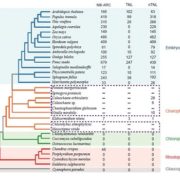
Origin of Plant R Genes
Plant Physiology, Plant Physiology: On The Inside, ResearchPlants rely on two branches of the innate immunity system to prevent or eliminate microbial infections: one involves cell surface receptors to respond to pathogen- or microbe- associated molecular patterns, and the other acts inside plant cells by using proteins with nucleotide-binding site (NBS) and…
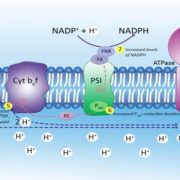
Phosphorous Deficiency and Photosynthesis
Plant Physiology, Plant Physiology: On The Inside, ResearchPhosphorus (P) is an essential macronutrient, and P deficiency limits plant productivity. P influences many aspects of photosynthesis P-deficient plants typically remain green and do not develop leaf chlorosis and yet P starvation immediately affects CO2 assimilation. Specifically, P deficiency is believed…
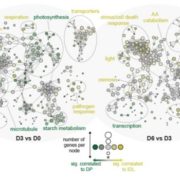
Leaf Metabolism in Response to Dark
Plant Physiology, Plant Physiology: On The Inside, ResearchOne of the more prevalent methods used to initiate plant senescence under laboratory conditions is to grow plants in prolonged dark conditions. The course of “dark-induced senescence” depends upon whether individual leaves on the plant or the entire plant is darkened: an individually darkened leaf…

Iron Accumulation and Fraxetin, a Coumarin
Plant Physiology, Plant Physiology: On The Inside, ResearchSoil pH has a strong influence on the availability of mineral nutrients and the distribution of species in natural plant communities. Iron (Fe) solubility decreases dramatically with increasing pH. In alkaline soils, calcifuge (“chalk-fleeing”) species are unable to compete due to their inability…
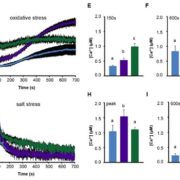
Calcium Dynamics in Chloroplasts
Plant Physiology, Plant Physiology: On The Inside, ResearchTransient changes in intracellular free Ca2+ concentration ([Ca2+]) are involved in the sensing of a wide variety of abiotic and biotic stimuli iIn plants. The unique spatiotemporal patterns in [Ca2+] that result enable specific stimulus-response coupling. Several intracellular compartments of the plant…
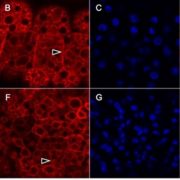
The Origins of Protein Storage Vacuoles
Plant Physiology, Plant Physiology: On The Inside, ResearchDuring seed development, protein reserves and minerals are stored in specialized vacuoles called protein storage vacuoles (PSVs). PSVs are functionally different from the lytic vacuoles (LVs) that serve a lysosome-like role in vegetative plant tissues. Embryonic vacuole (EVs) are also present during…
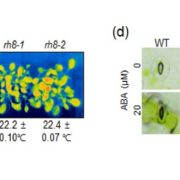
RH8-PP2CA interaction in ABA signaling ($)
Plant Science Research Weekly, Research BlogIt is well understood that abscisic acid (ABA) inhibits PPC2A phosphatase activity, which subsequently relieves phosphate-induced inhibition of a kinase interacting partner. This pathway composes the ‘core’ ABA signaling pathway, activating process involved in the ABA response such as stomatal closure…
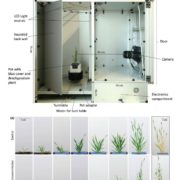
The “PhenoBox”, a flexible, automated, open-source plant phenotyping data solution (OA)
Plant Science Research Weekly, Research BlogHigh-throughput plant phenotyping systems are an excellent tool for analyzing large plant populations, providing better understanding of plant growth, productivity and performance under stress conditions. Unfortunately, high-throughput platforms are also high on costs and limited in their adaptability…
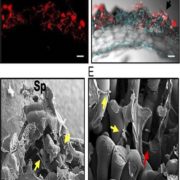
Phytophthora palmivora establishes tissue-specific intracellular infection structures in the earliest divergent land plant lineage (OA)
Plant Science Research Weekly, Research BlogSurprisingly little is known about the pathogens of liverworts. Carella et al. explored the interaction between the broad-host range pathogenic oomycete Phytophthora palmivora and the model liverwort Marchantia polymorpha. They found that the pathogen enters the host tissues and proliferates in intercellular…