


Chromatin region accessibility: cross-species comparisons and cell type distinctions
Blog, Plant Science Research Weekly, Research, Research BlogCis-regulatory elements direct transcriptional output during cell differentiation and coordinate adaptive responses to environmental stress. DNA becomes open and accessible when nucleosomes are displaced by DNA-binding proteins, indicating a correlation between open chromatin regions and transcriptional…
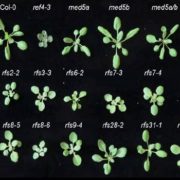
Mediator complex subunits in the regulation of phenylpropanoid biosynthesis ($)
Blog, Plant Science Research Weekly, Research, Research BlogThe Mediator complex is a transcriptional co-regulator that is conserved across kingdoms. Several subunits have been identified through genetic approaches in Arabidopsis. Recessive loss-of-function mutants of MED5 subunits cause phenylpropanoid overaccumulation, but ef4-3, a semi-dominant mutation of…
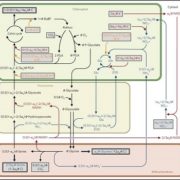
Plants increase CO2 uptake by assimilating nitrogen via the photorespiratory pathway
Blog, Plant Science Research Weekly, Research, Research BlogDuring photosynthesis Rubisco fixes CO2 by carboxylating its substrate RuBP, leading to the de novo production of carbohydrates. Photorespiration has long been considered a wasteful process, initiated by Rubisco-mediated oxygenation of RuBP and resulting in the loss of carbon, nitrogen and energy. …

VASCULATURE COMPLEXITY AND CONNECTIVITY required for bilateral symmetry but not for dorsoventrality in Arabidopsis leaves
Blog, Plant Science Research Weekly, Research, Research BlogThe formation of the lobes at the Arabidopsis leaf margin are due to differences in local auxin accumulation, coordinated by auxin efflux carrier (PIN1) and transcriptional regulator (CUC2), but the molecular mechanisms acting upstream are not yet understood. Among viable leaf shape mutants, Wilson-Sanchez…
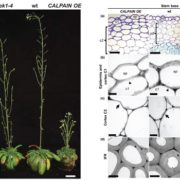
Arabidopsis DEFECTIVE KERNEL1 regulates cell wall composition and axial growth in the inflorescence stem
Blog, Plant Science Research Weekly, Research, Research BlogPlants can reach impressive heights, thanks to the mechanical stability provided by the cell walls. The required strength is ensured by coordination of cell wall deposition and cell expansion. Plant-specific calpain (DEK1) regulates axial stem growth, as lines overexpressing the calpain domain develop…
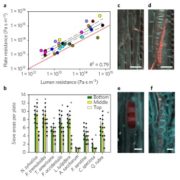
How do trees transport carbohydrates?
Blog, Plant Science Research Weekly, Research, Research BlogAs a tree grows in height, increasing the length of the transport pathway, the hydraulic resistance of the vascular tissues should increase. It is not clear if trees only rely on passive transport mechanisms (no active loading of sugars) to move carbohydrates from shoots to roots. To answer this question,…

Trees are particularly robust to fixed somatic mutations
Blog, Plant Science Research Weekly, Research, Research BlogPlants lack a developmentally defined germline and gametes originate only late during plant development. This allows mutations acquired during the vegetative growth (somatic mutations) to be transmitted to the reproductive organs. The accumulation of mutations is relatively low in annual plants such…

Genome-wide identification of Medicago peptides involved in macronutrient responses and nodulation
Blog, Plant Science Research Weekly, Research, Research BlogPlants are highly plastic and can modulate their growth and development to better respond to abiotic and biotic surroundings. Among the molecules involved in the adaptation to the environment, a crucial role is played by small secreted peptides (SSPs). In their paper, integrating 144 transcriptomic experiments,…
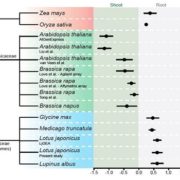
The Brassicaceae family displays divergent, shoot-skewed NLR resistance gene expression
Blog, Plant Science Research Weekly, Research, Research BlogNLR (Nucleotide-binding site leucine-rich repeat resistance) genes help plants recognize pathogens. Munch et al. looked at expression pattern data of 1,235 NLRs from nine plant species. The distribution of NLR gene expression between shoot and root is relatively constant within a species, and for most…