

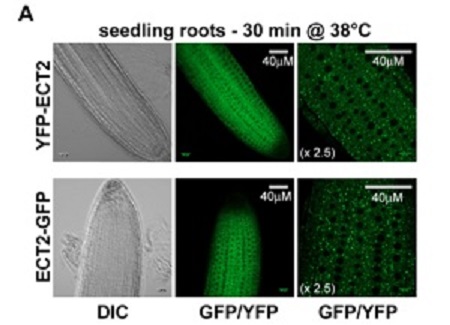
Trichome branching is regulated by the m6A reader ECT2 in Arabidopsis (OA)
Plant Science Research Weekly, Research BlogMethylation at position N6 of adenosines (m6A) is the most abundant mRNA chemical modification. It influences gene activity at the post-transcriptional level and is thus important for development. m6A is decoded by reader proteins. While the repertoire of reader proteins has been extensively studied…
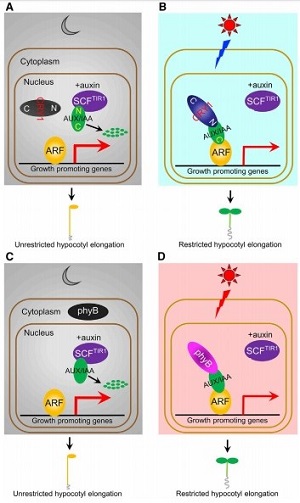
Photoactivated CRY1 and phyB interact directly with AUX/IAA proteins to inhibit auxin signaling in Arabidopsis (OA)
Plant Science Research Weekly, Research BlogSo far we know that light inhibits hypocotyl cell elongation and that the master regulatory plant hormone auxin induces hypocotyl elongation. Light signal depends on cryptochrome (CRY1) and phytochrome (PhyB). Auxin signal follows the traditional TIR1/AFB receptor-mediated degradation of AUX/IAA repressor.…
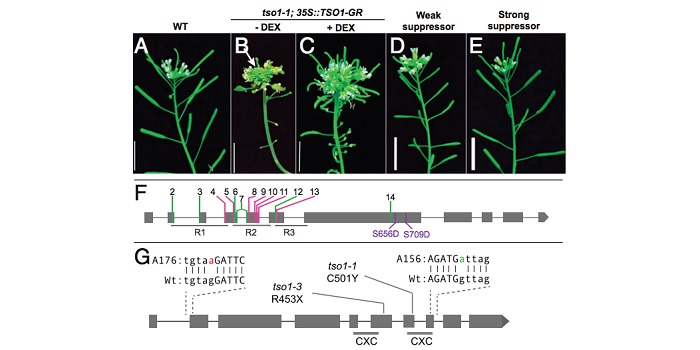
TSO1 and MYB3R1 form a regulatory module to coordinate cell proliferation with differentiation (PNAS)
Plant Science Research WeeklyIn order to ensure proper development, plants need to balance cell proliferation and differentiation. Mutation in TSO1 causes disorganization of cell layers, leading to drastic reduction in fertility. A mutagenesis screen for rescue of fertility in the tso1-1 background identified MYB3R1 as major partner…
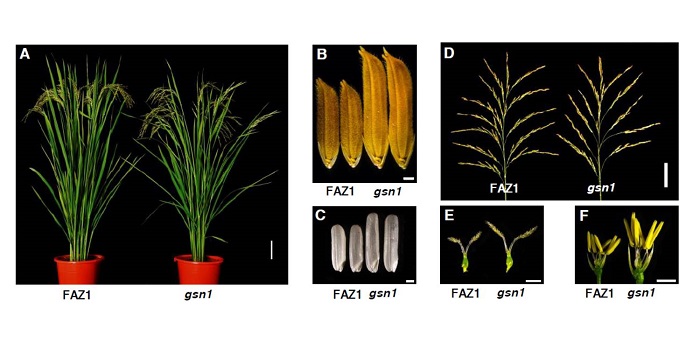
GSN1 coordinates grain number and grain size (Plant Cell)
Plant Science Research WeeklyGrain yield is determined by both grain number and grain weight. There is often a trade-off between these traits; for example, increased grain number is often associated with decreased grain weight. Using a forward-genetic approach, Guo et al. have identified a rice gene, GRAIN SIZE AND NUMBER1 (GSN1)…
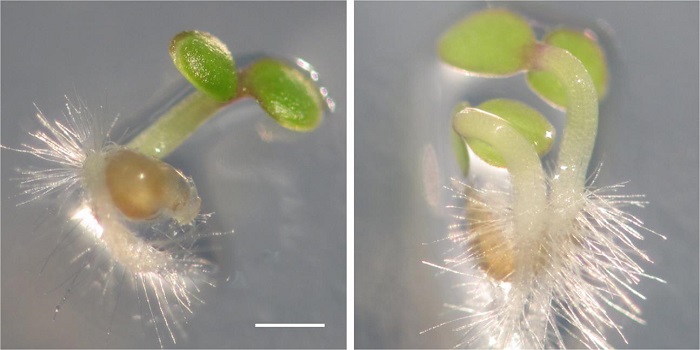
Cyclin-dependent kinase inhibitors ensure formation of one functional megaspore per ovule (PLOS Genet)
Plant Science Research WeeklyUsually the female germline starts with one MMC (megaspore mother cell) per ovule that becomes four megaspores through the process of meiosis. Out of these four, only one survives to produce a functional megaspore (FM); the other three undergo a degeneration process. The FM forms the embryo sac. In this…
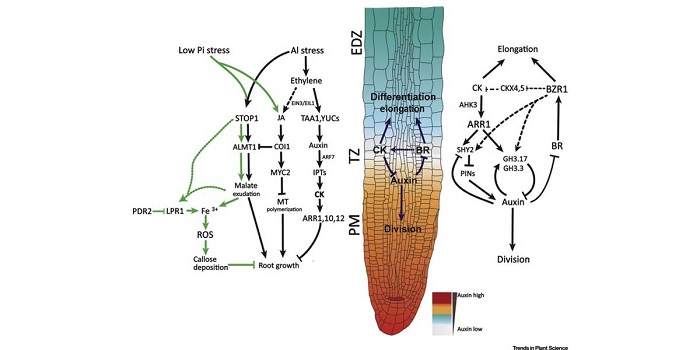
Review: The root transition zone: A hot spot for signal crosstalk (TIPS) ($)
Plant Science Research WeeklyPlant roots are an excellent system to study the interactions between endogenous (phytohormones) and exogenous (abiotic stresses) stimuli. The root can be considered as three sections: the meristematic zone (where active cell division occurs), the transition zone (acting as a boundary between meristem…
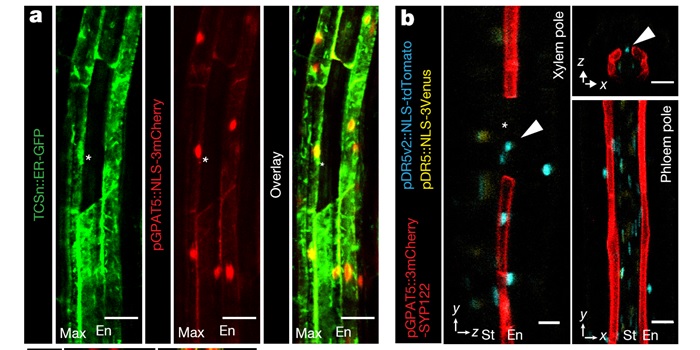
Diffusible repression of cytokinin signaling produces endodermal symmetry and passage cells (Nature)
Plant Science Research WeeklyPassage cells are a subset of interspersed root endodermal cells that are unsuberized, which is thought to aid in transport because suberin inhibits transcellular transport. In Arabidopsis, suberization follows a stereotypic pattern which responds to many stress conditions, partly mediated by abscisic…
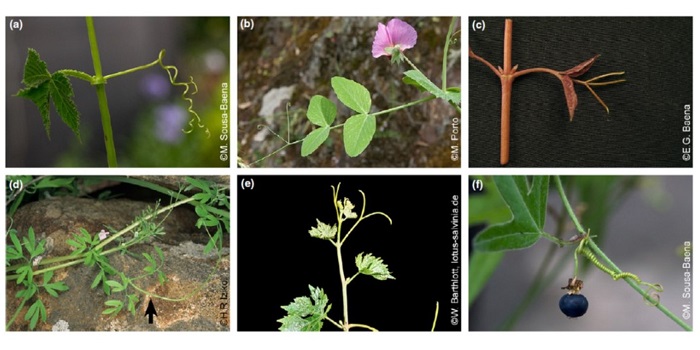
Review: The molecular control of tendril development in angiosperms (New Phytol.)
Plant Science Research WeeklyThere are obvious advantages to being a climbing plant; for example, climbing is a low-cost way to avoid being shaded by your neighbors. Tendrils, which evolved independently several times, are one climbing strategy (others include twining stems and sticky adventitious roots). Sousa-Baena et al. review…
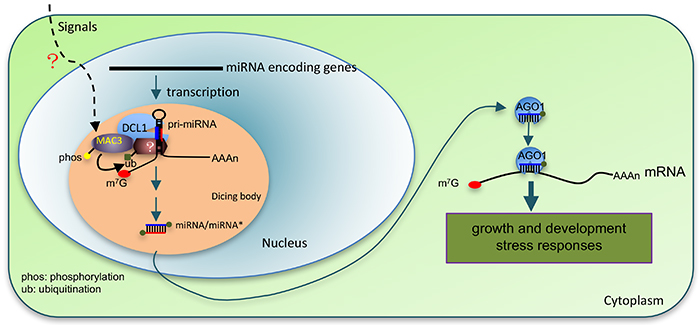
MAC3 Proteins Regulate MicroRNA Biogenesis
Research, The Plant Cell, The Plant Cell: In a NutshellLi et al. uncovered the roles of MAC3 in miRNA biogenesis in Arabidopsis. Plant Cell (2018).
By Shengjun Li and Bin Yu
Background: microRNAs (miRNAs) are tiny RNA molecules that regulate gene expression. Plants use miRNAs to control development and physiology. Consequently, understanding of the…