

Arabidopsis Leaf Shape Regulation
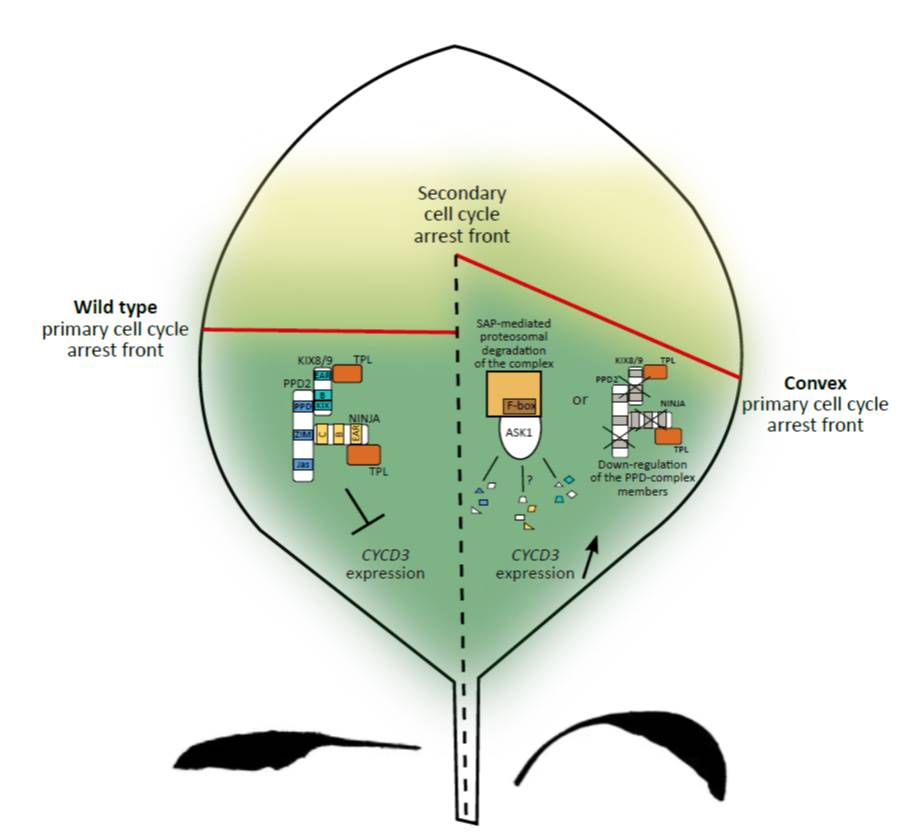
Blog, Plant Physiology, Plant Physiology: On The InsideLeaf morphology, both between species and within the same organism,
is diverse: leaves can be simple or compound; they can have margins that are smooth or serrated, and they can be flat or have various curvatures. In Arabidopsis, leaf development starts with extensive cell proliferation throughout…
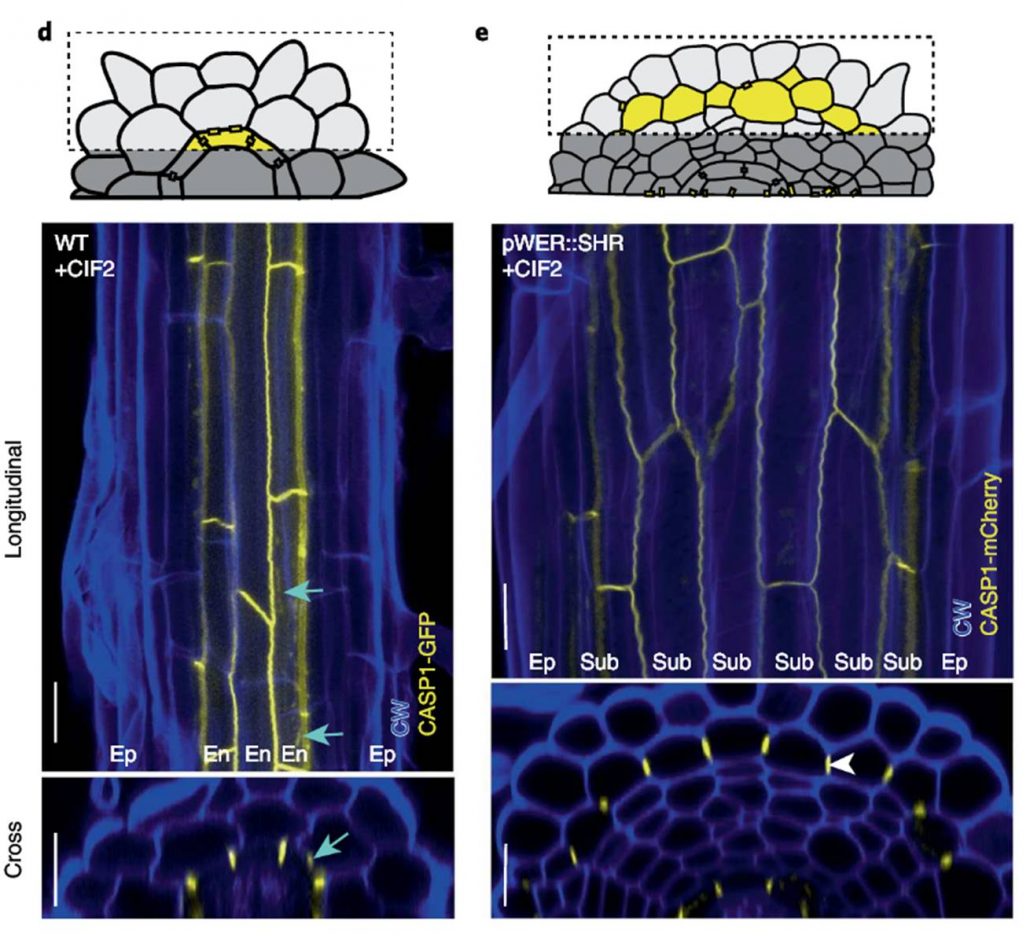
Minimum requirements for changing and maintaining endodermis cell identity in the Arabidopsis root ($) (Nature Plants)
Plant Science Research WeeklyForward-genetic, loss-of-function studies have been invaluable in identifying factors necessary for the formation of the root endodermis. Drapek et al. used an ectopic expression approach to identify factors that are sufficient to produce endodermal-like cells in different root regions. They found that…
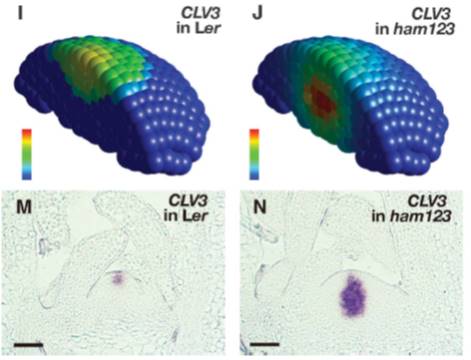
HAIRY MERISTEM with WUSCHEL confines CLAVATA3 expression to the outer apical meristem layers ($) (Science)
Plant Science Research WeeklyThe interaction between transcription factors WUSCHEL (WUS) and CLAVATA3 (CLV3) controls the size of the meristem. Although WUS is known to activate CLV3 expression, their expression domains don’t fully overlap, with CLV3 being restricted to the upper part of the meristem. Previously, in the multiple…
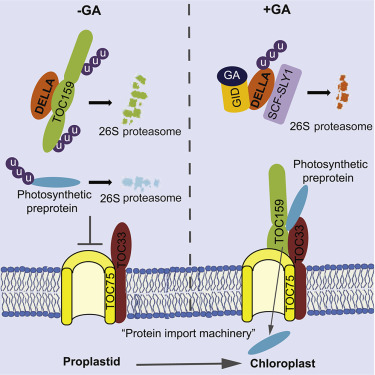
Chloroplast biogenesis controlled by DELLA-TOC159 interaction in early plant development (Curr. Biol.)
Plant Science Research WeeklyPlant photosynthesis occurs in the chloroplast, the green organelles that are the most famous members of the plastid family. Chloroplast biogenesis starts with illumination at germination, when the colorles, non-photosynthetic proplastid acquires photosynthetic activity as it greens. Gaining photosynthetic…
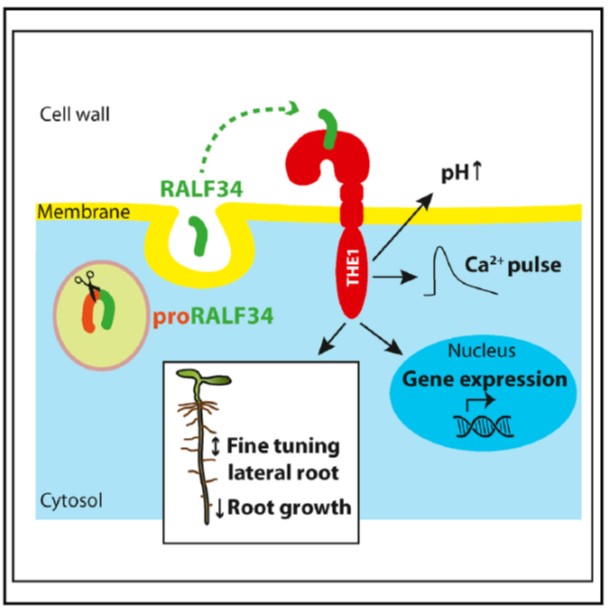
Receptor kinase THESEUS1 is a RALF 34 receptor with roles in lateral root development (Curr. Biol.)
Plant Science Research WeeklyRALF peptides were identified nearly 20 years ago, as small peptides that induce rapid alkalinisation of the culture medium when added to cell suspension cultures. Previously, members of the receptor-like kinase (RLK) family including FERONIA (FER) have been identified as RALF receptors. A related…
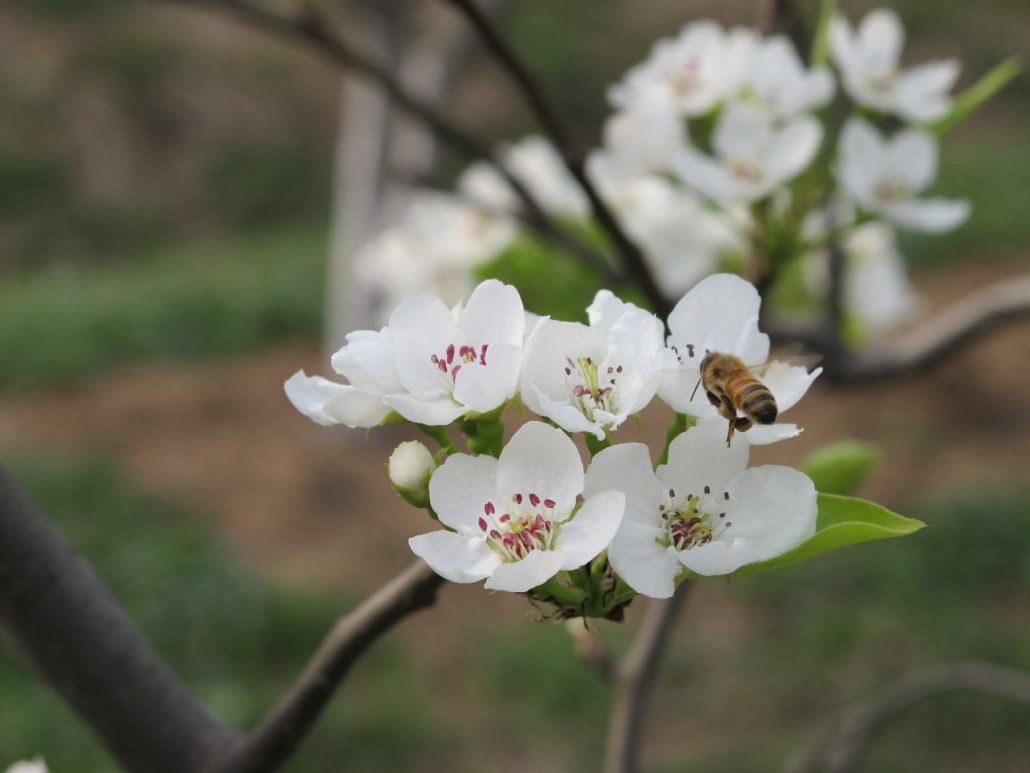
Role of the Actin Cytoskeleton in Self-Incompatibility
Research, The Plant Cell, The Plant Cell: In a NutshellChen et.al. demonstrate that phosphatidic acid mitigates S-RNase signaling in pollen by stabilizing the actin cytoskeleton. Plant Cell (2018). https://doi.org/10.1105/tpc.18.00021
By Jianqing Chen, Peng Wang, Shaoling Zhang, and Juyou Wu
Background: The success of sexual reproduction in flowering…
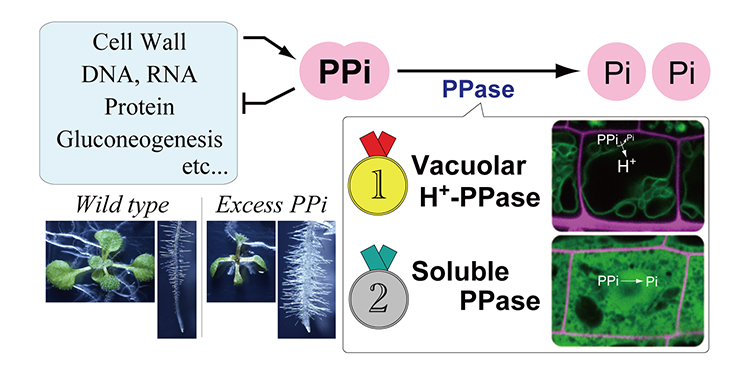
Maintaining Cellular Phosphate
Research, The Plant Cell, The Plant Cell: In a NutshellSegami et al. investigate cellular phosphate homeostasis in Arabidopsis. Plant Cell https://doi.org/10.1105/tpc.17.00911
Background: Many biological reactions, including the biosynthesis of DNA, RNA, proteins, and polysaccharides, produce inorganic pyrophosphate (PPi). However, accumulation of PPi…
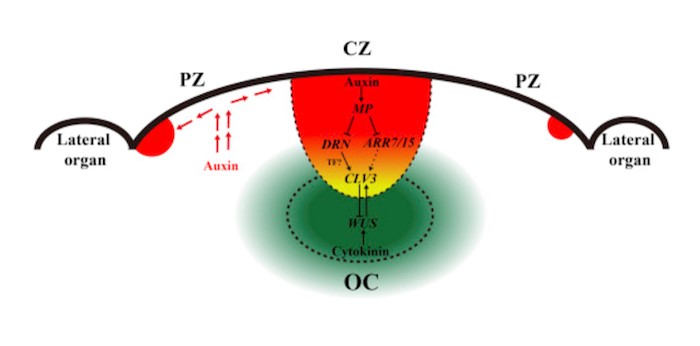
Auxin regulates shoot stem cells
Plant Science Research WeeklyAuxin and cytokinin play critical roles in determination of cell fate in the shoot apical meristem (SAM). Until now auxin's role was thought to be confined to the peripheral zone (PZ), promoting cell differentiation and organogenesis, mediated by AR5/MP. However, studies using GC-MS have shown the presence…

Co-expression networks for strawberry flower and fruit development
Plant Science Research WeeklyThe diploid strawberry (Fragaria vesca) is a useful model system for understanding non-climacteric ripening and seed-to-fruit cross-tissues communication. Previously, spatial and temporal transcriptome data from the strawberry fruit and flowers was generated. Shahan and colleagues combine the transcriptome…