


The Molecular Switch Governing the Heat Stress Response in Wheat
The Plant Cell: In a NutshellWang et al. explore how SUMOylation of a key transcription factor affects heat stress responses in wheat.
https://doi.org/10.1093/plcell/koad192
By Jie Liu and Haoran Wang; Frontiers Science Center for Molecular Design Breeding, Key Laboratory of Crop Heterosis and Utilization (MOE), Beijing Key…
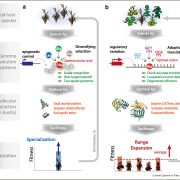
Review: Till death do us pair: Co-evolution of plant–necrotroph interactions
Plant Science Research WeeklyThis interesting and well-written review by Derbyshire and Raffaele takes a step back from the molecular interactions between plant and pathogen and discusses them in light of co-evolutionary processes. The review starts with a useful introduction and definition of concepts about “robustness” in…
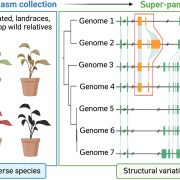
Spotlight: Super-pangenomes for improved breeding
Plant Science Research WeeklySometimes more really is better, and I think it’s safe to say that when it comes to genomic information, more is better. Here, Raza et al. highlight the great value of super-pangenomes. A pan-genome is defined as the entire set of genes within a species, created by combining sequences of many individuals.…
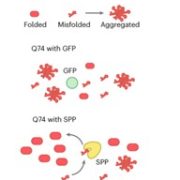
Chloroplast proteostasis prevents aggregation of Huntington’s disease-causing human polyQ protein
Plant Science Research WeeklyCertain human neurodegenerative disorders are caused by aggregation of disordered proteins. In particular, Huntington’s disease is caused by aggregation of a protein called huntingtin, which contains long stretches of glutamine (Q). Llama et al. observed that proteins with long stretches of glutamine…
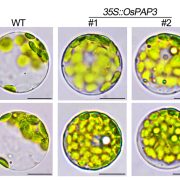
Altering chloroplast biogenesis leads to increased yields in rice
Plant Science Research WeeklyTranscription of chloroplast genes is carried out by the plastid encoded polymerase (PEP) with help from PAPs (PEP-associated proteins). PAP3 is important for chloroplast development in Arabidopsis thaliana and Nicotiana benthamiana, however its role in crops has not been fully elucidated. Here Seo et…
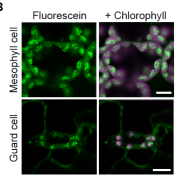
Staining starch granules in living plants
Plant Science Research WeeklyStarch granules are synthesized in the leaves of chloroplast during the day and degraded in the subsequent night. To visualise starch granules the tissue usually has to be fixed, which prevents live imaging. Here Ichikawa et al. set out to find a highly specific dye to image starch granules in living…
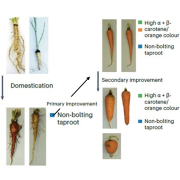
When and how did carrots turn orange?
Plant Science Research WeeklyCarrots were not always orange, and a new paper by Coe, Bostan, Rolling et al. sheds new light into the history of carrot domestication and improvement, i.e., how we went from white, knotty carrots to the orange, smooth ones that are now consumed all over the world. The authors published a new version…

Physcomitrium patens responses to elevated CO2 and nitrogen
Plant Science Research WeeklyWith atmospheric CO2 levels increasing 100 times faster than historical levels, much attention has been paid to how crop plants respond to this elevated CO2 (eCO2). For angiosperms, eCO2 leads to increased CO2 assimilation and decreased photorespiration, but over time plants can adapt, leading to lower…
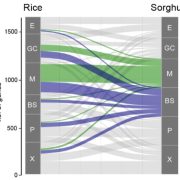
Single-nucleus sequencing reveals transition from C3 to C4 photosynthesis
Plant Science Research WeeklySometime in the Cretaceous period (dinosaur time!), some monocots acquired a special pathway for carbon fixation, rendering them more efficient particularly in hot or dry environments. In most monocots, carbon is fixed by Rubisco in the mesophyll cells. In the innovative pathway, carbon fixation is split…