

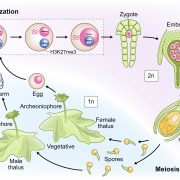
Review: Paternal imprinting in Marchantia polymorpha
Plant Science Research WeeklyHumans and flowering plants spend most of their lives in a diploid state with two copies of each chromosome in most cells, but to reproduce they produce haploid gametes through meiosis. By contrast, bryophytes (liverworts, hornworts, and mosses), spend most of their lives in the haploid state. They produce…
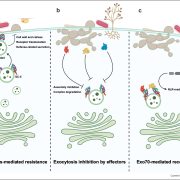
Review: The exocyst complex is targeted by pathogen effectors
Plant Science Research WeeklyThe exocyst complex is a conserved octameric protein complex in eukaryotic cells. Its primary function is to tether secretory vesicles to the plasma membrane during the exocytosis process, and it is also involved in autophagy and host-pathogen interactions. Intriguingly, EXO70, one of the subunits of…
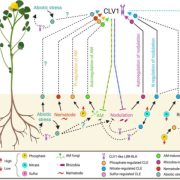
Review: CLAVATA signaling in plant-environment interactions
Plant Science Research WeeklyCLAVATA 3/EMBRYO SURROUNDING REGION-related (CLE) peptides and CLAVATA type receptors have been well charecterized for their role in root and shoot apical meristem maintenance in Arabidopsis. CLE peptides are also referred to as “peptide hormones” for their role in contolling physiological and developmental…
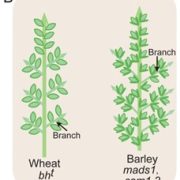
Review: Increasing yields of barley and wheat through inflorescence architecture
Plant Science Research WeeklyThe Triticeae is an important tribe of crops that contains both barley and wheat. As the global population increases, the yield of Triticeae crops must increase to meet global food demands. An important factor influencing yield is grain number per spike, which is affected by inflorescence architecture.…
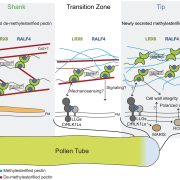
RALF4 prevents pollen tubes from growing crazy
Plant Science Research WeeklyPollen tubes are characterized by extremely fast elongation growth. Previously, small peptides known as RALFs (RAPID ALKALINIZATION FACTORs) were identified as signaling peptides, some with a role in pollen tube growth; for instance, RALF4/19 are important in maintaining the cell wall integrity of pollen…

Lateral root branching promoted by ammonia borane-dependent H2
Plant Science Research WeeklyMolecular hydrogen (H2) has been shown to have several cellular benefits, most notably serving as an antioxidant. Its effects in humans and plants have been primarily assayed using hydrogen-rich water (HRW, produced by bubbling H2 into water), but slower, more persistent release of H2 has been demonstrated…
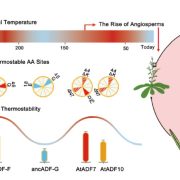
Evolution of the thermostability of actin-depolymerizing factors enhances pollen germination at high temperature
Plant Science Research WeeklyIn angiosperms, pollen germination leads to a period of extensive polarized growth of the pollen tube, which carries the sperm nuclei to the ovule. Studies of tip growth in both pollen tubes and root hairs have contributed to a descriptive model that involves polarized vesicle movement along the cytoskeleton…
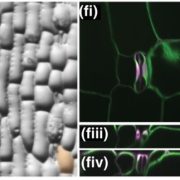
Subsidiary cells mediate stomatal closure in maize
Plant Science Research WeeklyStomata are pores on leaves which enable gas exchange. In grasses, stomata are surrounded by dumbbell-shaped guard cells that are flanked by subsidiary cells. However, the role of the subsidiary cells in stomatal closure is not fully understood. Here, Liu et al. investigated this using two maize (Zea…
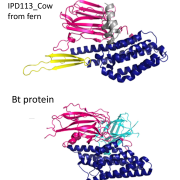
Ferns unleashed: Novel insecticidal proteins IPD113 challenge Bt resistance
Plant Science Research WeeklyInsect pests pose a significant threat to global crop production, with lepidopteran species like corn earworm and armyworms causing substantial losses. The widespread use of insecticidal proteins from Bacillus thuringiensis (Bt) in crops has been a key strategy to combat these pests. However, the emergence…