

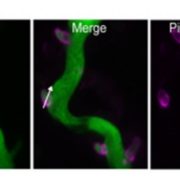
Special delivery: An independent secretion pathway for the delivery of cytoplasmic pathogen effectors
Blog, Plant Science Research Weekly, Research, Research BlogPathogenic microbes manipulate host plants by secreting effector molecules that interfere with immunity. Bacterial phytopathogens achieve this using specialized secretion apparatuses that act as molecular ‘hypodermic needles’ to inject effector proteins directly into plant cells. In comparison, effector…
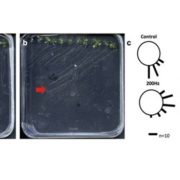
Root phonotropism: Early signalling events following sound perception in Arabidopsis roots
Blog, Plant Science Research Weekly, Research, Research BlogPlants can hear. We know plants respond to touch, can perceive day and night, and respond to volatile compounds, water and nutrients. Moreno et al. studied root phonotropism (not phototropism). They showed that roots of Arabidopsis plants can perceive and respond to sound waves. Arabidopsis roots grew…
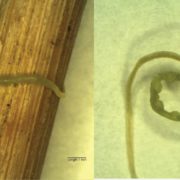
Stem parasitic plant Cuscuta australis (dodder) transfers herbivory-induced signals among plants
Blog, Plant Science Research Weekly, Research, Research BlogDodders (Cuscuta spp) are parasitic plants, which absorb water and nutrients from their host. Their vines can embrace, and in this way connect, more than one host. Hettenhausen et al. showed that in certain situations these connections serve as communication routes. In their experiment a pair of soybean…
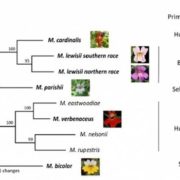
Less is more: Gene loss in flower pollination evolution ($)
Blog, Plant Science Research Weekly, Research, Research BlogThe evolution of flowers solved one of the largest obstacles of plant reproduction, finding a compatible mate. Since plants are sedentary, they are unable to search for a compatible mate like other organisms. Instead they use pollinators to do the searching for them. Flowers use scent and color to attract…

ABA-induced stomatal closure involves ALMT4, a phosphorylation-dependent vacuolar anion channel
Blog, Plant Science Research Weekly, Research, Research BlogChanges in guard cell turgor pressure result in stomatal opening and closing, balancing CO2 uptake with transpiration. These dynamics have been studied as early as the 1800s and much knowledge has been gained regarding the components involved in this process, yet we are still far from a unified model…
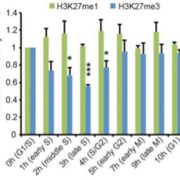
Epigenetic memory restoration and maintenance after cell division
Blog, Plant Science Research Weekly, Research, Research BlogNucleosomes, composed of histones, pack chromatin and make genes less available for transcription. Methylation of some histone positions is associated with repression of transcription and epigenetic silencing of some genes. After cell division during the cell cycle, maintenance of expression patterns…
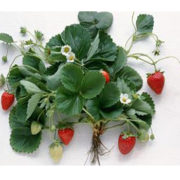
Flowering Versus Runnering: A Very Important Decision in Strawberry
Research, The Plant Cell, The Plant Cell: In a NutshellTenreira et al. find a gene responsible for the differentiation of the stolon in strawberry. The Plant Cell 2017. https://doi.org/10.1105/tpc.16.00949
Asexual reproduction produces offspring that are genetically identical to the parents. This process takes many forms in flowering plants, including…
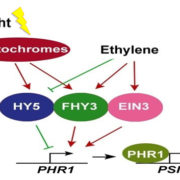
Light Helps Plants Cope with Phosphate Starvation
Research, The Plant Cell, The Plant Cell: In a NutshellLiu et al. focus on transcriptional regulation of PHR1 expression. The Plant Cell 2017. https://doi.org/10.1105/tpc.17.00268
Phosphorus (P) is an essential micronutrient for plant growth, development, and metabolism. Phosphate (Pi), the major form of P used by plants, is highly immobile in most soils,…
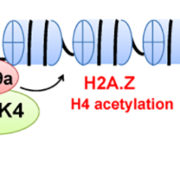
How Does Histone Phosphorylation Affect Flowering Time?
Research, The Plant Cell, The Plant Cell: In a NutshellSu et al. look at chromatin modifications that affect flowering. The Plant Cell 2017. https://doi.org/10.1105/tpc.17.00266
Plants, unlike animals, begin their lives as seeds that – in flowering plants – develop from flowers. This depends upon proper regulation of flowering time, to ensure pollination,…