


Recognizing Plant Cell first authors: Tatyana Radoeva
The Plant Cell, The Plant Cell: Author ProfilesTatyana Radoeva, first author of A robust auxin response network controls embryo and suspensor development through a bHLH module
Current Position: Postdoctoral Researcher, Department of Biochemistry, Wageningen University & Research, the Netherlands
Education: PhD, Wageningen University &…
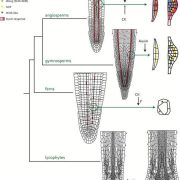
Review: The evolution of root branching: increasing the level of plasticity (J Exp Bot) ($)
Plant Science Research WeeklyWithout roots, plants are unable to gain height due to poor anchorage and are less fit for survival outside of humid environments. Root branching allows plants to better adapt to their environmental conditions and improves their capability to forage for water and nutrients. In this review, Motte and…
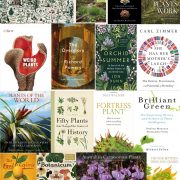
Books for plant scientists
Plant Science Research WeeklyThe holiday season is upon us! If you are looking for a good book to read and relax with, browse the Plantae Bookshelf Network to find your next favorite. In this post, Juniper Kiss has compiled a list of some of your 2018 favorites including, She Has Her Mother's Laugh by Carl Zimmer, The Food Explorer…

Greatly enhanced removal of volatile organic carcinogens by a genetically modified houseplant ($)
Plant Science Research WeeklyPlants provide us with food, fiber, shelter, medicine, and fuel. In the process, they also release the oxygen that we breathe. Now, they can also help remove carcinogens from our homes. Zhang et al., have developed a genetically modified a common houseplant, Epipremnum aureum, pothos ivy, that can remove…
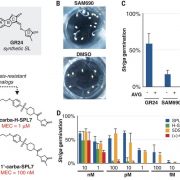
A femtomolar-range suicide germination stimulant for the parasitic plant Striga hermonthica (Science)($)
Plant Science Research WeeklyStriga hermonthica (Striga) parasitizes a wide range of crops including sorghum and rice, mainly in sub-Saharan Africa. This parasite decreases crop yields and results in billions of dollars in economic damage. Striga seeds are numerous and remain dormant in the soil until prompted to germinate by…
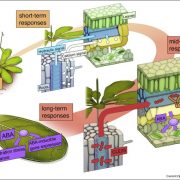
Review: Long distance signlaing in plant stress response (COPB)
Plant Science Research WeeklyTo compensate for their lack of a nervous system, vascular plants have developed complex mechanisms to connect their organs and coordinate stress. Many different types of molecules are involved in long-distance signaling and must be integrated to maintain homeostasis. In this review, Takahashi and Shinozaki…

An unexpected flower from the Jurassic of China (eLIFE)
Plant Science Research WeeklyThe economic importance of angiosperms, whether for food, ornamentals, timber, pharmaceuticals, or any other commercial product is easy to prove. However, their origin is not. Evolutionary biologists have long debated the origin of flowering plants. Fu et al., have unearthed fossils from the Early Jurassic…

Primula vulgaris (primrose) genome, and the heterostyly supergene (Sci. Reports)
Plant Science Research WeeklyFloral heteromorphy (differences in form) in Primula has long been of interest to plant biologists. Over 150 years ago, Charles Darwin recognized the importance of this floral anatomy for promoting cross-pollination. In heterostylous Primula species, plants produce either, pin or thrum flowers. Pins…
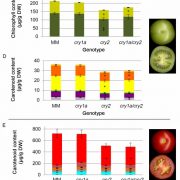
Pivotal roles of cryptochromes 1a and 2 in tomato development and physiology (Plant Phys)
Plant Science Research WeeklyCryptochromes are a class of flavoproteins found in plants and animals that are sensitive to blue light. In Arabidopsis, cryptochromes are involved in many important physiological processes including de-etiolation, flowering, circadian rhythms, cotyledon opening and expansion, anthocyanin accumulation,…